

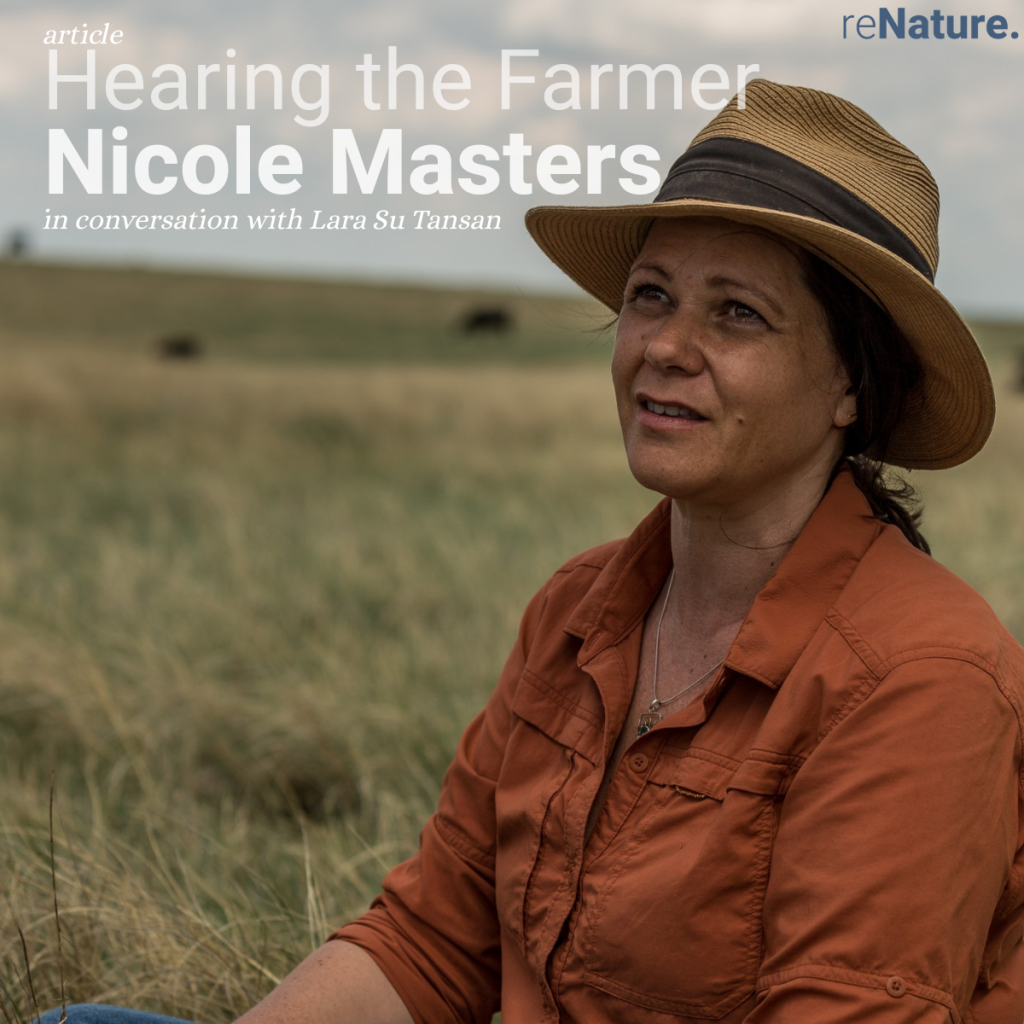
Hearing the Farmer with Nicole Masters, in conversation with Lara Su Tansan
Published on: April 23, 2026
I grew up in Turkey, where the connection to land and food is still visceral. Moving to Europe and working in supply chains, I felt the disconnect. Nicole was the first person I heard name it so precisely as a crisis of relationship.
I asked her what she would change about how the world talks about soil. She didn’t mention carbon sequestration or biodiversity metrics. She said: relate to it like a family member.
Her central argument, after all of it: the barrier to regenerative transition is psychological. It’s the worldview we bring to the land. And until that shifts, nothing else does either.
That answer tells you everything about who Nicole is, and why she is one of the most consequential voices in regenerative agriculture today. Not because she has the loudest platform or the most institutional backing, but because she has spent 25 years asking a question the industry is only beginning to catch up to: what if the problem was never technical?
She was always going to end up here
Nicole grew up in New Zealand, spending long hours in aircraft with her pilot father, looking down at the land below. She was the kind of child who played I Spy and gave the clue “E”: for erosion. While other six year olds were looking at cars and clouds, she was reading the scars humans left on landscapes. She grew up between New Zealand and Hong Kong (from one of the lowest population densities on earth to one of the highest) which gave her, she says, an early ability to navigate very different worlds and understand very different pressures.
In the Green Cover’s 2025 Nexus in the Field Workshop, she mentions how she went on to study soil science at university, and nobody mentioned soil was alive. That changed in 2002, when the late Dr. Elaine Ingham came to New Zealand and said something that restructured everything Nicole thought she knew. Soil wasn’t an inert substrate. It was a living ecosystem: one of the most complex on earth. Nicole has described that moment as her world falling apart and rebuilding simultaneously. It was the hinge on which her entire career turned.
What followed wasn’t a straight line. She started in horticulture and commercial vermiculture, farming avocados with her father in New Zealand. Her first consulting client in 2006 was a vineyard owner who said something that stuck: “You don’t need to know vineyards. I know vineyards. Tell me about soil.” That conversation taught her the difference between consulting and coaching, a distinction that now sits at the centre of everything she does.
What Integrity Soils does
Nicole founded Integrity Soils in 2006, at a time when regenerative agriculture was genuinely fringe. Today, Integrity Soils (now expanding under the umbrella of The Learning Field) works with producers and organisations across 30 million acres globally. Her CREATE program, a 36 week intensive agroecological coaching school, trains the next generation of soil health coaches to become people who can work at the intersection of technical knowledge and human behaviour. Graduates are now working in 16 countries.
But the work has evolved in a direction that surprises people. Nicole and her team spend as much time inside organisations as they do on farms: running workshops, designing training programs, working on the internal culture of companies that want to operate regeneratively but haven’t reckoned with what that actually requires of the people inside them.
“You want to see the world transform or regenerate,” she told me. “What does that look like within the organisation first?”
The day to day, she says, involves a lot of play! She and her colleague Megan Lannon design games, activities, and experiences that make complex agroecological ideas accessible and embodied. “It sometimes feels ridiculous that we get to enjoy our work this much.”
The Mindset Gap
In her book For the Love of Soil (self published, widely considered a field bible in regenerative agriculture circles), Nicole lays out what she calls the 5Ms: mindset, management, organic matter, minerals, microbes. Mindset comes first. Always.
This is her central argument. We have the knowledge. We have, the financing (in many regards). What we don’t have (what we have never adequately addressed) is the internal shift that makes someone actually change how they relate to the land they farm.
Nicole talks about the language of farming as a language of dominance. Herbicides named Guillotine, Rifle, Shotgun, Scepter. The question farmers wake up asking, as she has heard it from her own clients: who am I going to kill today? She is not being dramatic. She is describing what it does to a person, over decades, to frame their relationship to the natural world as a war. The consequences show up everywhere: in soil health, yes, but also in farmer mental health, in rural community breakdown, in the cognitive paralysis that comes from chronic financial stress.
When she works with farmers who are resistant, who are locked into monoculture contracts, dependent on chemical inputs, she doesn’t argue practices. She asks what they care about and their values.
“When people say they care about money, that’s not really a value,” she told me. “Ask why they care about money. Because they want to look after their family. Okay, how is this current system ensuring that?”
She never approaches resistance with confrontation. She approaches it with curiosity. “I’m not here to make a heavy chemical user wrong,” she said. “I’m just here to open more doors.”
The Moment It Clicks
The most powerful agent of change in farming communities, Nicole argues, is not data or policy or financial incentive. It is peer pressure: what her team coined as the “social squeeze”. When a respected farmer starts doing things differently and it works, the conversations in the community change.
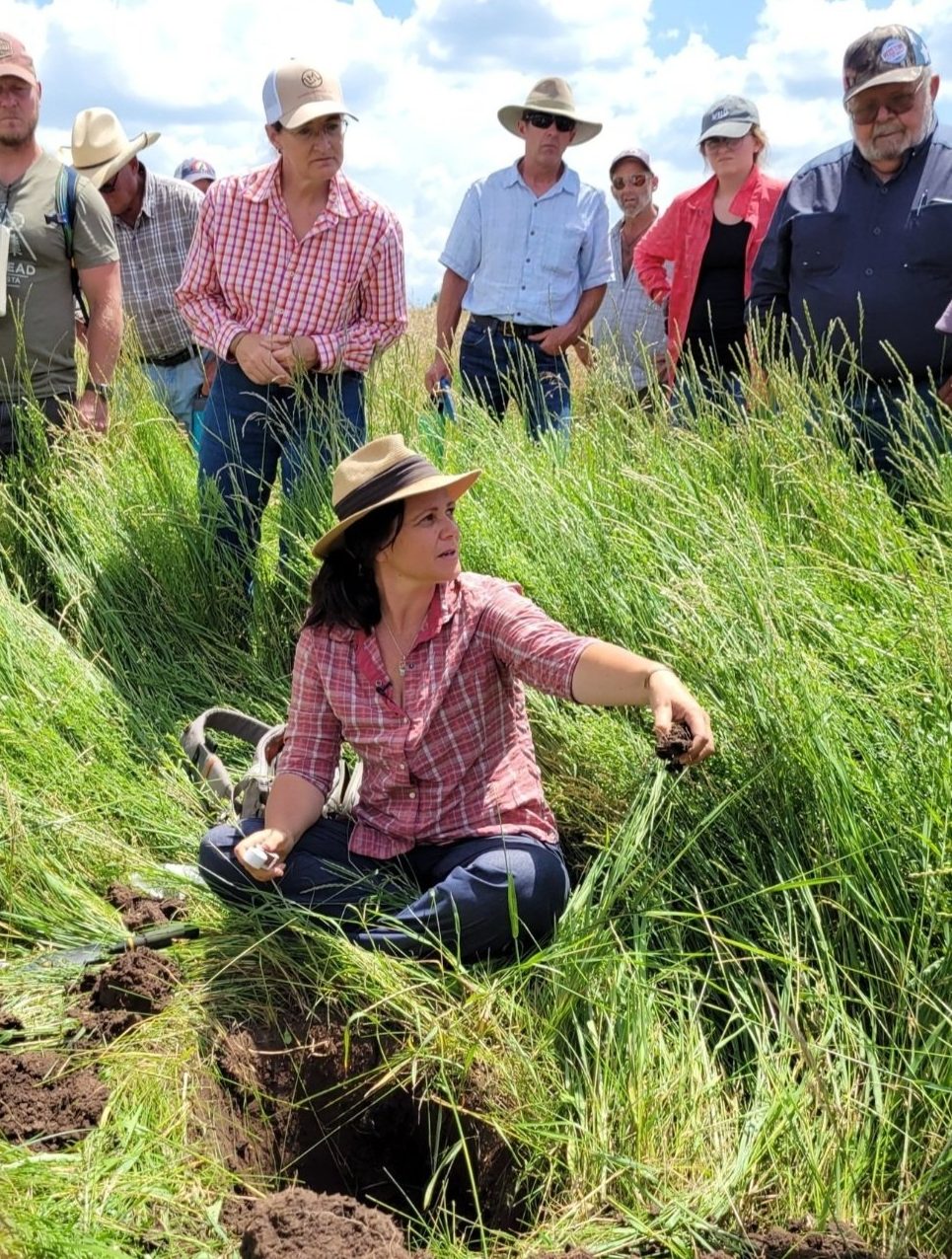
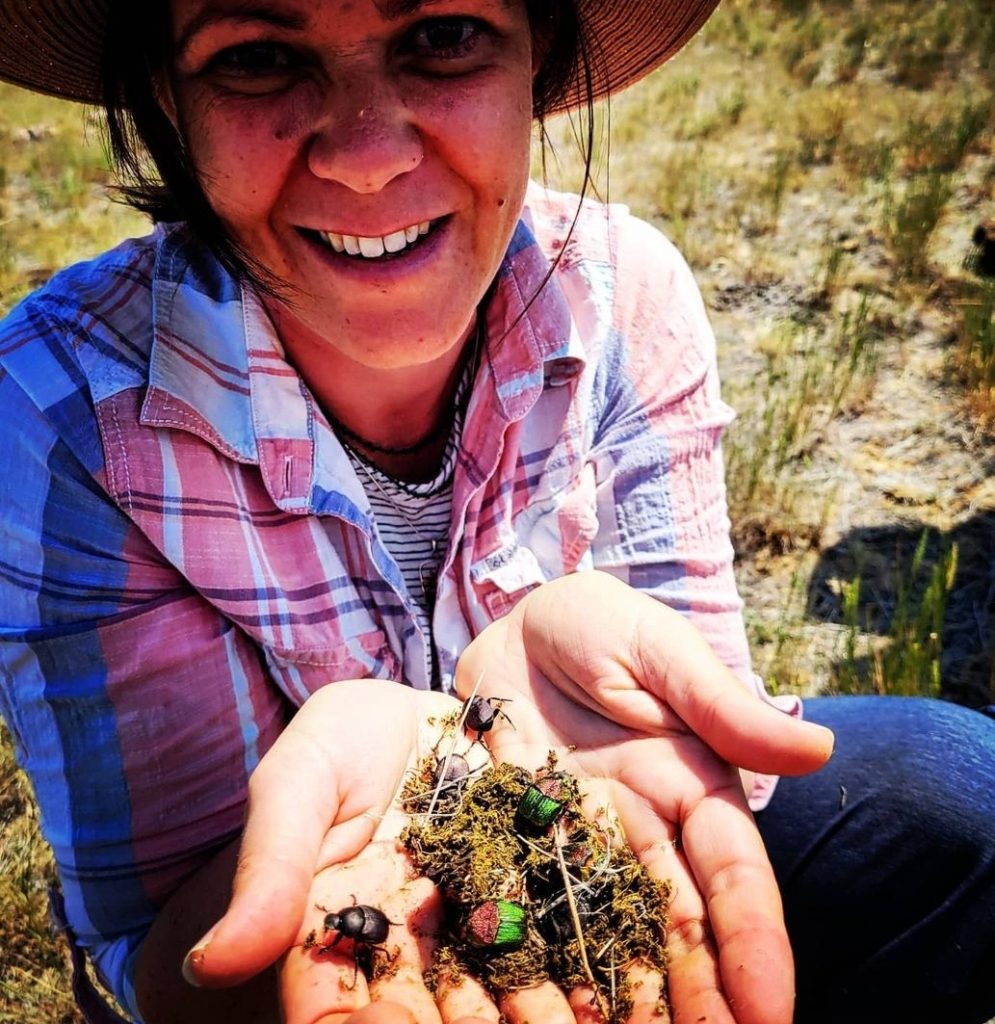
But she has also watched something more intimate than that. Grown men in their sixties and seventies, on their knees in the soil during her workshops, laughing. Getting excited about an insect. One participant told her it was the first time he had laughed like that since he was four years old.
“That’s what a soil health workshop looks like,” she said.
And then she explained, through neuroscience, why that moment of levity matters, why joy and play are not soft extras but neurological prerequisites for the kind of learning that actually changes behaviour. You cannot think your way into a new paradigm when you are operating in chronic stress. You have to feel your way there first.
On Institutions, Supply Chains, and the Limits of Individual Change
I pushed Nicole on something that sits at the heart of reNature’s work, and honestly, at the heart of the regenerative movement’s biggest unresolved tension.
Most farmers who need to transition are not free agents. They are locked into supply chains, monoculture contracts, debt structures designed by the very institutions Nicole holds responsible for the current state of agriculture. Universities still teaching the same textbooks. Input companies still dominating extension services. If the mindset shift happens at the individual level but the system around the farmer stays the same, I asked, is it enough?
Her answer was honest and unsentimental. You have to work from both sides. “That’s why we’re working with organisations as well,” she said. The Learning Field’s organisational training work is not a sideline, it is a direct response to this problem. Train the people inside the institutions. Train the people influencing the supply chains. Do that from a regenerative mindset, play an infinite game.
On the question of finance: whether the barrier is a business case gap or a worldview gap, she was direct. “If farmers feel the transition is too costly, they’re getting bad information. It’s an educational gap.”
The Landscapes That Give Her Hope
Nicole has driven through apocalyptic landscapes. She told me she has had two moments of real despair, riddled with that sinking feeling of thinking we might be done. Both times, at the end of the journey, she arrived somewhere that was breaking all the rules.
One was in Colorado in 2021, during a year when most of the western US was on its knees from drought. A family farm where the father had told his children: if you’re coming back, you need your own enterprise. Five families now working the same land, growing extraordinary diversity, running a restaurant because one daughter didn’t want to farm but wanted to cook. Abundant while everything around it was burning and dry.
The other was in Kenya. A conservation property running a thousand head of livestock, managed by nine Maasai cattle owners who moved their herds seven times a day. The bird life was extraordinary (the birds had figured out the flies gathered around the cattle). Everywhere else wildlife was retreating; here, zebra and cape buffalo were returning. And when one cattleman’s animals fell sick, the community didn’t exclude him, actually, they knew that when they invited him. They share the calves. They share the profit.
“Instead of the Maasai man on the side of the road with his one cow, struggling all day,” she said. “We do this as a community. Together, we all win.”
Where She Is Going
Nicole is working on her next book. She shared just enough: it will be about finding examples of where humans are the solution, not the problem. Evidence, gathered from the ground up, that regeneration is not only possible but already happening: in Colorado, in Kenya, in every landscape where someone decided to try something different and stayed long enough to see it work.
She has spent 25 years documenting what we’ve broken and how to fix it. The next chapter is about what wholeness actually looks like.
Thank you, Nicole. This conversation stayed with me.
If you haven’t read For the Love of Soil, start there.
Lara Su Tansan, Content & Consultant @ reNature. In conversation with Nicole Masters, Agroecologist, Educator, and Author of For the Love of Soil
