


How Carbon Finance Can Support Regenerative Agroforestry
Published on: December 22, 2025
Introduction
Carbon has become one of the most debated topics in regeneration, climate finance, and agricultural scaling. Over recent years, it has moved from a niche concept to a central mechanism shaping how climate action is funded and measured.
This article brings together a series of conversations between reNature’s Consultant & Content Manager, Lara Su Tansan, and Industrial Ecologist, Max Carter. Together, they explore why reNature engages with the voluntary carbon market, how agroforestry fits into carbon removal, what it takes to model and verify impact, and—most importantly—how carbon finance can work for farmers.
As carbon becomes an increasingly part of reNature’s work, these reflections offer insight into how climate finance can be designed with integrity, transparency, and long-term regeneration in mind.

Why Engage With the Voluntary Carbon Market
For several years, reNature has closely followed the evolution of the voluntary carbon market—studying how carbon is sequestered through regenerative agriculture, what makes agroforestry projects succeed, and how carbon finance can genuinely empower farmers. Along the way, the risks have also been clear: price volatility, opaque benefit sharing, and uncertainty about real climate impact.
For a long time, most traded credits were carbon avoidance credits, which reward projects for preventing emissions, such as protecting existing forests. While valuable, these credits often struggled to deliver lasting, additional impact.
The market is now shifting toward carbon removal credits: projects that actively draw CO₂ from the atmosphere. Agroforestry—one of reNature’s core regenerative approaches—plays a central role in this transition.
This shift is supported by the Integrity Council for the Voluntary Carbon Market (ICVCM), which has introduced global quality benchmarks for certifiers such as Verra and Gold Standard. These benchmarks aim to improve transparency, consistency, and scientific rigor across the market.
At the same time, new demand and coalitions are shaping the landscape:
- CORSIA, under the International Civil Aviation Organization, is creating large-scale demand for high-quality credits across the aviation sector.
- The Symbiosis Coalition, backed by companies such as Meta, Microsoft, and Google, is investing in large-scale nature-based carbon removal.
- The CASH Coalition focuses on enabling smallholder access to climate finance.
Together, these developments signal a maturing market—one where standards are improving, demand is stabilizing, and the balance between scale and integrity is beginning to align.
Understanding Carbon Pools
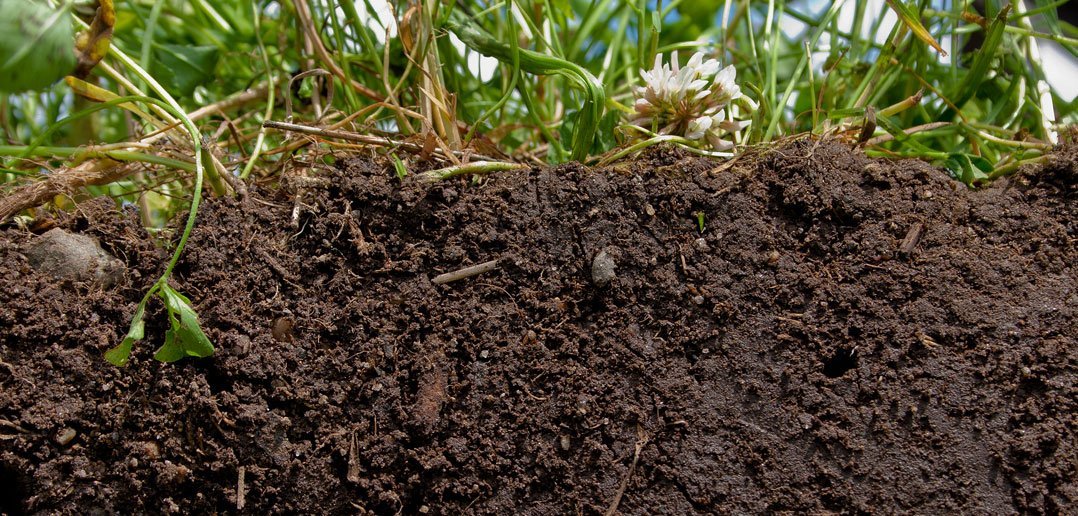
Carbon is stored across Earth’s systems: in the atmosphere, oceans, soils, plants, animals, and sediments. Each of these storage systems is known as a carbon pool, and together they form the global carbon cycle.
Human activity has disrupted this balance, pushing excess carbon into the atmospheric pool as CO₂. While CO₂ plays a role in regulating Earth’s temperature, too much of it traps heat and drives climate instability.
There are two broad pathways to remove CO₂ from the atmosphere:
- Technological solutions, such as direct air capture, are still emerging.
- Biological solutions, which rely on living systems to store carbon.
reNature focuses on scaling biological carbon removal through agroforestry. On a single farm, multiple carbon pools coexist:
- Aboveground biomass: trees, plants, deadwood, and litter
- Belowground biomass: roots and soil organic carbon
Some pools are short-lived, while others store carbon for decades. Trees are particularly important because they are relatively easy to measure, reliable over long timeframes, and capable of storing large amounts of carbon in both trunks and roots.
Carbon credits translate this stored carbon into a measurable, verifiable unit: one credit represents one ton of CO₂ removed from the atmosphere. Beyond finance, credits make ecological impact visible and economically viable for those restoring the land.
Can Carbon Credits Strengthen Farmer Livelihoods?
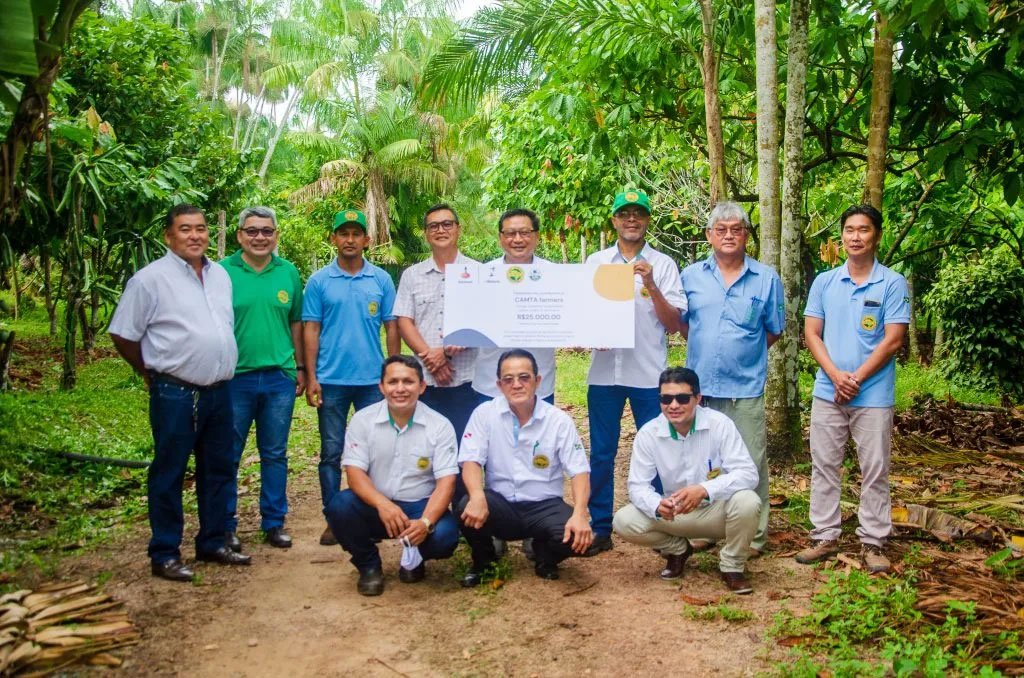
Agroforestry delivers well-documented benefits: carbon sequestration, biodiversity restoration, improved soil health, and greater climate resilience. Healthy soils retain more water and nutrients, reduce pests, and support more stable yields. Economically, diversified systems lower input costs and reduce farmers’ exposure to climate and market shocks.
However, transitioning to agroforestry requires upfront investment—seedlings, labor, and training—that many smallholders cannot afford. Carbon finance is often presented as a solution. In theory, revenues from carbon credits can cover transition costs and reward farmers for ecosystem services.
In practice, the picture is more complex. Some companies use credits to offset emissions while delaying reductions at the source. Genuine climate action requires emissions reductions first, with credits addressing only unavoidable emissions.
Alternative models, such as circular finance, fund agroforestry through loans or yield-linked returns instead of credits. While this avoids some greenwashing risks, it can also shift financial risk onto farmers, particularly when repayment depends on uncertain yields.
Each approach has trade-offs. Carbon credits enable scale but risk misuse; circular finance preserves integrity but can burden farmers. At reNature, the goal is to design financing that is transparent, long-term, and farmer-centered—where carbon supports regeneration rather than distorting it.

How Do You Model a Tree?
Carbon projects depend on modeling: mathematical representations of how trees grow and store carbon over time. Modeling helps estimate impact, assess feasibility, and build investment cases—but nature rarely follows neat equations.
There are two main approaches:
- Top-down models, which use observed data to estimate growth patterns. These are simpler and faster but rely on existing datasets from similar regions.
- Bottom-up models, which simulate interactions between soil, climate, species, and management. These can be more accurate but require extensive data.
reNature combines both approaches, starting with simpler models and testing more detailed ones where projects show promise. A core formula estimates carbon stock per hectare by scaling tree biomass, including roots, adjusting for survival rates and tree density, and applying growth curves over time.
As tools improve, including digital and satellite-based monitoring such as Space4Good, Spatialise, and Farm Tree, models are becoming more accurate and accessible—though balancing usability and precision remains a central challenge.
What Farmers Say About Carbon
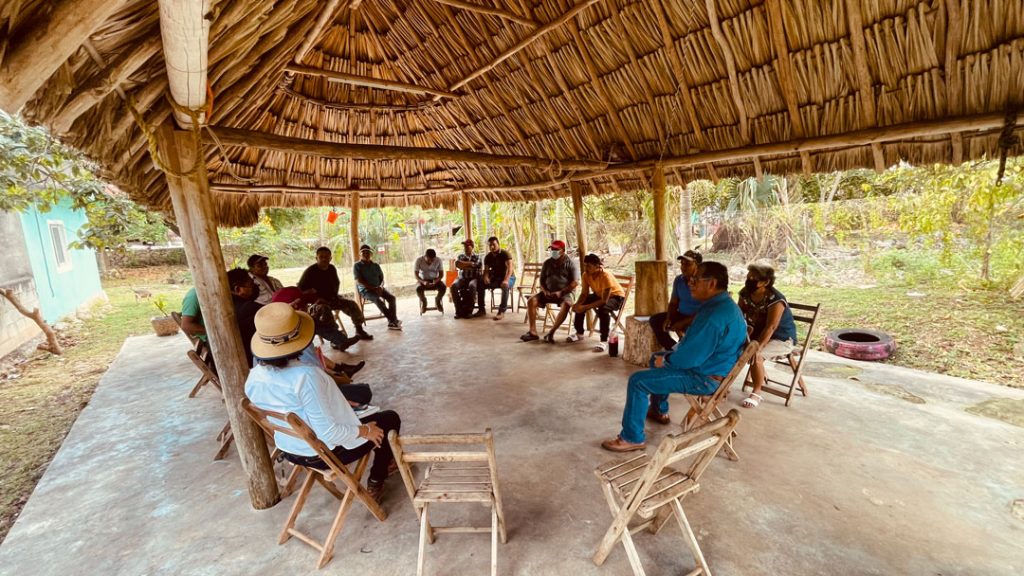
Farmers’ perspectives are essential to understanding carbon markets in practice. Agroforestry specialist Festus Kiplagat describes carbon credits as “a good innovation trapped in a bad system.”
Many standards were designed far from the realities of smallholder farming. They assume single-use land, rigid permanence, and decades-long contracts that rarely reflect how farmers manage diverse, multifunctional landscapes.
Capacity is key. Strong local teams that understand both carbon science and community dynamics can adapt standards, ensure informed consent, and design projects that fit existing systems. When farmers see tangible benefits—financial and ecological—regeneration becomes self-sustaining.

Who Runs the Agroforestry Carbon Market?
The carbon market is a complex ecosystem involving farmers, project developers, investors, certifiers, auditors, brokers, exchanges, buyers, and commodity industries.
Project developers, like reNature, coordinate implementation, often relying on upfront investment or early credit purchases. Certifiers and auditors are meant to ensure integrity, yet past scandals have revealed weaknesses: inflated baselines, opaque data, and uneven oversight.
The Integrity Council for the Voluntary Carbon Market emerged to address these gaps, introducing Core Carbon Principles to strengthen science-based verification. While progress is underway, challenges remain—particularly around transparency, revenue sharing, and leakage.
Standards, Technology, and Trade-Offs
Choosing a carbon standard is not a neutral decision. Large certifiers such as Verra, Gold Standard, and Plan Vivo offer established track records but rely on heavy documentation and costly audits, often limiting participation to large-scale projects.
Digital-first approaches like Open Forest Protocol aim to lower barriers through satellite monitoring, blockchain-based data storage, and continuous measurement. These models improve accessibility for smallholders but are still building market trust and recognition.
The tension between track record and accessibility reflects a broader question: how to balance credibility, inclusion, and system change in a rapidly evolving market.

Interested in Carbon Financing our projects?
Reach out to us nowFrom Theory to Investable Projects
Not every farm should become a carbon project. Successful initiatives require proven systems, farmer commitment, and long-term scalability. When aligned correctly, agroforestry reduces agricultural risk through diversified income, stable yields, and reduced dependence on inputs.
When designed well, carbon finance adds a performance-based revenue stream that is largely decoupled from commodity prices, improving cash flow stability for farmers and reducing downside risk for investors.
At reNature, carbon-backed agroforestry projects are developed where agricultural performance, farmer incentives, and climate outcomes reinforce one another.
Conclusion
The voluntary carbon market is changing. Standards are improving, new technologies are emerging, and regeneration is becoming part of mainstream climate finance. Yet integrity, fairness, and farmer inclusion remain decisive factors.
Carbon is not a silver bullet. It is an add-on—one that only works when the underlying agricultural system is healthy, resilient, and farmer-led. When designed with transparency and long-term thinking, carbon finance can help scale regeneration while delivering real climate impact.
reNature has developed dozens of model farms around the globe that are inspiring local farmers to make the transition to regenerative farming. Carbon Financing can push the transition at a regional level.
