

Insights on Ghana
Published on: March 18, 2025
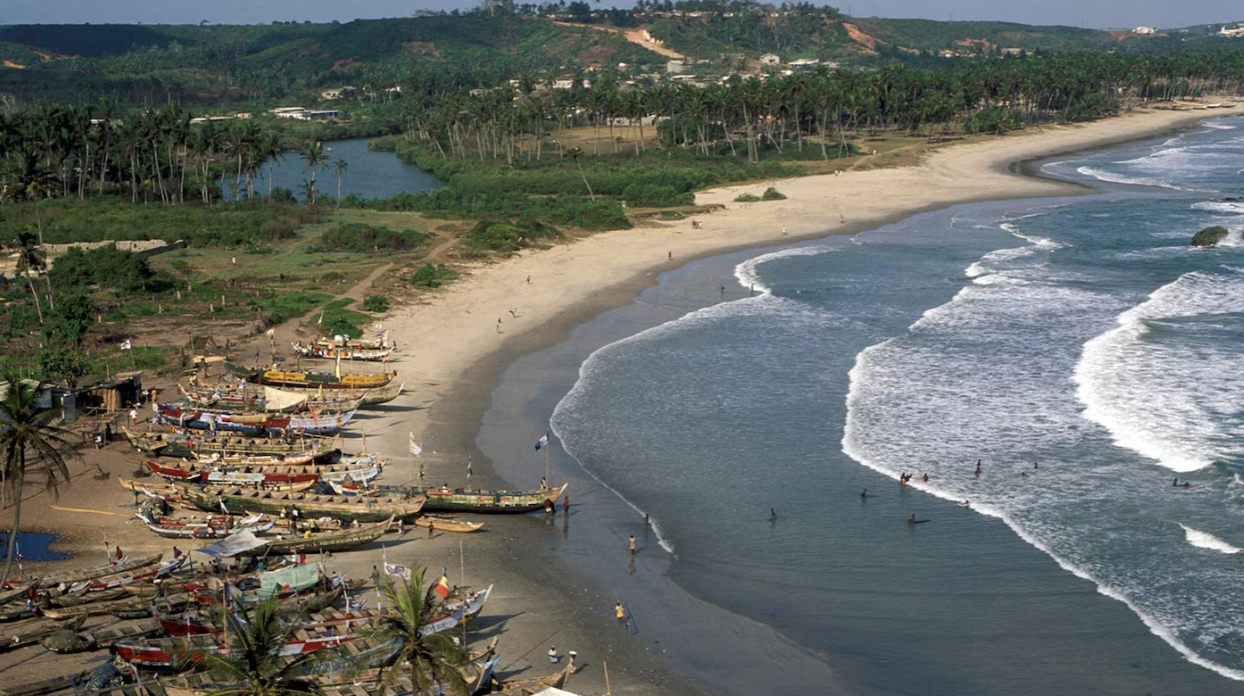
Ghana is a Western African nation along the Gulf of Guinea and the Atlantic Ocean. The mighty medieval trading empire that thrived between the 4th and 13th centuries in southeastern Mauritania, western Mali, and eastern Senegal, is known for its diverse ecosystems, which range from coastal savannas to tropical rainforests. As the first African country to gain independence from colonial rule in 1957, Ghana has played a pivotal role in the continent’s history.
Beyond its historical significance, Ghana has a rich cultural heritage, with over 100 ethnic groups, each contributing to the nation’s vibrant tapestry of languages, traditions, and festivals. Economically, while cocoa production remains a cornerstone, Ghana has diversified into gold mining, oil and gas, and tourism sectors.

Ghana’s Independence and its Impact on Africa
Modern day Ghana, which gained its independence on the 6th of March 1957, was primarily formed from the former Gold Coast colony. The push for independence was spearheaded by Kwame Nkrumah, who stated “The best way of learning to be an independent sovereign state is to be an independent sovereign state.”. With this idea in mind, Nkrumah, a nationalist and Pan African leader, saw Ghana’s freedom as a catalyst for the liberation of the entire African continent. Emphasizing this vision, he famously declared, “Our independence is meaningless unless it is linked up with the total liberation of the African continent.” Inspired by Ghana’s example, more than 30 African nations gained independence in the following decade, marking a significant shift in the continent’s political landscape.

The Key Ghanaian Crops
Cocoa
Ghana, responsible for 20% of the global cocoa production, is the world’s second largest cocoa producer. With 800,000 smallholder farmers and an annual production of 800,000 metric tons, cocoa farming is a major contributor to the agricultural sector, making up 8% of Ghana’s GDP. The global cocoa market, valued at 15 billion euros in 2023, is expected to reach 26.6 billion euros by 2031. Since 1947, the Ghana Cocoa Board (COCOBOD) has played a key role in stabilizing the industry by providing support to farmers, including farmgate price controls, access to fertilizers, and disease-resistant seedlings.

Challenges with Cocoa
Despite cocoa being the key crop of the nation, the industry in itself faces numerous challenges that threaten its long term viability. Productivity levels remain below the global average, largely due to outdated farming techniques, limited access to modern agricultural inputs, and aging plantations. As aforementioned, the 800,000 smallholder farmers that dominate the sector have farms that span, on average, around 2-3 hectares, which restricts economies of scale and makes it difficult for farmers to adopt more efficient and sustainable production methods. This is also one of the reasons why as reNature, we find it vital to focus on scalable projects with regenerative and restorative practices.

Climate change, as it is for everywhere in our world, is another growing concern. This in particular is damaging to the cocoa industry since cocoa trees require specific agro climatic conditions to thrive. Rising temperatures, unpredictable rainfall patterns, and soil degradation are already affecting yields. At the same time, the expansion of cocoa farms has contributed to deforestation, attracting international scrutiny as buyers push for more sustainable and ethical production practices. This further highlights the urgency in implementing scalable agroforestry methods.

One of the other challenges is the fact that the youth focuses on illegal mining activities rather than farming. The average cocoa farmer in Ghana is around 55 years old, with the young population mainly prioritising illegal mining activities for their source of income. Also known as “Galamsey”, the illegal mining in Ghana has destroyed ecosystems, one of the biggest examples being the Pra River. Locals living next to the river have pointed out that in the past the water was “once so clean that you could see the fish and crocodiles that lived in it”, whereas now, the river has turned into a yellowish-brown body of water”. This is due to the mercury- and cyanide-heavy gold extraction methods used by the miners. All of these extractive activities damage the local environment, which also consists of the cacao fields.

Cassava
Cassava is a starchy root crop native to South America, widely cultivated in tropical and subtropical regions. It’s a major food source for over 800 million people globally, especially in Africa, Asia, and Latin America. Cassava is known for its resilience – thriving in poor soils and drought conditions where many other crops fail.
Its tuberous roots are rich in carbohydrates, particularly starch, making them a key energy source. However, cassava contains natural toxins (cyanogenic glycosides), so it must be properly processed (peeled, soaked, cooked, or fermented) to be safe for consumption.
Cassava is incredibly versatile: it can be boiled, baked, or fried, and is also processed into products like tapioca, cassava flour, and animal feed. It’s essential for food security and economic livelihoods in many developing countries.

The global cassava market is expected to reach 201.5 billion euros by 2030 due to a growing demand for gluten-free, plant-based foods. products. The sector faces challenges such as post-harvest losses, limited industrial processing, and inadequate infrastructure, and most cassava grown is not the high-starch industrial variety needed for export.


Yam
Yam, a starchy tuber, is a staple food in Ghana, and the country is the second largest producer of the crop globally. However, yam production has stagnated despite its importance to the Ghanaian economy, threatening both rural livelihoods and urban food security. The crop is the most expensive of all root and tuber crops due to the labor demands involved in every stage of production, from land preparation to transportation. These factors hinder productivity growth and raise concerns about the long term sustainability of yam farming in Ghana.

Declining soil fertility due to continuous cultivation without sufficient soil management poses a further challenge. Addressing these challenges presents a significant economic opportunity, given that the global yam market is projected to reach 45.1 million euros by 2030.

Maize
Maize is one of Ghana’s most important cereal crops. It is a staple food for millions and is crucial in the livestock feed and agroprocessing industries. The crop is widely cultivated nationwide, with significant production zones in the Brong-Ahafo, Ashanti, Northern, and Eastern regions. Despite its importance, Ghana’s maize production faces multiple challenges threatening food security and economic growth.

Like cocoa production, one key constraint is low yields compared to global standards. Traditional farming methods, erratic rainfall patterns, and limited access to high-yielding seed varieties and fertilizers contribute to low productivity. Additionally, post-harvest losses, caused by inadequate storage facilities and pest infestations such as the Fall Armyworm, further reduce the amount of maize available for consumption and trade. Regardless of the challenges faced, the global maize market is expected to reach 380.6 billion euros by 2030.

Oil Palm
Oil palm is one of Ghana’s key cash crops, contributing significantly to the economy, employment, and industrial processing. Ghana ranks among the top oil palm producers in Africa, with major cultivation areas in the Western, Central, and Ashanti regions. The crop is processed into palm oil, which is widely used in food, cosmetics, and biofuel industries, making it a high value agricultural commodity. Its global market
Despite its economic significance, Ghana’s palm oil sector faces several challenges. The industry is dominated by smallholder farmers, who account for nearly 60% of production. However, they often lack access to high-yielding seed varieties, proper irrigation, and modern processing technologies, resulting in low productivity per hectare. Ghana’s oil palm sector must transition toward more sustainable and efficient farming practices to remain competitive in global markets.

Ghana’s Agricultural Future
The many viable crops of Ghana shows the high potential the agricultural future of the country has. However, in order for this potential to manifest, innovation, regeneration and resilience are key to the work that is being done. Opportunities increase ten fold through the implementation of climate-smart agriculture, organic farming, and sustainable supply chain development, which can help farmers adapt to the changing climate conditions while at the same time maintaining not only productivity but also quality of the yields.
Regenerative methods such as agroforestry, which have been implemented in our Regenerative Cocoa project have been showing that sustainability and productivity do go hand in hand if these methods are implemented properly. At reNature, we aim to empower farmers and communities across Ghana by supporting their transition to regenerative agricultural practices that enhance ecosystem health, secure long-term livelihoods, and create market access for sustainably grown produce. Through knowledge-sharing, technical support, and collaboration with local stakeholders, we are making steps to unlock Ghana’s agricultural potential in a way that is resilient, future-proof, and beneficial for both people and the planet.

