


What do Regenerative Farmers Truly Need?
Published on: March 15, 2024
At reNature, our mission is to assist farmers in their transition to regenerative agriculture. When presenting regenerative agriculture to corporations, we often encounter a few recurring questions about the transition process:
- Is there a standard for regenerative agriculture?
- What is the cost per hectare?
- Will the investment pay off?
- Who is responsible for covering the transition expenses?
- How much does it reduce carbon emissions at the farm level?
- What are the monitoring costs?
If you have additional questions that should be addressed, please share it with us.
But the broader question remains: What do farmers actually need? This question delves into the complex network of stakeholders in the global supply chain. The challenge isn’t the farmers themselves; it’s the systemic barriers that hinder the widespread adoption of regenerative agriculture.
While there are differences at the national, regional, and local levels, a few straightforward solutions can significantly boost the transition to nature-based agriculture.
Recognition for Positive Efforts
Farmers transitioning to regenerative or other non-traditional farming methods are often viewed as unconventional or even risky. It’s crucial to recognize and value their efforts to implement positive change. Support and acknowledgment should be provided throughout the supply chain. To start, consider sharing this article on your social media platforms as a way to spread awareness and support the leading farmers.

Easing Land Use Regulations
Farmers are often restricted by national, regional, and local regulations that dictate how they can use their land. For example, in some EU regions, farmland must be productive every year and cannot be left fallow for recovery. In countries like the Netherlands, planting too many trees on farmland is prohibited, as it could reclassify the land as forest, reducing its agricultural value and potentially impacting regional food production.
While some regulations benefit the environment—such as Brazil’s strict rules on riparian buffer zones that protect waterways—overregulation can stifle farmers’ willingness to innovate and experiment.

Recognizing Soil Improvement
Regenerative agriculture focuses on restoring healthy soils, rich in organic matter and biodiversity, which in turn leads to higher yields and better-quality crops. It’s essential to find ways to reward farmers for enhancing soil quality. By valuing soil improvement, we can make it more appealing for farmers and landowners to invest the necessary time and resources.
Landowners can also encourage farmers to adopt regenerative practices by promoting soil quality improvement on their land.
Flexible Loan Conditions
Access to financing is a significant challenge across industries, but it’s particularly tough in agriculture, especially for new farmers. According to EU reports, farmers’ unmet demand for bank financing amounts to €62 billion, with smallholders and young farmers being the most affected.
Farm loans typically come with stringent requirements, such as collateral (land, equipment, livestock, or crops) and a clear purpose for the loan, whether it’s for purchasing equipment, land, or covering operating expenses. Lenders may also require adequate insurance to mitigate risks like crop failure or natural disasters. Because regenerative agriculture lacks established track records, financial institutions and insurance companies often view it as a high-risk investment.
We can proof otherwise.

Extending Lease Contracts
Most farmers rent the land they work on. For instance, in France, around 60% of agricultural land is owned by non-farmers. Rental prices for agricultural land vary widely by country and region. In 2022, the Netherlands had the highest average rental cost for arable land and permanent grassland at €843 per hectare. Factors such as national regulations, proximity to infrastructure, and land characteristics like soil quality, slope, and drainage all influence these prices.
Farmers and landowners typically renegotiate land lease contracts every few years. Any improvements to the land, such as enhanced soil health, become part of these negotiations.
Short-term leases, often under five years, discourage farmers from investing in land and soil quality improvements. In contrast, longer lease agreements that allow farmers to reap the benefits of their regenerative practices are more likely to motivate them to transition to sustainable methods.
This issue is particularly relevant in the EU and the USA. In Brazil, by comparison, less than 4% of farmland is leased, whereas the figures are 33% in Europe and 38% in the United States, according to the World Census of Agriculture.
Fair Pricing
It’s reasonable to expect higher prices for higher-quality products, and consumers are generally willing to pay more for better goods. However, companies, particularly food processors, often view premium prices as a threat to their profits and shareholder satisfaction, leading them to resist paying extra. For farmers, premium pricing also carries risks, as these deals often end before they can recoup their investment.
A more sustainable approach would be to implement fair pricing combined with longer-term off-take agreements, ensuring that farmers are adequately rewarded for their efforts to enhance their farming systems.
Transparent Mass Balancing
For regeneratively produced products to reach consumers on a larger scale, their yields must increase. Currently, these products are typically sold in small quantities to specialty brands or at local markets. Large companies need to develop methods to separate regenerative commodities earlier in the supply chain, allowing them to claim that a percentage of their products are regenerative. By demonstrating that a portion of their product benefits the environment, companies can attract consumers and help scale up regenerative practices. Mass balancing is already a standard in renewable energy—so why not apply it to food production?

Reducing Margins on Goods and Services
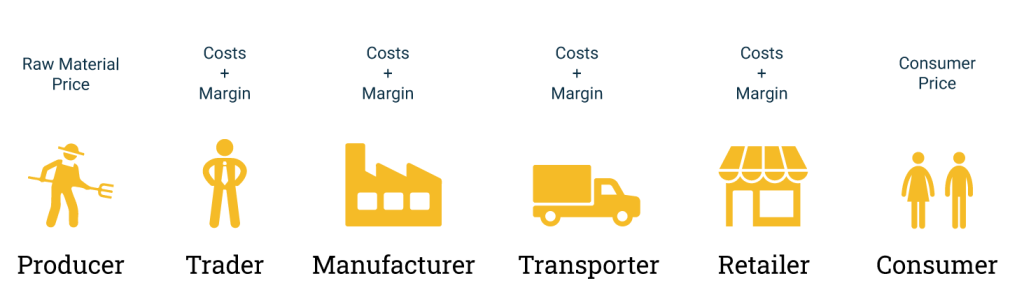
Lastly, let’s consider the economic dynamics within the supply chain. Currently, the emphasis is on keeping raw material costs low, with each step in the supply chain adding value. When companies pay premiums to farmers, the initial costs rise, making the final product more expensive. To make regenerative products accessible to a broader market rather than being a niche or exclusive offering, margins on environmentally beneficial products need to be reduced. This adjustment would make regenerative products more widely available while still maintaining profitability through mass production. Expanding market access for regenerative produce will boost demand and accelerate the transition to sustainable practices.
For instance, in the simplified supply chain example below, a Brazilian nut harvester (producer) receives €1 per kilo of raw material, while the Dutch consumer ends up paying €22 per kilo at the supermarket.
Conclusion
To boost regen ag, regenerative farmers need recognition for their efforts, fewer regulatory constraints, and incentives for soil improvement. They also require better access to finance, longer lease contracts, fair pricing, and transparency in mass balancing to make regenerative agriculture economically viable. Addressing these needs will help scale up regenerative practices and promote a more sustainable food system.
