

Biochar
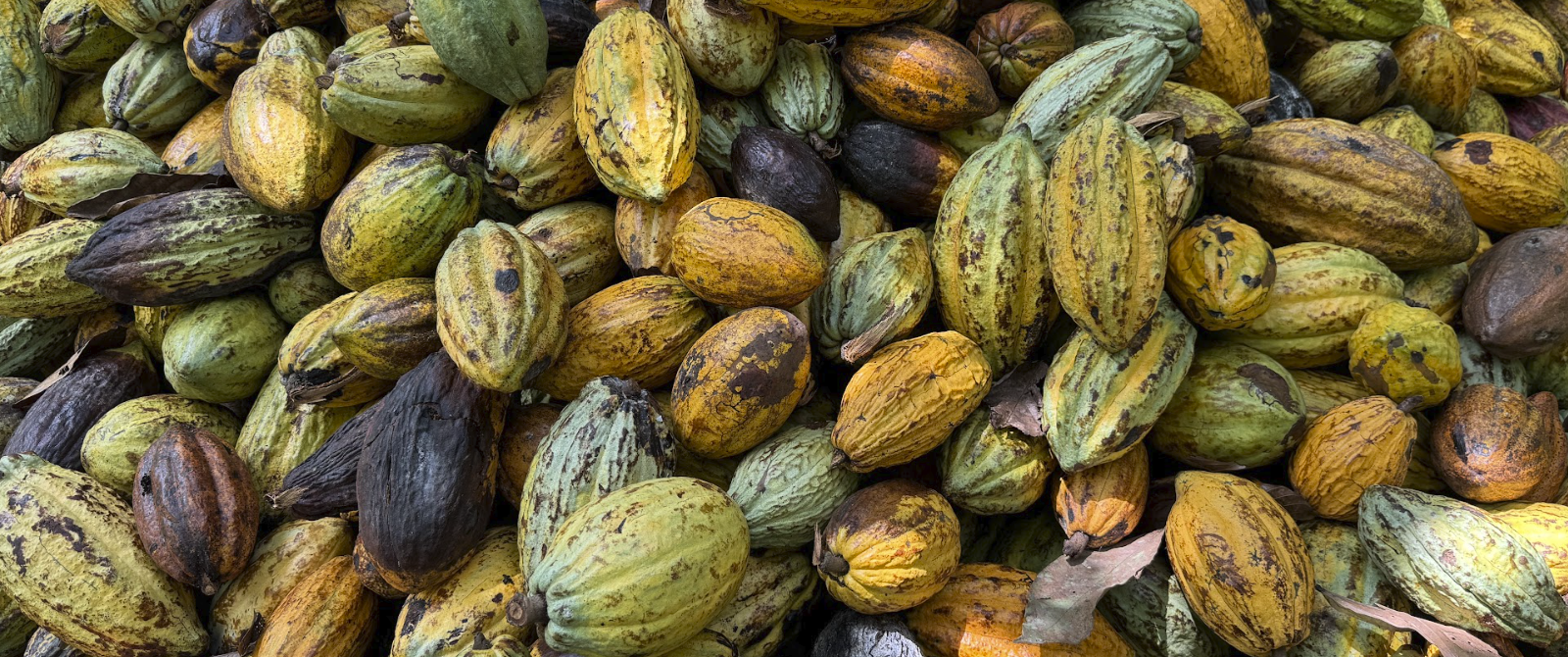
Biochar is what happens when agricultural waste (cocoa pod husks, pruned branches, farm residues) is burned slowly at high temperatures with limited oxygen. The result is a stable, carbon rich material that does not break down quickly in soil. When added to the ground, it improves water retention, feeds soil biology, and reduces the need for synthetic fertilizers.
On this farm, biochar is both a soil restoration tool and an income opportunity. The raw material is already here: cocoa pod husks that would otherwise be left to rot or burned openly. Converting them into biochar instead closes a loop: farm waste becomes farm input.
The process is being introduced through community training sessions on safe handling, kiln management, and optimal application rates. Equipment including earth kilns, moisture meters, and IoT LogBoxes to monitor kiln temperatures has been identified and prepared. Carboneers, one of the project partners, monitors all biochar production digitally and connects it to carbon credit markets, meaning that every ton of carbon locked into the soil through biochar has the potential to generate additional revenue for the farmer.
Projected carbon credit revenues for this farm are estimated at 25 tons CO₂e in 2025, growing to 100 tons CO₂e in 2026, with a potential value of up to 85 EUR per ton.

