

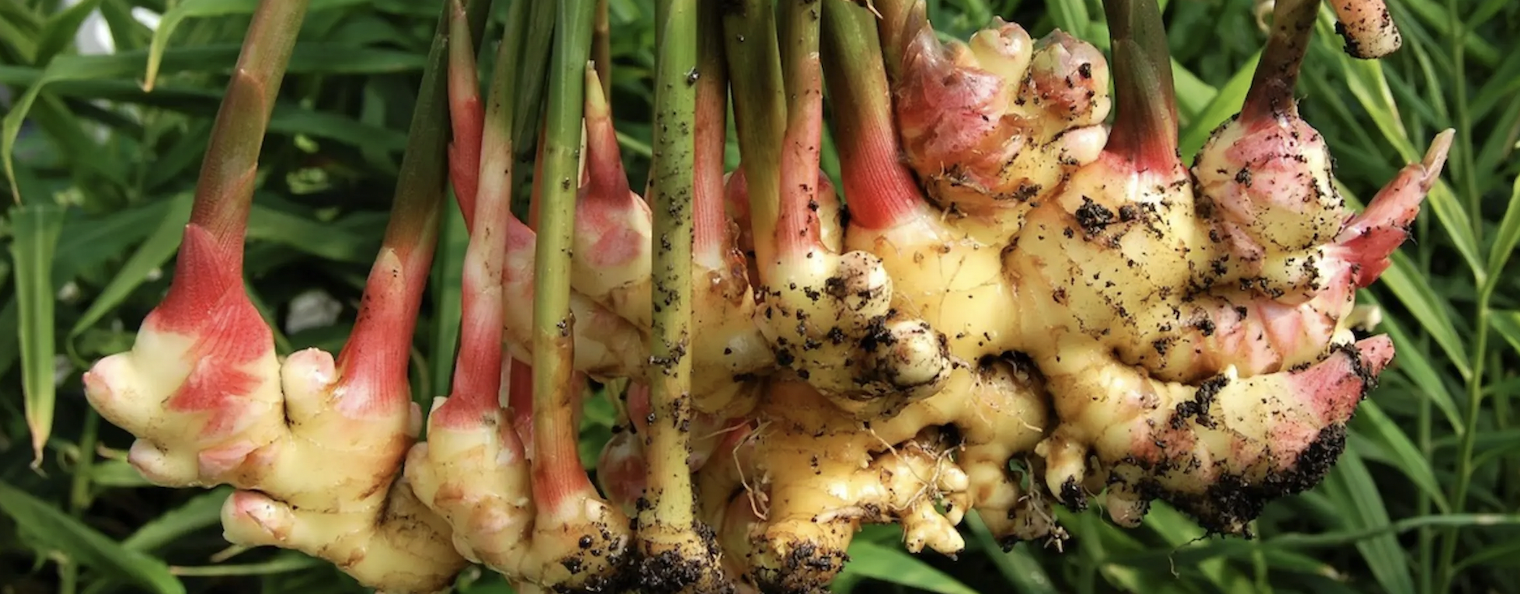
Ginger
Ginger used to be one of the most important products of trade, having been exported from India to the Roman Empire over 2000 years ago due to its healing properties. By the middle of the 16th century, Europe was receiving more than 2000 tons of dried ginger a year from the East Indies. Its popularity has only increased in our modern markets, with its global value estimated to reach 5.7 billion euros (or 6.02 billion US dollars) by 2033. Thus, ginger is a crop with high potential for regenerative agriculture. Thriving in tropical and subtropical climates, ginger grows well in agroforestry systems alongside banana, coffee, and leguminous plants. Its natural pest deterring properties reduce the need for chemical pesticides, making it an efficient crop in organic and regenerative systems.

Regenerative ginger farming focuses on soil health through composting, mulching, and cover cropping. These techniques improve moisture retention and enhance soil structure, leading to higher yields over time. Intercropping ginger with trees helps prevent erosion and maintains biodiversity on farms.
By replenishing soils, reducing chemical reliance, and embracing biodiversity, farmers can cultivate not just a crop, but a future where agriculture regenerates the land and sustains livelihoods for generations to come.


