


El Manzano Regenerative Farm & Demonstration Centre
- DefinitionDevising project idea, defining the aim and main components
- DesignSpecifying details such as time-frame, budget, target indicators, project partners and relevant steps to reach the project objectives
- Open to FinancingSearching and securing funding and investment, setting up relevant financing partnerships, and discussing payment modalities
- ImplementationExecution of feasibility studies, context analysis, plot design, planting and setting up facilities and starting with potential capacity-building
- MaintenanceOperational phase (monitoring and evaluation, impact assessments and adjustments, execution of educational programmes and long-term capacity building)
- Scaling UpScaling up phase is when the project it has already shown success by obtaining impact as well as economic results and it's ready to become replicable.
Cabrero, Biobío Region, Chile
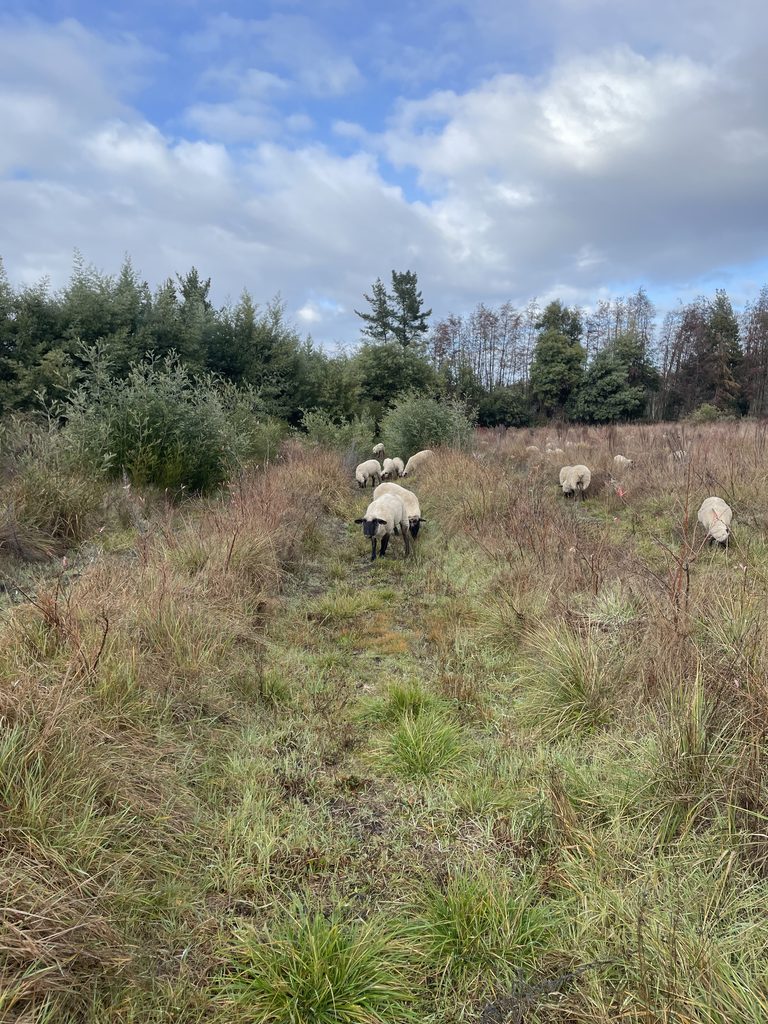
El Manzano is a 120-hectare family-owned regenerative farm in Chile’s Biobío Region, combining certified organic agriculture, forestry and a long history of sustainability education. Building on more than fifteen years of regenerative farming experience, El Manzano aims to establish 2–3 regenerative model farms within the property, turning different parts of the existing operation into practical demonstration systems.
These model farms can showcase regenerative approaches adapted to El Manzano’s diverse activities, including grains and legumes, regenerative seed production, livestock integration and the transition from pine plantations towards agroforestry. Improved irrigation, machinery and infrastructure will support these systems.
Rather than demonstrating regenerative agriculture as a single practice, El Manzano can show how different regenerative production models work together across a diversified commercial farm. The ambition is to create a living demonstration, research and education centre whose lessons can be shared with farmers throughout Chile and Latin America.
How can farming thrive with less water and inputs?
Agriculture in Chile’s Biobío Region faces interconnected challenges around water scarcity, production efficiency and maintaining viable farm businesses while protecting natural resources. For El Manzano, increasing cereal and legume yields without becoming dependent on external inputs is an important part of this challenge.
Water availability is a central concern. Improving irrigation efficiency can reduce pressure on water resources and lower the electricity costs associated with irrigation. At the same time, El Manzano wants to transition parts of its pine plantations towards more diverse agroforestry systems while integrating livestock and expanding regenerative crop and seed production.
Economic resilience is equally important. Although the farm already has commercial production and established market relationships, limited investment capacity restricts its ability to modernise machinery, improve irrigation and expand processing.
Creating 2–3 model farms provides an opportunity to address these challenges through practical examples. Each model can demonstrate how regenerative practices can be combined for different production systems while generating knowledge that can ultimately be transferred to other farmers.
What can 2–3 regenerative model farms demonstrate?
Rather than redesigning the entire 120 hectares as one uniform system, El Manzano aims to develop 2–3 model farms or demonstration areas that reflect the diversity already present on the property. These models can become practical testing and learning environments for regenerative agriculture.
Based on El Manzano’s priorities, the demonstration systems can focus on areas such as regenerative grains and legumes with reduced external inputs, regenerative seed production, livestock integration, and the transition from pine forestry towards agroforestry. Efficient irrigation, improved machinery and appropriate processing infrastructure can strengthen their productivity and resilience.
reNature can support the design and development of these model systems by assessing current practices, identifying opportunities for improvement, strengthening water management and supporting biodiversity and carbon monitoring.
Together, the model farms can form the foundation of a larger demonstration centre where farmers, researchers, and other stakeholders can see different regenerative systems in practice and understand how to adapt them elsewhere in Chile and Latin America.

How can model farms regenerate land and water?
The model farms can demonstrate how productive agriculture contributes to healthier soils, improved water management and greater biodiversity. Regenerative grain production and livestock integration can support nutrient cycling and soil health, while more efficient irrigation can reduce pressure on scarce water resources.
Transitioning pine plantations towards agroforestry and native ecosystem restoration can diversify the landscape and increase carbon sequestration. Monitoring these demonstration areas can also generate evidence on carbon, biodiversity, water retention and infiltration, helping El Manzano show the environmental outcomes of regenerative practices under real farming conditions.
Can demonstration farms become living classrooms?
El Manzano already has a strong educational foundation. Between 2008 and 2020, Ecoescuela El Manzano provided experiential education in sustainability and regenerative agriculture. The proposed model farms offer an opportunity to reactivate this role.
Instead of teaching regeneration only in theory, participants can experience several regenerative production systems operating on a commercial farm. The project is expected to directly benefit around 40 people and indirectly reach approximately 150. Over time, the model farms could support farmer training, applied research and knowledge exchange, helping regenerative practices spread beyond El Manzano to other farming communities.
Can regenerative models also be profitable?
For the model farms to be replicable, they must demonstrate not only environmental benefits but also economic viability. Increasing yields, reducing dependence on external inputs and improving irrigation efficiency can strengthen El Manzano’s operating model while lowering costs such as irrigation electricity.
Diversification across grains, seeds, blueberries, rice, timber, agroforestry and livestock can create multiple income streams and reduce dependence on individual commodities. Improved machinery, technology and processing can further strengthen productivity and value creation. By combining ecological performance with commercial production, the model farms can provide practical examples of financially resilient regenerative agriculture.
From one farm to multiple models for regeneration
El Manzano’s opportunity is to turn more than fifteen years of regenerative experience into 2–3 clear, practical and replicable model farms. Each can demonstrate a different pathway towards productive agriculture that improves soil, water, biodiversity and farm resilience.
Together, these models can form the backbone of a renewed demonstration, research and education centre. With reNature’s support, El Manzano can strengthen their design, implementation and monitoring while reconnecting the farm with education and research. The result can extend far beyond the 120-hectare property: practical regenerative models that farmers across Chile and Latin America can learn from and adapt.