

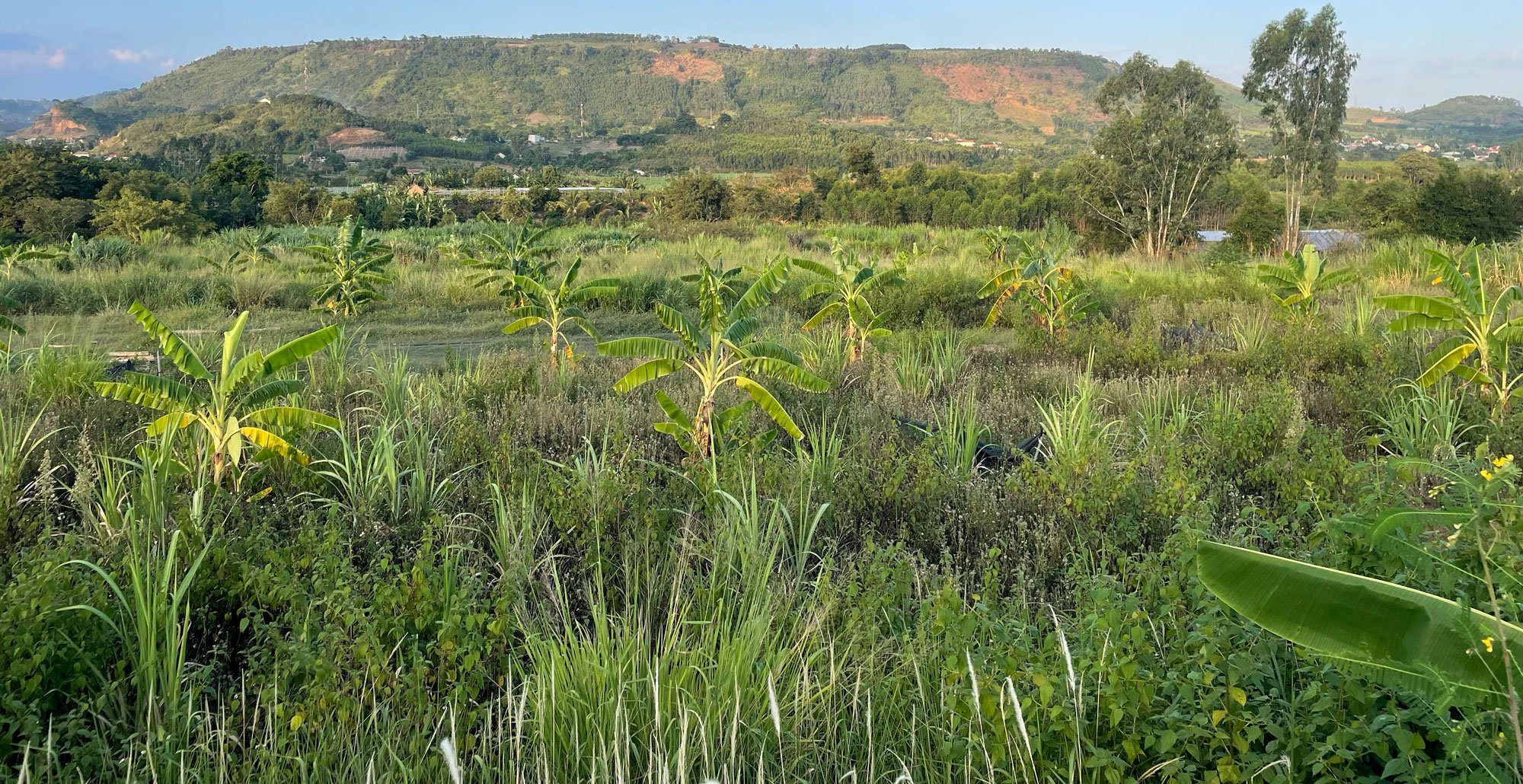
Regenerative coffee agroforestry in Gia Lai
- DefinitionDevising project idea, defining the aim and main components
- DesignSpecifying details such as time-frame, budget, target indicators, project partners and relevant steps to reach the project objectives
- Open to FinancingSearching and securing funding and investment, setting up relevant financing partnerships, and discussing payment modalities
- ImplementationExecution of feasibility studies, context analysis, plot design, planting and setting up facilities and starting with potential capacity-building
- MaintenanceOperational phase (monitoring and evaluation, impact assessments and adjustments, execution of educational programmes and long-term capacity building)
- Scaling UpScaling up phase is when the project it has already shown success by obtaining impact as well as economic results and it's ready to become replicable.
With support from Zero Foodprint Asia, reNature is working with four lead farmers in Gia Lai, Vietnam, to develop locally adapted coffee agroforestry systems. The project combines soil restoration, diversified planting, and practical learning to help farmers build more resilient farms and strengthen their livelihoods.
The initiative builds on a first phase conducted in collaboration with Sucden in 2023, when reNature surveyed 150 farmers and developed a master design for coffee agroforestry. This design now provides the foundation for four tailored Model Farms, each reflecting the farmer’s priorities, available resources and local growing conditions.
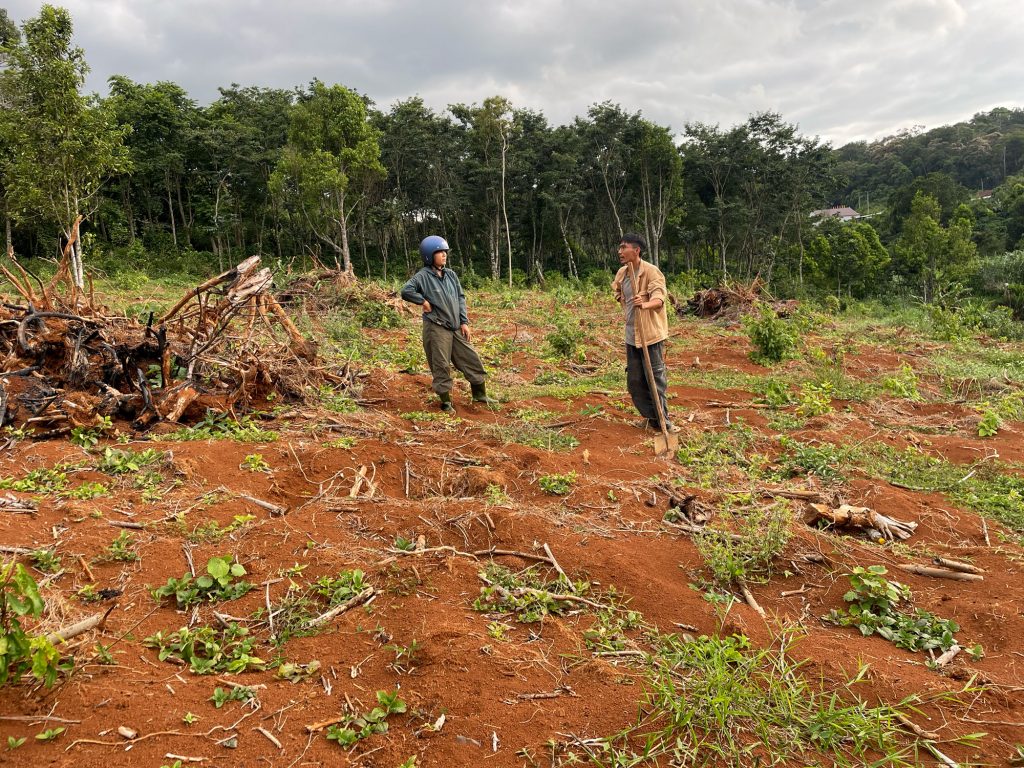
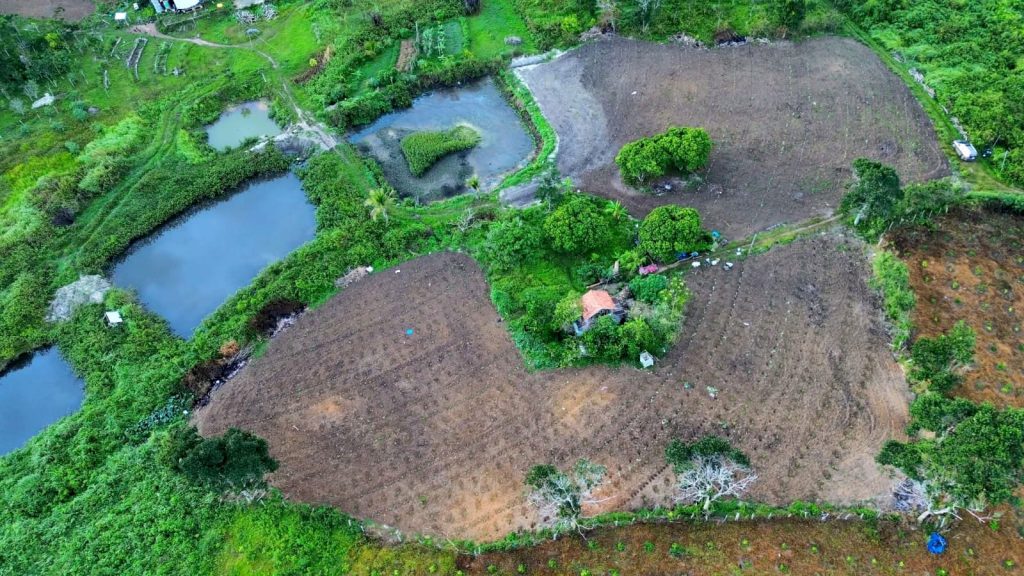
Located in the Kbang area, near Kon Chu Rang Nature Reserve, the farms differ in elevation, soil quality and existing vegetation. These differences require individual designs that connect coffee production with complementary crops, shade trees and plants grown to replenish organic matter.
Farmers need practical examples of transition.
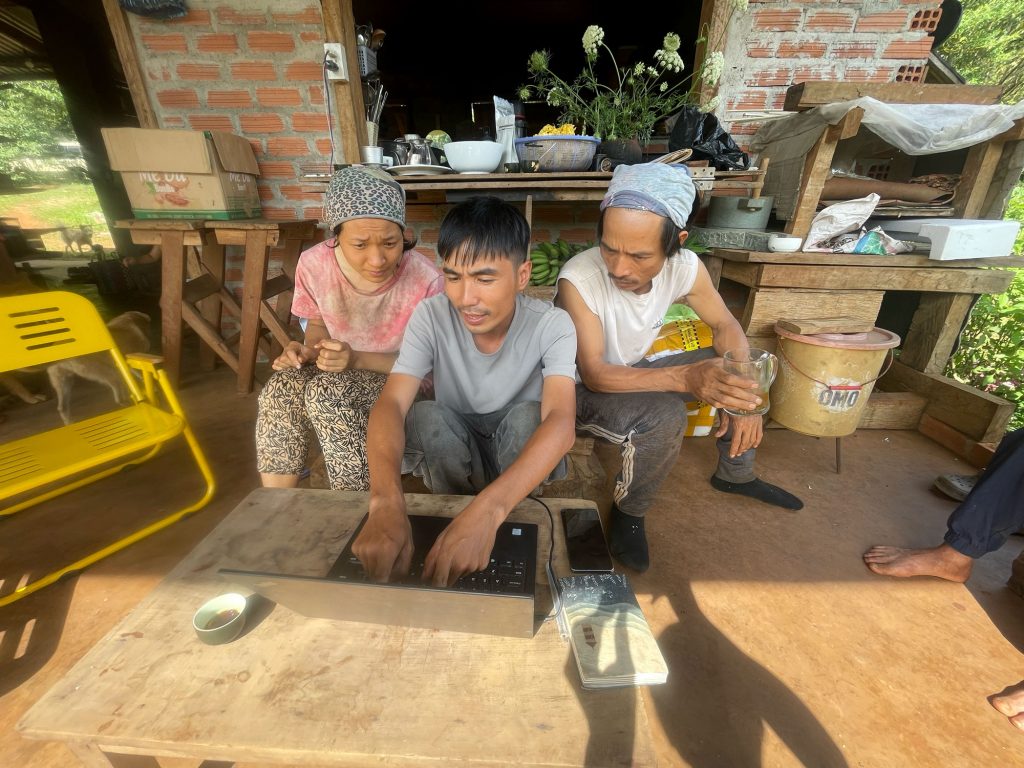
The four lead farmers are motivated to improve their farms, protect their families’ health and restore the surrounding environment. However, their assessment identified a shortage of proven local examples and tailored technical training, alongside high upfront investment costs.
Using FAO’s Tool for Agroecology Performance Evaluation (TAPE), reNature assessed each farmer’s practices and circumstances. The findings showed that reducing synthetic inputs has not yet translated into well-integrated, productive farming systems. The Model Farms will demonstrate how diversified planting and active soil management can help bridge this gap.
Climate shocks and specialized production threaten livelihoods.
Farmers identified extreme weather and climate shocks as major barriers, while market price fluctuations add further uncertainty. Field visits documented struggling coffee production and a durian orchard affected by frost.
The designs respond to these challenges by selecting coffee varieties and companion crops suited to each plot. Robusta, Arabica and, on one farm, Liberica are included according to local conditions and farmer preferences. Short-term crops will provide opportunities for earlier harvests while coffee and longer-term trees become established.
Soil restoration comes first.
Laboratory analysis found acidic soils across all four farms, with varying organic matter levels and nutrient availability. Some plots also showed compaction, limited moisture retention or exposed soil vulnerable to erosion.
Land preparation will therefore include lime applications to address acidity, organic fertilisation and tailored nutrient management. The planting designs incorporate species that produce biomass for mulching and nutrient recycling, helping protect the soil and support the developing coffee system.
Diversification must work for the household.
Each design combines coffee with short-term crops, longer-term productive trees and biomass species. Depending on the farm, these include maize, peanut, pineapple, chili, ginger, citrus, mangosteen and macadamia.
Banana and papaya are included primarily to supply biomass. Planting arrangements and pruning schedules are designed around the household’s labour capacity, balancing crop production with the ongoing management needed to build a functioning agroforestry system.
Four Model Farms as a foundation for wider adoption
The project translates a regional master design into practical systems for four lead farmers: Alang Hai, Hung Tran, Viet Anh Huong and Ms Nghi.
The August 2026 report scheduled implementation to begin in September and continue through the final months of 2026. Following establishment, a capacity-building programme is planned for farmers from the surrounding community.
By combining demonstration plots with practical training, the project aims to make regenerative coffee farming more accessible. The four Model Farms will provide places to observe results, exchange experience, and learn how to adapt agroforestry to different farm conditions.

Open to source regen coffee from Vietnam?
Contact us for a cupJournal

How to make coffee become regenerative


