A Cacao Agroforestry Design for Toumbokro, Côte D’Ivoire
- DefinitionDevising project idea, defining the aim and main components
- DesignSpecifying details such as time-frame, budget, target indicators, project partners and relevant steps to reach the project objectives
- Open to FinancingSearching and securing funding and investment, setting up relevant financing partnerships, and discussing payment modalities
- ImplementationExecution of feasibility studies, context analysis, plot design, planting and setting up facilities and starting with potential capacity-building
- MaintenanceOperational phase (monitoring and evaluation, impact assessments and adjustments, execution of educational programmes and long-term capacity building)
- Scaling UpScaling up phase is when the project it has already shown success by obtaining impact as well as economic results and it's ready to become replicable.
In Toumbokro, central Côte d’Ivoire, a one hectare cacao agroforestry plot has been established as part of reNature’s contribution to the HortiNord programme. Funded by the Dutch Ministry of Foreign Affairs through the Netherlands Embassy in Abidjan, HortiNord is a landscape scale initiative aimed at transforming agriculture in the region through demonstration, training, and incubation of young farmers.
The cacao plot was implemented in parallel and is expected to support the programme’s future training components, particularly those focused on agroecology and youth engagement.
Positioned near the agroecological demonstration site and close to the main water source, the plot serves a dual purpose: it functions as a working model for regenerative cacao production, and as a practical reference point for students, farmers, and local partners looking to test agroforestry design in a real world setting.
Design Priorities and Structure
The design is based on a stratified agroforestry system tailored to the local context. Cacao forms the backbone, intercropped with banana, yam, and citrus. These are layered with fruiting shade trees such as Kplé and Petit kola, and upper canopy forest species like Fraké, Makore, and Framiré.
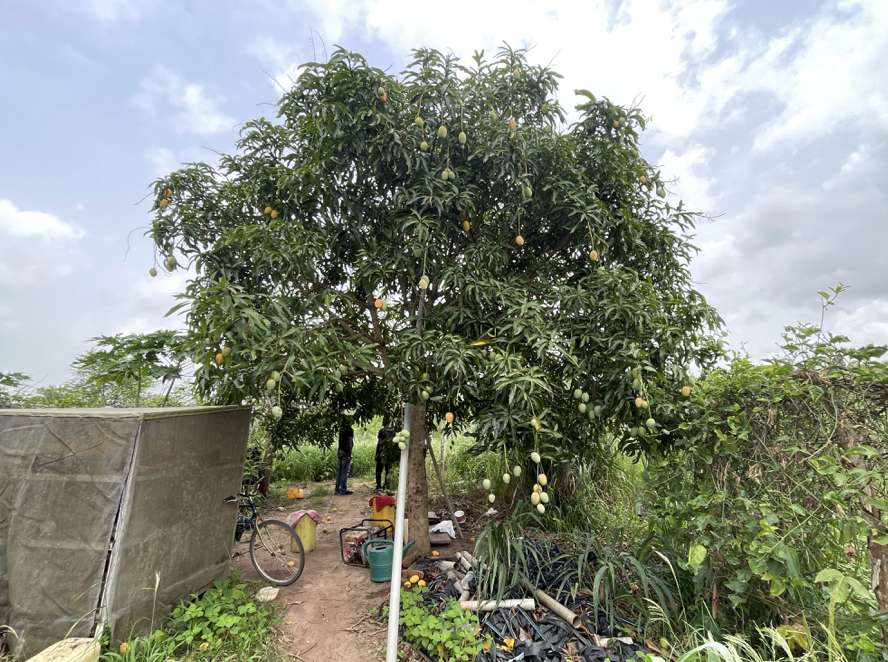
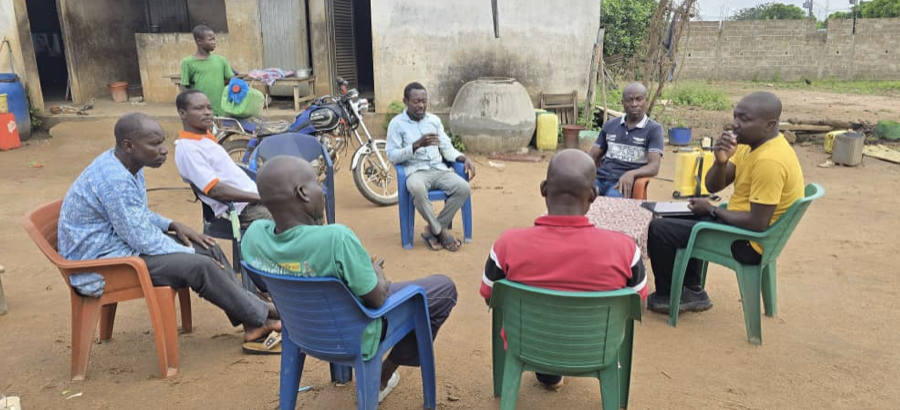
Species were selected through a mix of technical criteria: root depth, shade provision, nutrient contribution, and farmer input. During early stage discussions in Yamoussoukro, farmers identified shade loss, declining soil fertility, and irregular rainfall as key challenges. Many had already begun diversifying with avocado and orange trees, and expressed interest in expanding access to fast growing shade and fruit species.
The planting layout accounts for spatial requirements, growth stages, and market timelines. Yams are harvested within the first year. Bananas begin producing in year two. Cacao and citrus come online from year four, and forest species reach maturity over the longer term.
Implementation: A Practical Setup
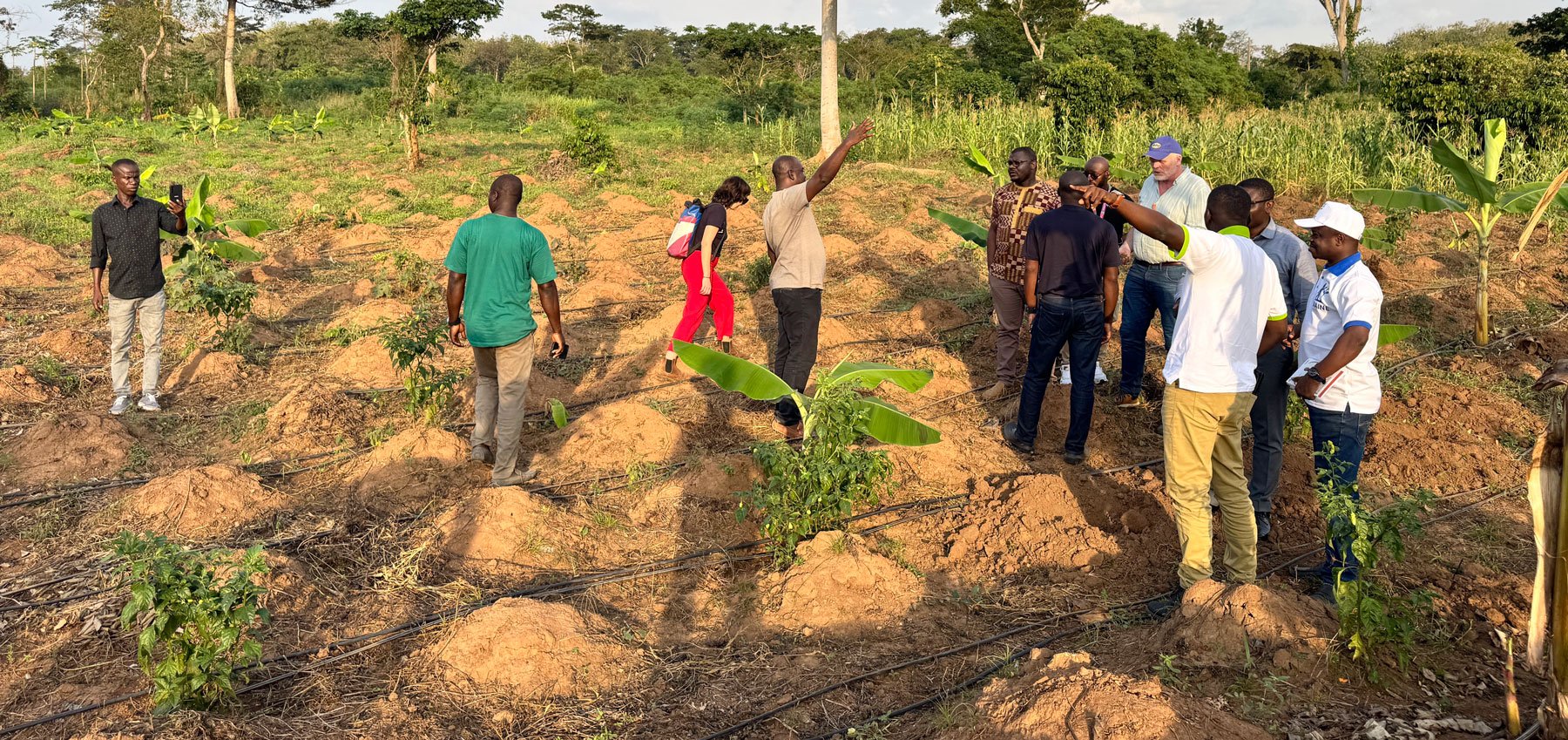
A model farm was developed which is directly adjacent to the agroecological training area, simplifying irrigation planning, site access, and monitoring.
A nursery was established between the two plots to serve both. Seedlings were sourced through a combination of local producers and institutions: STAG provided forest and timber species, CNRA supplied grafted citrus varieties, and CCC facilitated access to certified cacao seed. Banana and yam cuttings came from community networks. Young community members were trained to manage the nursery and support the planting process.
Irrigation was designed by ASFA, drawing from the nearby lake. The system supports early stage tree survival during the dry season and aligns with the site’s natural slope.
Looking Ahead
The model farm is designed for replication, not dependency. It should operate as a mature, self-sustaining agroforest and a practical demonstration of diversified, regenerative cocoa production. Its training materials, maintenance model, and monitoring system will be transferred to cooperative staff and extension workers, enabling them to establish new plots independently.
Blended finance is central to achieving scale. Grant funding can cover demonstration, training, technical assistance, and early-stage risks, while affordable loans enable farmers to invest in farm conversion. Repayments remain within the cooperative’s revolving fund, financing successive farmer cohorts. In this way, one initial investment builds both permanent local capacity and reusable capital.
As the farm develops, early harvests and monitoring data will strengthen the model and support market access, traceability, and regulatory compliance. The site therefore provides more than a demonstration: it creates a locally owned platform through which training, finance, and regenerative practices can expand across the cooperative system.