

Regenerating ageing Cocoa Farms through Inga Agroforestry
- DefinitionDevising project idea, defining the aim and main components
- DesignSpecifying details such as time-frame, budget, target indicators, project partners and relevant steps to reach the project objectives
- Open to FinancingSearching and securing funding and investment, setting up relevant financing partnerships, and discussing payment modalities
- ImplementationExecution of feasibility studies, context analysis, plot design, planting and setting up facilities and starting with potential capacity-building
- MaintenanceOperational phase (monitoring and evaluation, impact assessments and adjustments, execution of educational programmes and long-term capacity building)
- Scaling UpScaling up phase is when the project it has already shown success by obtaining impact as well as economic results and it's ready to become replicable.
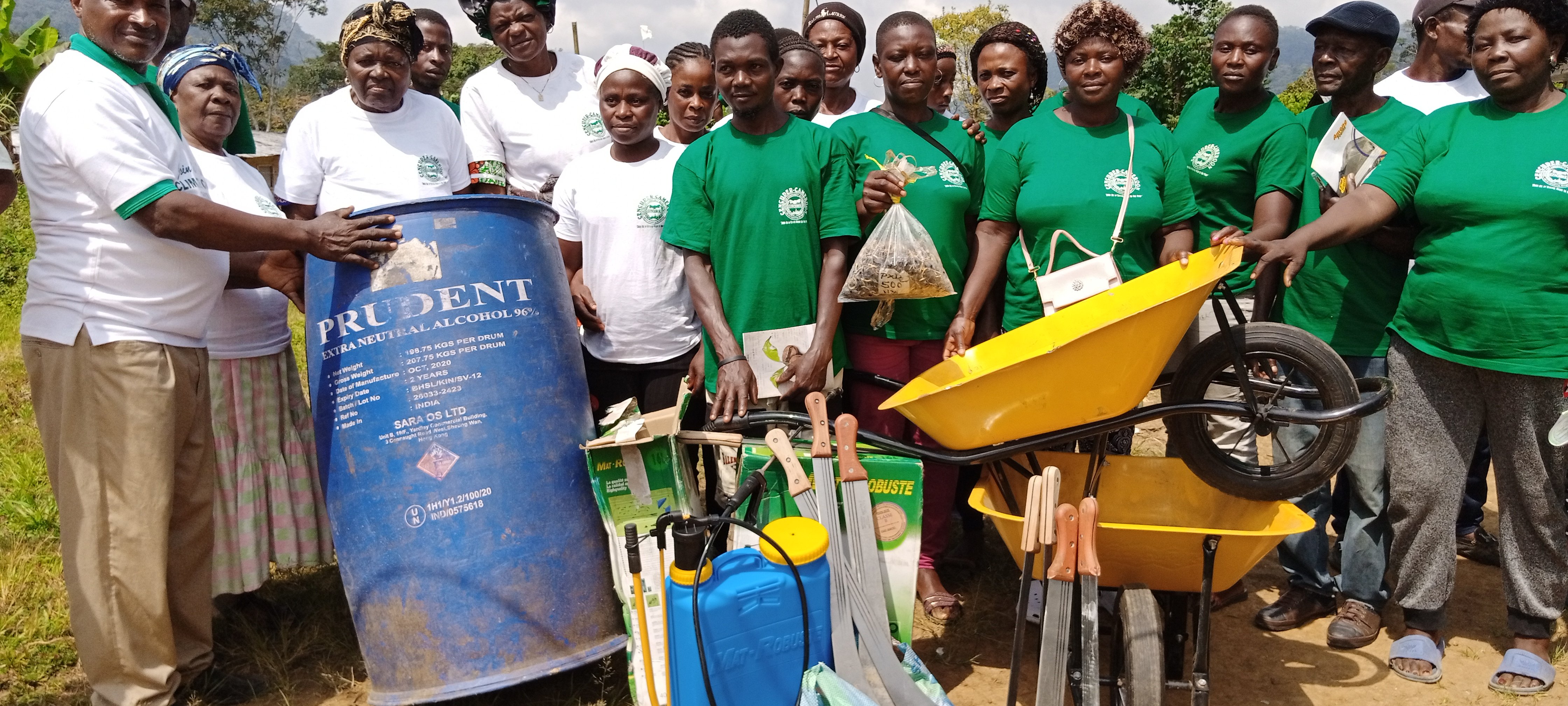
Cocoa is Cameroon’s main cash crop, yet many farms face declining yields due to aging trees, soil degradation, drought, and rising fertilizer costs. CENCUDER proposes the establishment of a 5-hectare regenerative Model Farm in Bangem, South West Cameroon, to restore ageing cocoa farms using Inga alley cropping and diversified agroforestry systems.
The Model Farm will serve as a training and demonstration place for 100-200 smallholder farmers, equipping them with practical skills in nursery management, organic soil fertility, climate adaptation, and biodiversity conservation. Improved cocoa varieties, Inga seedlings, and complementary crops such as plantain and oil palm will be integrated to increase productivity and resilience. Building on CENCUDER’s proven experience—having transplanted over 25,000 cocoa and Inga seedlings and regenerated 250 farms —this project will scale regenerative practices while strengthening farmer incomes and environmental stewardship.
How Can Inga Agroforestry Restore Cocoa Landscapes?
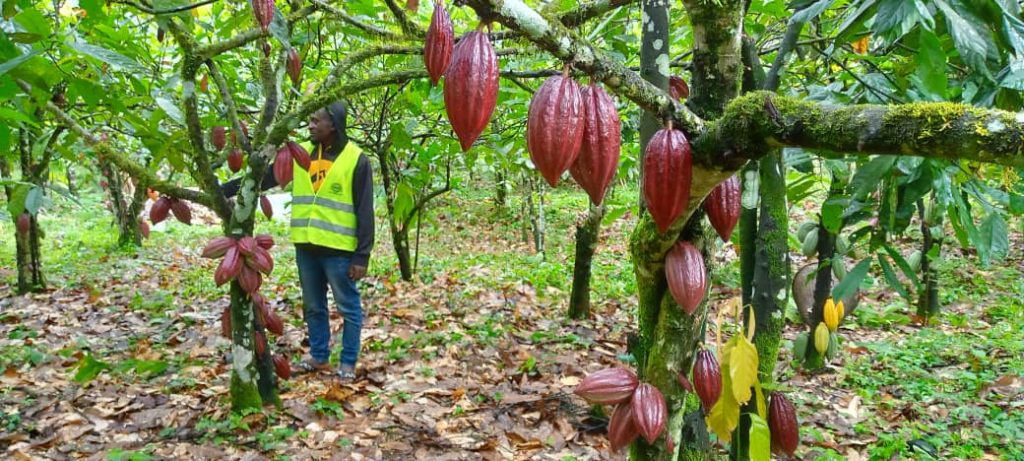
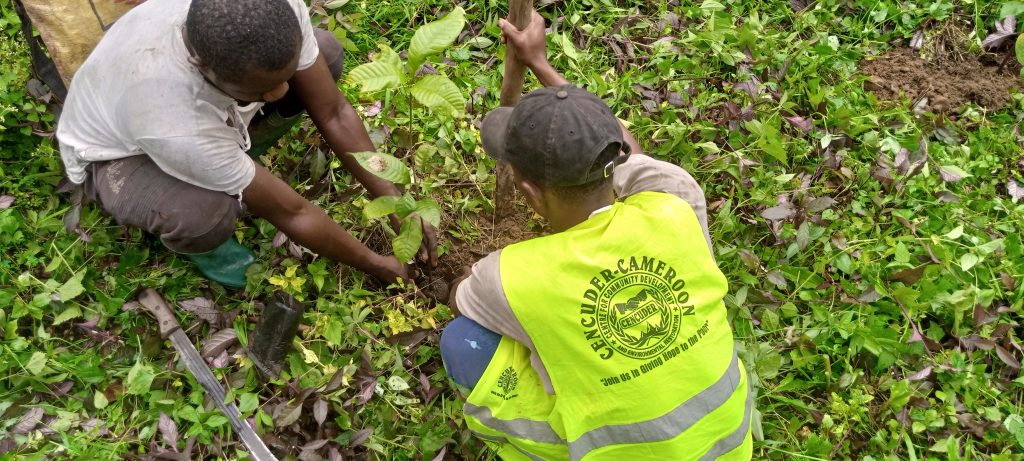
The project will establish a 5-hectare Model Farm on locally secured farmland to demonstrate Inga alley cropping integrated with improved cocoa varieties and diversified shade systems. Inga, a fast-growing nitrogen-fixing tree, improves soil fertility, increases organic matter, suppresses weeds, and enhances water retention—naturally restoring degraded cocoa farms. Farmers will receive hands-on training in nursery establishment, seedling management, transplanting techniques, organic composting, and biodiversity conservation. The Model Farm will function as a learning hub where farmers observe results directly and replicate the system on their own land.
How Will This Project Restore the Environment?
By integrating Inga and diversified shade trees into cocoa farms, the project will rebuild soil organic matter, enhance nitrogen availability, and reduce dependency on chemical fertilizers. Increased tree cover will improve biodiversity corridors and reduce pressure on surrounding rainforest ecosystems. Regenerated cocoa systems sequester carbon, reduce erosion, and enhance water infiltration—strengthening climate resilience. By intensifying production sustainably on existing farmland, the project also helps prevent further deforestation in vulnerable forest-edge communities.
How Will Farmers and Communities Benefit?
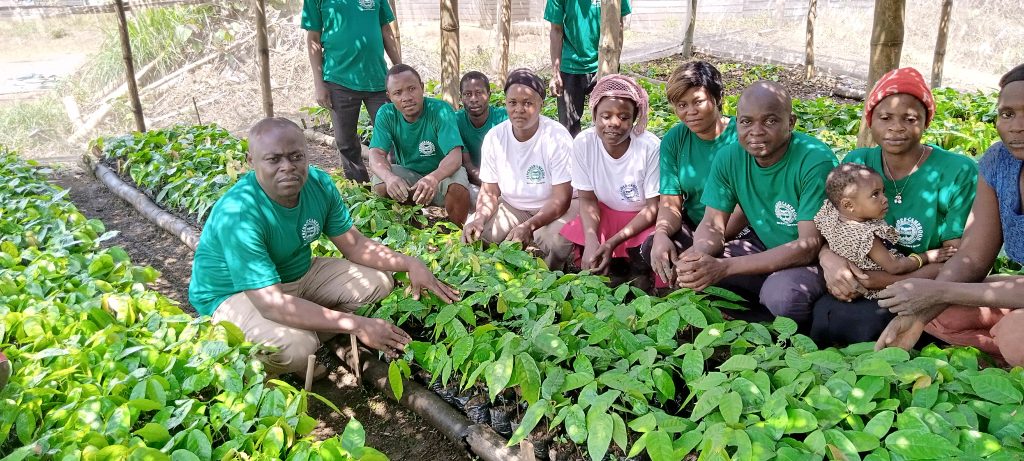
The Model Farm will directly train 100–200 farmers in regenerative practices, with knowledge cascading to over 2,000 interested farmers in surrounding communities. Farmers will gain practical skills, improved planting materials, and access to climate-smart techniques that increase confidence and long-term food security. The project strengthens community cohesion, empowers women farmers, and builds local technical capacity through CENCUDER’s experienced agricultural team. As seen in past programs, farmer participation and enthusiasm are high, ensuring strong local ownership.
How Does It Strengthen Rural Economies?
Regenerative cocoa agroforestry diversifies income streams through additional crops such as plantain, kola nut, and oil palm. Improved cocoa varieties and healthier soils increase productivity and farm resilience, stabilizing household income. By reducing input costs and increasing yields, farmers achieve greater economic independence. Over time, diversified agroforestry systems create more stable revenue flows and reduce vulnerability to climate and market shocks. This strengthens long-term rural economic resilience while maintaining ecological integrity.
A Scalable Model for Climate-Resilient Cocoa
This project represents a practical, farmer-driven pathway toward regenerative cocoa production in Cameroon. By combining proven local experience with a structured Model Farm approach, it creates a replicable system for landscape restoration, poverty reduction, and climate adaptation. With the right financial partnership, this initiative can transform aging cocoa farms into resilient agroforestry systems—benefiting farmers, communities, and the environment for generations to come.