

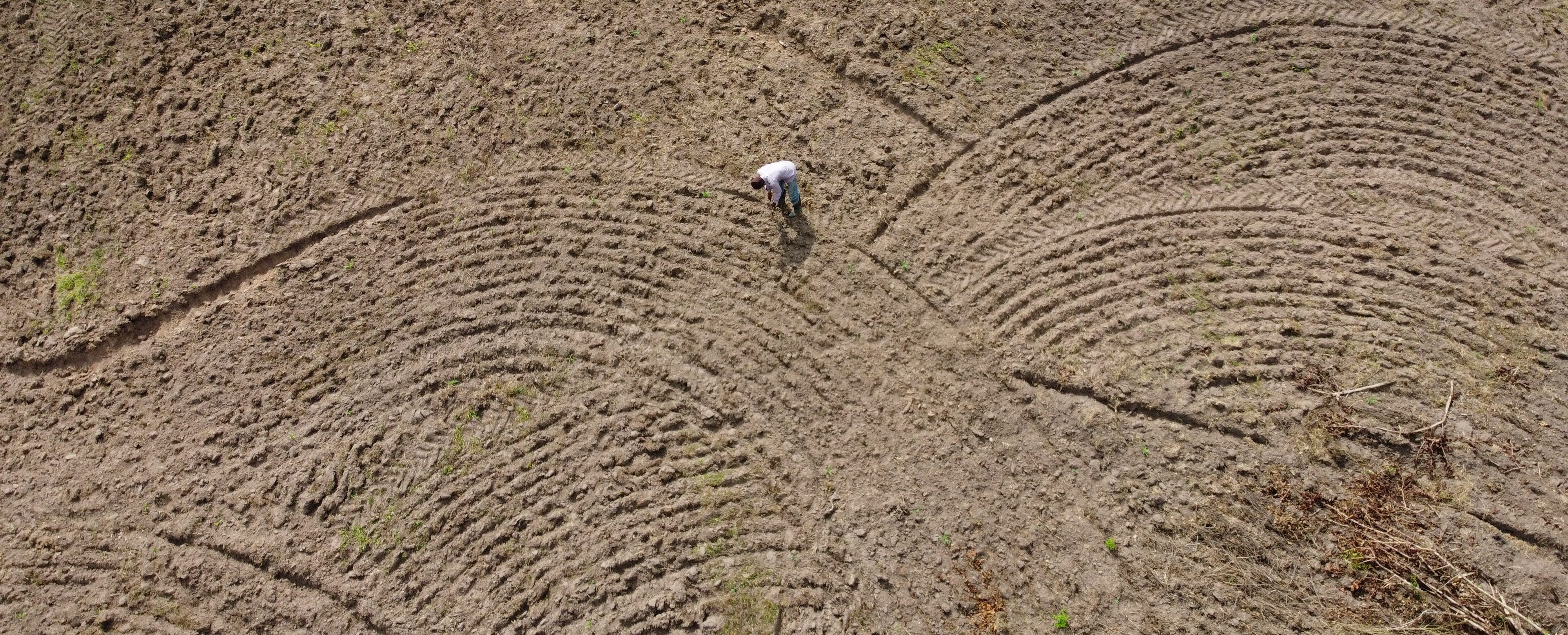
From Degraded Soils to Regenerative Scale: The Farmgo Transformation
- DefinitionDevising project idea, defining the aim and main components
- DesignSpecifying details such as time-frame, budget, target indicators, project partners and relevant steps to reach the project objectives
- Open to FinancingSearching and securing funding and investment, setting up relevant financing partnerships, and discussing payment modalities
- ImplementationExecution of feasibility studies, context analysis, plot design, planting and setting up facilities and starting with potential capacity-building
- MaintenanceOperational phase (monitoring and evaluation, impact assessments and adjustments, execution of educational programmes and long-term capacity building)
- Scaling UpScaling up phase is when the project it has already shown success by obtaining impact as well as economic results and it's ready to become replicable.
Farmgo’s approach is built around a multi-functional regenerative transition model that mimics natural ecosystems to restore soil health while maintaining productivity. The system combines vertical crop structuring to optimize light use, continuous soil cover to prevent erosion, and integrated nitrogen fixation to naturally replenish soil fertility. By diversifying production and stacking functions within the same land area, the model improves nutrient cycling, enhances water retention, and reduces dependency on synthetic inputs.
Initial implementation targets 30 hectares for the implementation of a Model Farm, with projected yield stabilization within 18–24 months. With access to 400 hectares of land, Farmgo has a rare opportunity to scale this system rapidly. Combined with existing infrastructure, such as drones, sensors, and digital farm management tools, the project enables a data-driven regenerative transition from pilot to full-scale deployment.
Why are soils losing their strength?
Ogun State’s farming potential is high, but years of monocropping and chemical overuse have weakened the very foundation that agriculture depends on: healthy soil. Declining fertility reduces yields, raises dependence on external inputs, and makes farms more vulnerable to erratic weather and market shocks. In systems where intercropping could help rebuild soil life and diversify production, labor-intensive tasks such as manual weeding can become costly barriers. At the same time, regenerative agriculture knowledge remains limited in the region, leaving many farmers without the technical support needed to shift practices confidently. This challenge is bigger than one farm. It affects the productivity, profitability, and ecological resilience of a broader 2,000-hectare farming community around Farmgo. Without a practical model that proves regenerative agriculture can work at scale in local conditions, soil degradation, rising input costs, and biodiversity loss are likely to continue. The region needs a demonstration that restoration and business performance can grow together.
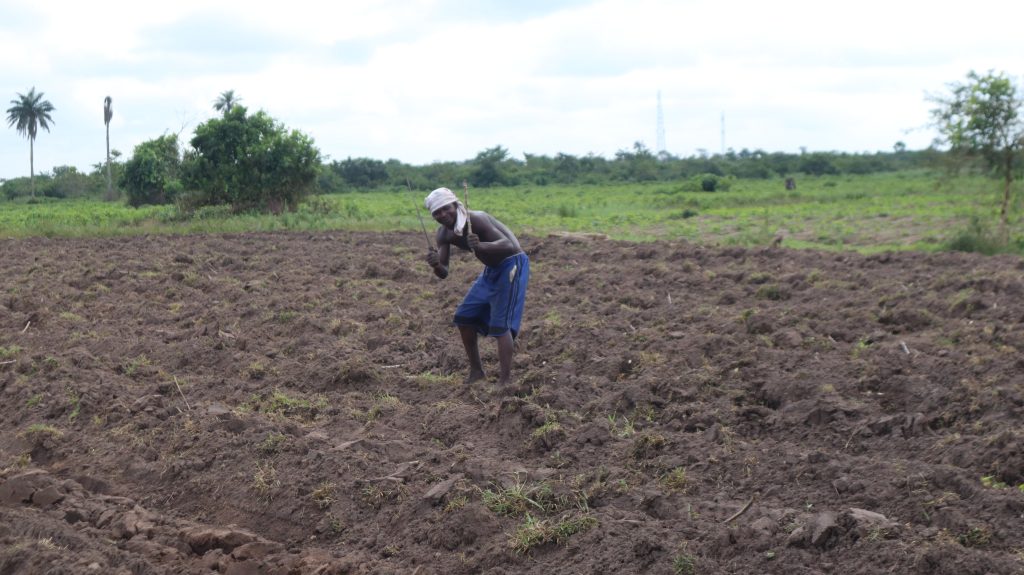
How can Farmgo lead the transition?
Farmgo’s approach is built around a multi-functional regenerative farming system that mimics natural ecosystems to restore soil health while maintaining productivity. The system combines vertical crop structuring to optimize light use, continuous soil cover to prevent erosion, and integrated nitrogen fixation to naturally replenish soil fertility. By diversifying production and stacking functions within the same land area, the model improves nutrient cycling, enhances water retention, and reduces dependency on synthetic inputs.
Initial implementation targets 30 hectares, with projected yield stabilization within 18–24 months. With access to 400 hectares of land, Farmgo has a rare opportunity to scale this system rapidly. Combined with existing infrastructure, such as drones, sensors, and digital farm management tools, the project enables a data-driven regenerative transition from pilot to full-scale deployment.
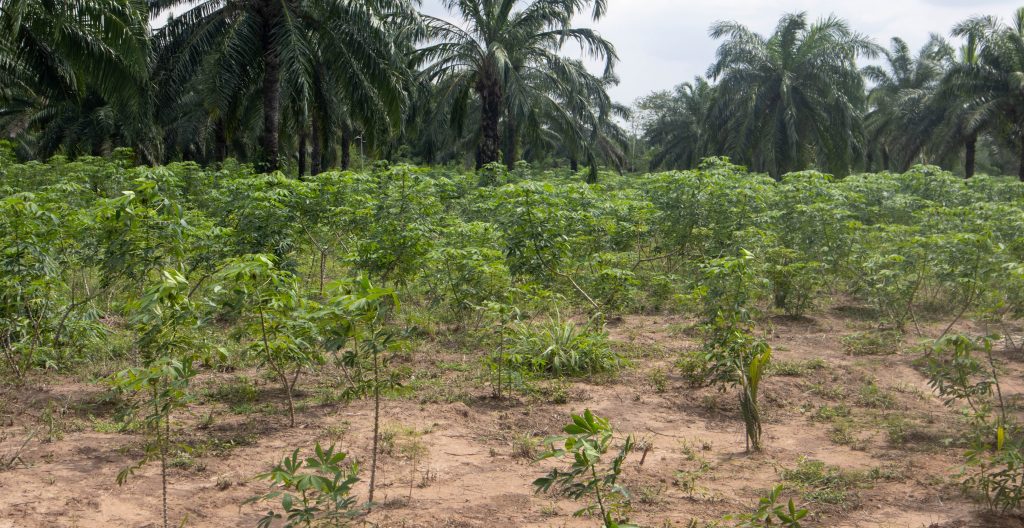
Can regeneration restore this landscape?
Yes, this project has strong environmental potential because it addresses soil degradation directly while improving the wider farm ecosystem. Regenerative crop rotation, composting, intercropping, erosion control, and biochar trials can rebuild soil organic matter, improve water retention, and reduce dependence on synthetic fertilizers. Climate-smart oil palm development also creates longer-term potential for carbon sequestration. Together, these practices can strengthen biodiversity, improve ecological resilience, and create measurable progress toward climate and land restoration goals in southwest Nigeria.
Who benefits beyond the farm?
The social impact reaches beyond Farmgo’s core team. The project directly supports farmers and workers involved in current operations, while also creating a practical knowledge hub for a much larger surrounding farming community. In a region where awareness of regenerative agriculture is still limited, Farmgo can demonstrate what a successful transition looks like in real conditions. That visibility matters. Training, shared learning, and local proof of success can help neighboring farmers adopt better practices, improving confidence, skills, and long-term community resilience.
Can regeneration improve profitability too?
The economic case is strong. Farmgo already operates within established B2B channels, supplying industrial buyers and commodity platforms in a market with solid demand for cassava, maize, and palm products. The business also presents itself as a technology-driven, sustainability-focused agribusiness with strong operational systems and market orientation. Regenerative improvements can reduce input dependence, improve yield stability, and lower exposure to fertilizer cost inflation over time. With expected reductions in input costs and stronger long-term margins, the transition is not only environmentally sound but commercially attractive.
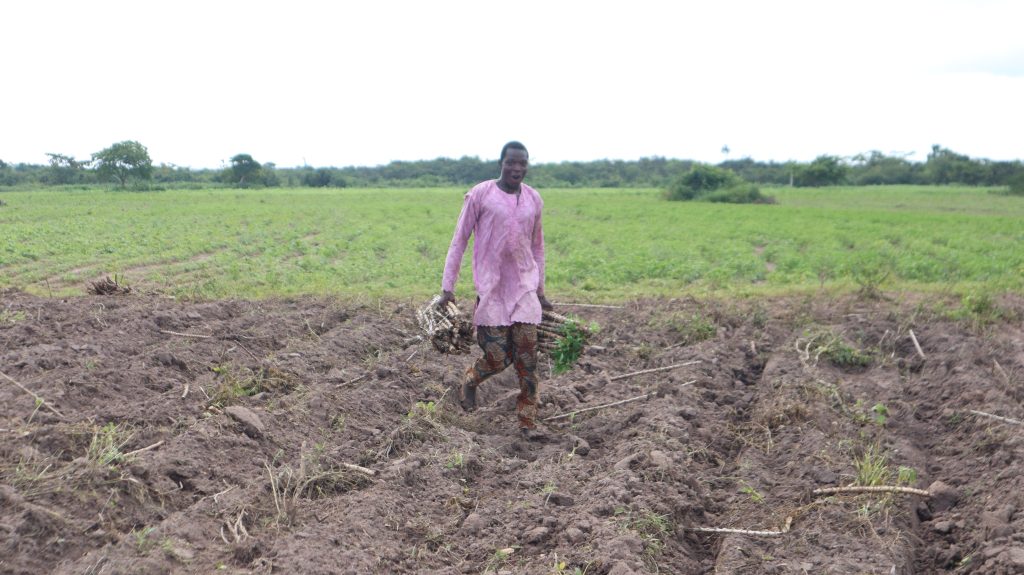
A scalable model for Nigeria
Farmgo represents an exciting opportunity to show that regenerative agriculture in Nigeria can be both practical and profitable. With land, technology, market access, and an active pilot already in place, the company has the ingredients needed to scale impact quickly. reNature’s role would be to turn those ingredients into a coherent regenerative system with measurable outcomes. If successful, Farmgo could become a leading example of soil restoration, resilient production, and community-centered agricultural transformation in Ogun State and beyond.n, resilient production, and community-centered agricultural transformation in Ogun State and beyond.