

Regenerating Cocoa, Ghana
- DefinitionDevising project idea, defining the aim and main components
- DesignSpecifying details such as time-frame, budget, target indicators, project partners and relevant steps to reach the project objectives
- Open to FinancingSearching and securing funding and investment, setting up relevant financing partnerships, and discussing payment modalities
- ImplementationExecution of feasibility studies, context analysis, plot design, planting and setting up facilities and starting with potential capacity-building
- MaintenanceOperational phase (monitoring and evaluation, impact assessments and adjustments, execution of educational programmes and long-term capacity building)
- Scaling UpScaling up phase is when the project it has already shown success by obtaining impact as well as economic results and it's ready to become replicable.
A Sector at a Crossroads
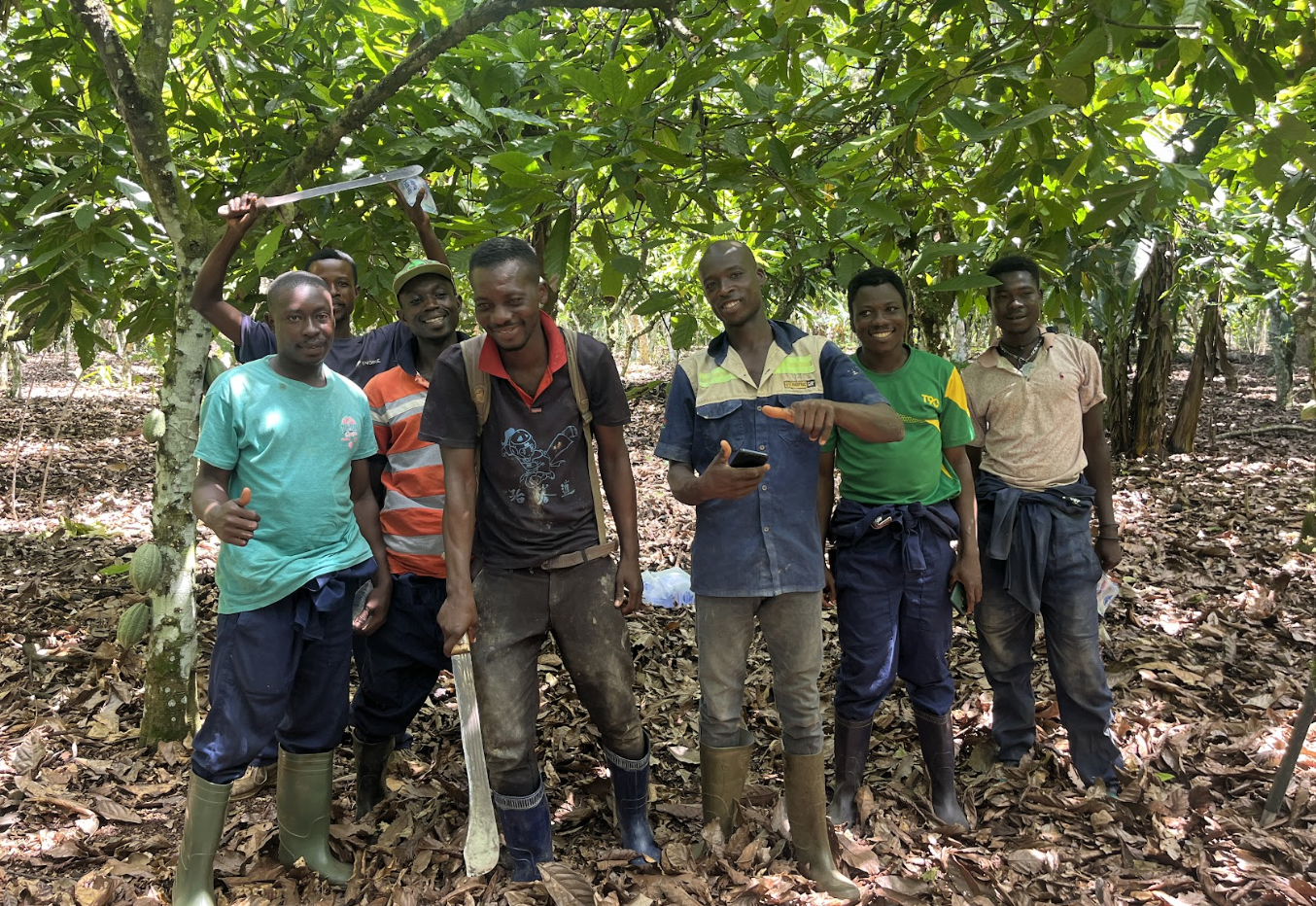
In the cocoa heartlands of Ghana, farmers walk their land with an awareness of its changing rhythms. For generations, these soils have been their legacy, sustenance, and future. But today, the once rich soils now struggle to support the trees in a natural way that have defined Ghana’s agricultural identity. The rains that once arrived with reassuring regularity now come either too soon or too late and either to less or too much, and the shade trees that once stood as silent guardians of the cocoa groves have disappeared.
Ghana’s cocoa industry, the backbone of the country’s economy and the livelihood of millions, is at a turning point. Years of monoculture farming, driven by the relentless demand for higher yields, have drained the land of its fertility. The forests that once stabilized the climate and protected biodiversity have been cleared, exposing farms to the full force of extreme weather and worsening pest pressures. To maintain productivity, farmers have become increasingly reliant on synthetic fertilizers, but these inputs offer only temporary relief, damaging the soil further.
Yet amidst these challenges, a transformation is taking root. Farmers are beginning to look at their land not as something to be nurtured for future generations. Across cocoa farms, new trees are being planted – not just cocoa, but shade trees, nitrogen fixing plants, and companion crops that restore life to the soil. The land is recovering, the trees are growing stronger, and a new way of farming is emerging – one that does not just sustain cocoa but regenerates its foundation.
From Extraction to Regeneration: A Systemic Shift
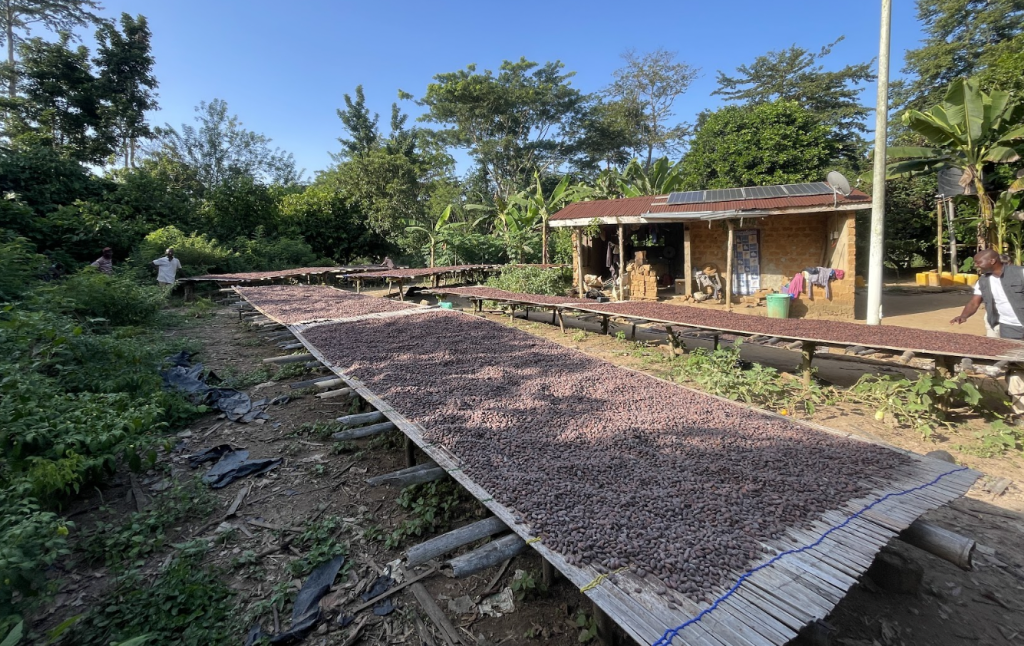
The crisis facing Ghana’s cocoa sector is not just an agricultural one; it is systemic, embedded in the way cocoa has been grown and traded for decades. For too long, the industry has been built on an extractive model – one that prioritizes short term yield gains over longterm sustainability. The consequences of this approach are now impossible to ignore. In the last couple of years, harvests have become declining, incomes remain volatile, and the very future of cocoa farming in Ghana hangs in the balance.
In response, a new movement is emerging. This movement reimagines cocoa farming through the lens of agroforestry. This is not only a matter of improving farming techniques but it is also a fundamental shift in how cocoa is cultivated, how farmers are supported, and how supply chains value sustainability.
Agroforestry is proving that productivity and sustainability do not have to be opposing forces. By integrating diverse plant species alongside cocoa, farmers are replenishing the soil, reducing dependence on synthetic inputs, and enhancing resilience to climate shocks. Shade trees are returning to farms, creating cooler microclimates that protect cocoa plants from excessive heat and drought. Cover crops are stabilizing the soil, preventing erosion, and improving water retention. Pests and diseases, once rampant in monoculture systems, are naturally kept in check by a resurgence of biodiversity.
But this shift is not just happening on the farms – it is rippling through the entire cocoa sector. The Dutch government (the Dutch Embassy in Ghana, The Dutch Ministry of Foreign Affairs and the Netherlands Enterprise Agency | RVO) has been supporting reNature in recognizing the urgency of the crisis. They are actively supporting initiatives that integrate agroforestry into cocoa production, reinforcing the country’s position as a leader in sustainable agriculture. In addition, they are not only providing financial support but also fostering the exchange of expertise between Ghana and the Netherlands. Their involvement underscores the reality that the future of cocoa is not just a national issue, but a global responsibility.
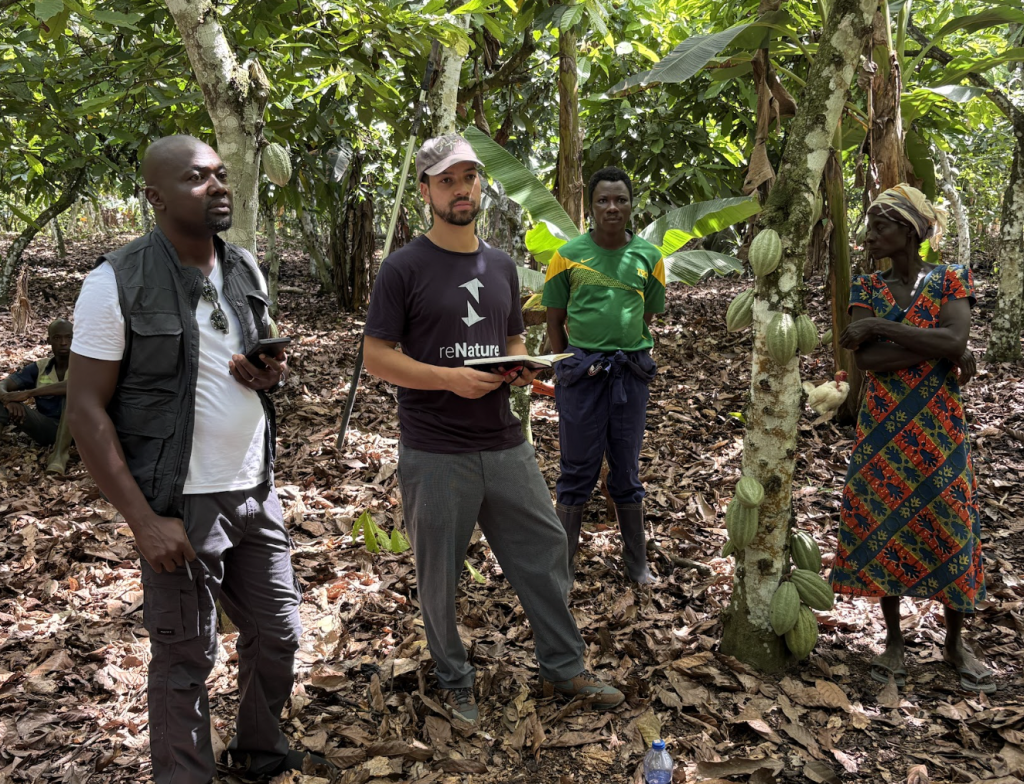
Private sector actors – cocoa traders, chocolate manufacturers, and retailers – are also recognizing that sustainability is no longer a niche concern but an economic imperative. Some companies are already committing to sourcing cocoa from farms that embrace regenerative practices, offering financial incentives to farmers who adopt these methods. As consumer demand for ethically sourced chocolate continues to grow, businesses are beginning to see that supporting regenerative cocoa does not have to be a trade off but rather a coexistence of regenerating nature whilst meeting consumer demands.
The Visit
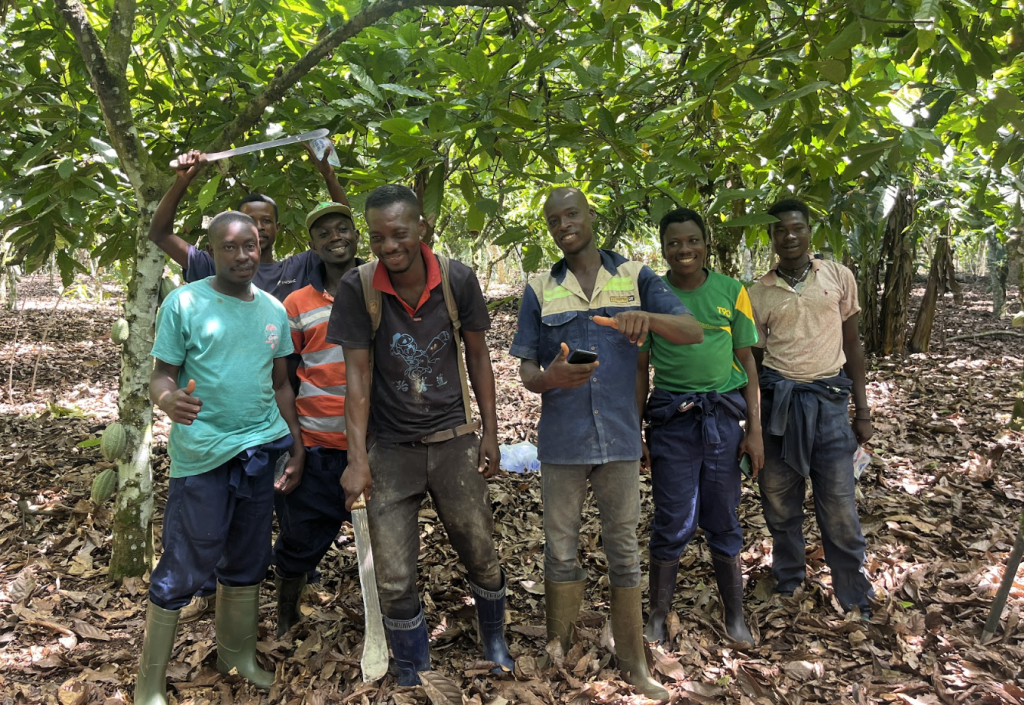
Stepping onto a farm that has adopted regenerative agriculture or agroforestry, the contrast with conventional farms is evident. The soil, previously compacted and nutrient deficient, now retains moisture, even after extended dry spells. Cocoa trees, arranged with optimized spacing, exhibit improved canopy coverage, while intercropped banana, cassava, and other companion plants contribute to soil fertility and additional income sources for farmers.
Farmers gather under the shade of a Terminalia superba tree, engaging in discussions at a farmer field school. These sessions serve as a platform for technical exchange, where those who have already transitioned to regenerative practices share insights with peers still evaluating the shift. One farmer reports stabilized yields despite regional fluctuations, attributing this to improved soil management and agroforestry integration. Another highlights intercropping’s role in enhancing food security and reducing external input dependency.
The discussions are pragmatic. While the benefits are clear, so are the transition challenges. Farmers cite initial investment requirements, knowledge gaps in implementing agroforestry models, and concerns about whether cocoa buyers will offer premiums for sustainable practices. These issues underscore the need for structured financial support, accessible technical training, and transparent market mechanisms to ensure that sustainability efforts translate into economic viability.
Beyond productivity, the broader impact of agroforestry methods is becoming apparent. Long term climate resilience, reduced pest outbreaks due to improved biodiversity, and diversification opportunities – such as integrating poultry farming or high value intercrops – are emerging advantages. The integration of digital tools, like mobile apps for traceability and productivity monitoring, is being explored to streamline farm management and enhance market access.
As initiatives such as the “Farm of the Future” model develop, key factors such as engagement with COCOBOD, soil sampling for data driven decisions, and optimizing agroforestry designs will influence the project’s scalability. Strategic alignment with existing cocoa hubs and investment in research, such as biochar applications, could further support sustainable soil restoration.
While the transition requires significant adjustments, the outlook remains forward thinking. The emphasis is not merely on maintaining cocoa yields for the next season but on developing a system that ensures long term soil health, economic stability for farmers, and alignment with climate adaptation strategies.
The Future of Cocoa in Ghana
Ghana’s cocoa industry is at a turning point. The choices made today will determine whether cocoa farming remains a viable livelihood or whether it continues down a path of diminishing returns. The shift to agroforestry represents more than an environmental necessity; it is an economic and social imperative. By restoring soil health, increasing resilience to climate change, and creating financial stability for farmers, this approach is proving that sustainability is not a cost but an investment in the future.
Scaling this transformation will require continued commitment from all stakeholders. Governments must reinforce policies that support agroforestry and reward sustainable farming. Industry leaders must follow through on sourcing commitments that incentivize regeneration. Investors and financial institutions must create pathways for farmers to access funding without excessive risk. And farmers, the backbone of this entire system, must continue to lead the way, demonstrating that regeneration is not just possible, but essential.
reNature, in collaboration with our consortium partners (Beyond Beans, SPAAK, and Carboneers), will establish a model farm demonstrating agroforestry practices that reduce dependence on costly and polluting fertilizers while promoting nature-based solutions. The farm will highlight intercropping options, diverse agroforestry techniques to enhance sustainability and productivity, the benefits of biochar, and educational initiatives to support long-term adoption.
This is not just about cocoa. It is about people, ecosystems, and the future of agriculture in Ghana and beyond. And in these farms, where new trees take root alongside old ones, where farmers exchange stories of success and lessons learned, where the soil is coming back to life change is already happening. The question is no longer whether Ghana can lead the way in sustainable cocoa production. It is how quickly the world will follow.