

The Ubuntu Project, Uganda
- DefinitionDevising project idea, defining the aim and main components
- DesignSpecifying details such as time-frame, budget, target indicators, project partners and relevant steps to reach the project objectives
- Open to FinancingSearching and securing funding and investment, setting up relevant financing partnerships, and discussing payment modalities
- ImplementationExecution of feasibility studies, context analysis, plot design, planting and setting up facilities and starting with potential capacity-building
- MaintenanceOperational phase (monitoring and evaluation, impact assessments and adjustments, execution of educational programmes and long-term capacity building)
- Scaling UpScaling up phase is when the project it has already shown success by obtaining impact as well as economic results and it's ready to become replicable.
One of the sayings in our country is Ubuntu – the essence of being human. Ubuntu speaks particularly about the fact that you can’t exist as a human being in isolation. It speaks about our interconnectedness. You can’t be human all by yourself, and when you have this quality – Ubuntu – you are known for your generosity. We think of ourselves far too frequently as just individuals, separated from one another, whereas you are connected and what you do affects the whole World. When you do well, it spreads out; it is for the whole of humanity.
Desmond Tutu
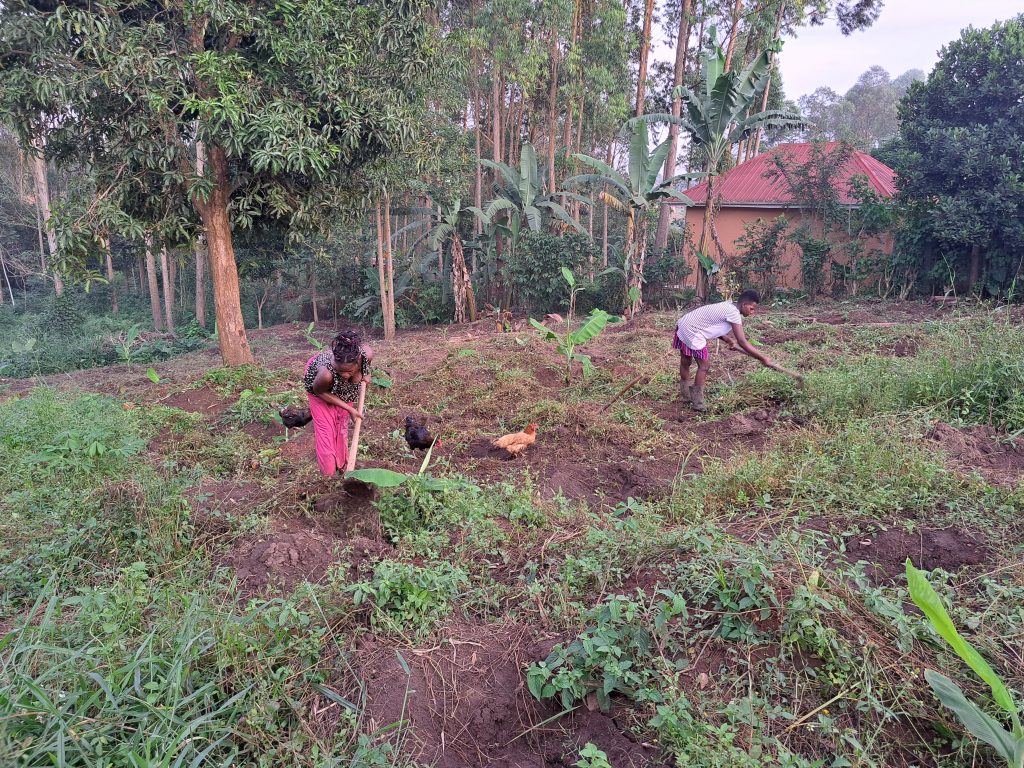
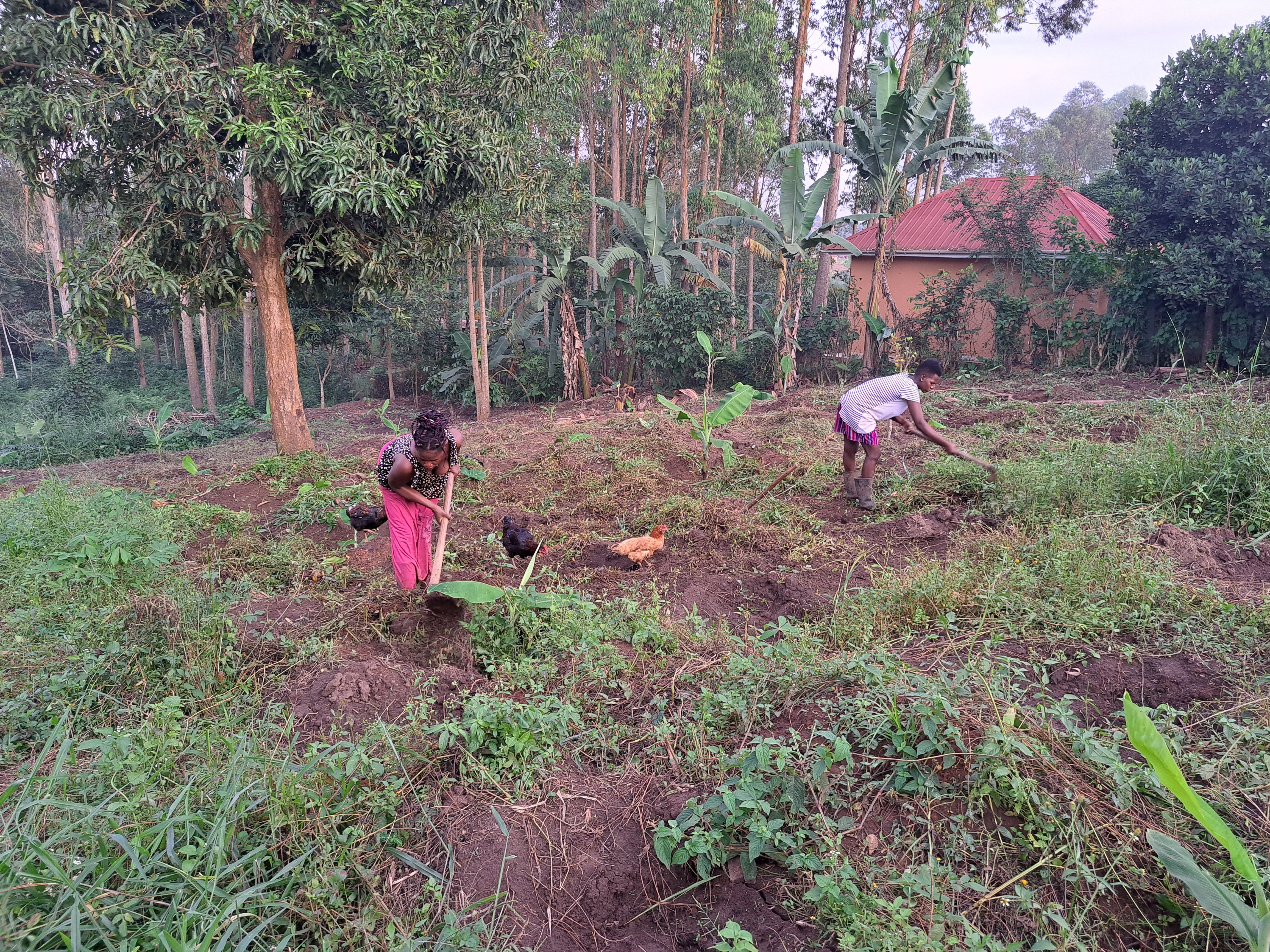
This philosophy of interconnectedness and shared responsibility serves as the foundation for The Ubuntu Project, an initiative dedicated to strengthening coffee based agroforestry systems in Uganda. At its core, the project embraces collaboration, bringing together farmers, local experts, and supportive institutions to regenerate landscapes, improve livelihoods, and foster resilience.
One of the project’s defining characteristics is its emphasis on knowledge exchange and capacity building. Through partnerships with experts from the Union Community Development Volunteers (UCDV) and other local institutions, farmers are introduced to innovative agroecological practices through model farms that allow community members to acquire the skills and confidence needed to manage their land sustainably. The project’s educational dimension not only enriches the local knowledge base but also fosters a sense of shared responsibility and empowerment.
These training sessions are informed by an interdisciplinary network of agronomists, climate scientists, economic analysts, and community organizers. Each expert brings a unique perspective, ensuring that interventions are well rounded, relevant, and attuned to both local traditions and global best practices. What emerges is a dynamic learning environment where farmers can adapt proven agroforestry methods to their specific contexts, ultimately increasing yields, diversifying income sources, and mitigating climate risks.
The Ugandan government’s supportive stance further strengthens the project’s potential impact. By recognizing the importance of agroforestry as a tool for food security and climate adaptation, local authorities are encouraging policies that align with the project’s objectives. This synergy between grassroots initiatives and government endorsement helps to scale up sustainable land management strategies and attract additional investments, partnerships, and technical support.
The Challenges
Ugandan farmers confront a range of obstacles that threaten their livelihoods and the stability of the sector. Chief among these are increasingly erratic rainfall patterns tied to climate change, limited access to lucrative, high value markets, and pervasive food insecurity that impedes both household welfare and long term investment in their farms.
Volatile weather conditions have disrupted traditional farming cycles, making it more difficult for growers to predict when to plant, irrigate, and harvest. Moreover, weak infrastructure, limited bargaining power, and insufficient market information often confine farmers to selling at low, unstable prices. As a result, many struggle to invest in quality improvements—such as better processing techniques or certification schemes—that would enhance their beans’ value and secure more reliable income streams.
\Compounding these issues is the ongoing struggle with food insecurity. Coffee provides seasonal income, but these earnings alone rarely cover all of a household’s year-round nutritional needs. Without sufficient access to diverse seeds, sustainable soil management practices, or effective extension services, many farmers cannot reliably grow enough nutritious food crops alongside coffee.
These interlinked challenges require a coordinated approach – from government, private sector, and community partners – to strengthen resilience, enhance market opportunities, and ensure both profitability and food security for Uganda’s coffee farmers. This is what UCDV has been working on for years. As reNature, we are inspired to build resilient communities by scaling up UCDV’s efforts.
Moving Forward
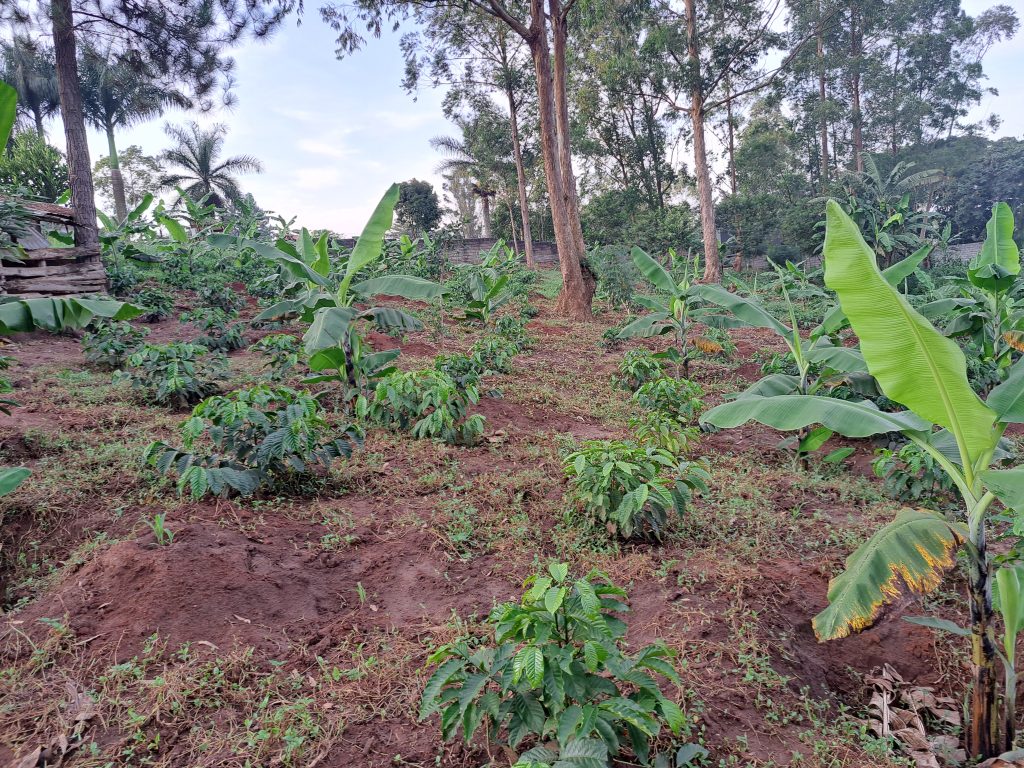
The vision is to expand these partnerships, bringing in new collaborators from the private sector, research institutions, and non-governmental organizations. Financial backing and technical assistance are critical for making advanced irrigation systems, improved seedlings, and cutting edge soil management technologies more accessible to smallholder farmers. Building these connections will help transform Ugandan coffee landscapes into resilient, productive, and ecologically balanced agroforestry systems.
In the spirit of Ubuntu, by bringing together smallholder farmers, local institutions, policy makers, and private sector allies, we foster a network of interconnected support that transforms Ugandan coffee landscapes into thriving, regenerative agroforestry systems. Now is the time to join this community of changemakers. Would you like to help us embrace Ubuntu? Do not hesitate to reach out. Let’s secure a more abundant, sustainable future for all.