

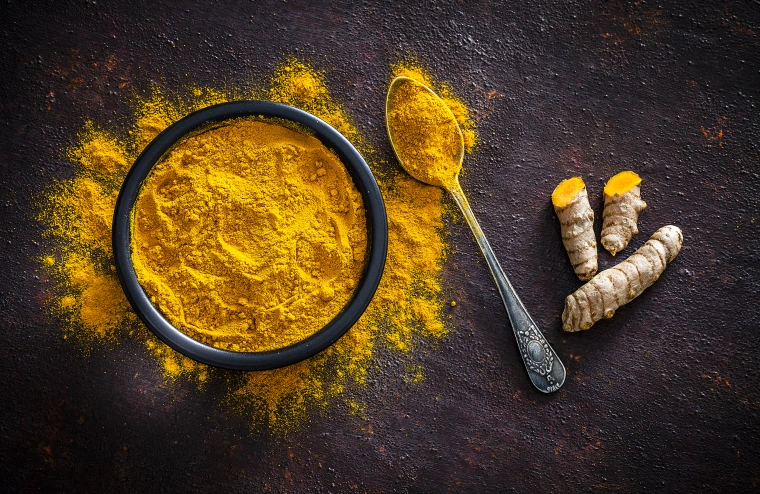
Turmeric
The “Golden Spice”, is widely known for its medicinal properties. Among India’s Adivasi communities, turmeric has long been used not only as a remedy for wounds and infections but also in purification rituals and childbirth care. In Indonesia, the Dayak people incorporate turmeric into postpartum healing practices, while among the Maasai in East Africa, turmeric infused pastes are used to treat inflammation and skin ailments. Turmeric’s role in regenerative agriculture and the modern market is just as important. Its value is expected to reach 7.2 billion euros (or 7.6 billion US dollars) by 2032.

Turmeric thrives in agroforestry setups, growing well alongside fruit trees and nitrogen fixing plants. Its fibrous roots help retain soil moisture and reduce erosion, while its natural resistance to pests minimizes reliance on chemical inputs. Traditional turmeric farming often relies on chemical fertilizers, which can degrade soil over time. Regenerative approaches, including organic composting, mulching, and diverse planting systems, help maintain soil health and improve long term yields.
With demand for turmeric increasing in health, food, and supplement industries, regenerative agriculture offers a way to ensure profitability while restoring degraded farmland.


