Capacity Building & Scaling up
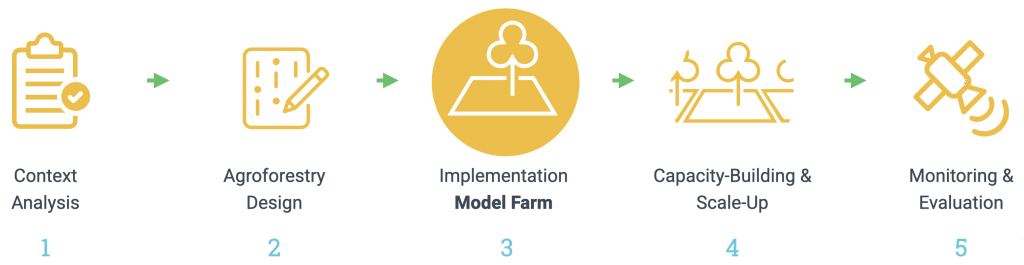
After a full crop cycle, the Model Farm is ready to become the center of excellence, the knowledge hub. The grounds will be used for mid to long-term capacity-building programs running over multiple years that build deep understanding of regenerative agriculture within the local farmers’ group.
Step 4: Training the Trainers
Scaling regenerative agriculture is not achieved by creating more fields alone. It depends on empowering local communities with the knowledge, confidence, and leadership to continue the work independently. This is why reNature places the training of local trainers — farm ambassadors — at the heart of every project. These ambassadors become the long-term stewards of regenerative transformation in their region.
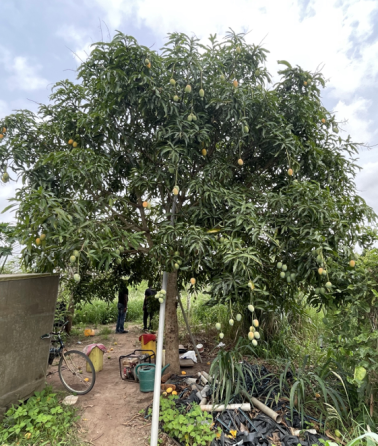
Every training process begins with a Model Farm designed specifically for the local ecosystem — its soils, climate, crops, and cultural context. This space is not simply a demonstration; it is an active learning environment, a living example. Farmers and technicians work directly with the regenerative design, gaining practical experience throughout an entire cropping cycle. By planting, managing, harvesting, and observing results together, participants build real skills that cannot be taught by theory alone.

Building Community Knowledge
As the Model Farm matures, it evolves into a Knowledge Hub where workshops, field courses, and longer training programs take place. Knowledge here is created through participation, not delivered from the top down. Local perspectives, traditions, and farming wisdom are woven into the training. This sense of joint ownership strengthens trust, relevance, and long-term engagement.
Within these learning cohorts, certain farmers, agronomists, and community members emerge as natural leaders. These individuals receive deeper, continuous training and become farm ambassadors. Their role is vital. They speak the local language, share the same challenges, and understand the nuances of the community’s agricultural practices. Because of this, they can translate regenerative principles into locally meaningful strategies and inspire their peers to adopt them.

Phasing out
The transition from Model Farm to community-wide adoption happens gradually over three to five years. During this period, farm ambassadors receive remote technical support to guide others through trials, adapt techniques, and help troubleshoot challenges. The region becomes less dependent on external experts and more confident in its own capacity. Knowledge stays local, evolves with experience, and becomes part of the community’s agricultural identity.
Training local trainers is the cornerstone of regenerative scaling. It ensures that a project does not disappear once funding ends or experts leave. Instead, it becomes a growing movement led by local champions — people who understand the land, care for their community, and carry the knowledge forward. By cultivating these ambassadors, reNature helps regenerative agriculture take root deeply and spread naturally across the landscape.
Creating Regenerative Business
A common misconception is to think implementing a regenerative agricultural system ends at farm level and training farmers in regenerative farming. reNature has learned that success also depends on the local market need, the ability to process and store the different produce, and transport the goods to urban areas.
With the support of the Swiss Leopold Bachman Foundation, reNature has developed a Regional Regenerative Entrepreneurship Program (RREP) to empower local communities to reclaim value through regenerative entrepreneurship. Local communities and their regenerative start-ups are supported by creating an ecosystem using local people’s entrepreneurship, social fabric, and self-determination to drive investment in regenerative agriculture.

Would you like to regenerate at scale?
Contact usPrevious Step: Model Farm Design & Implementation