

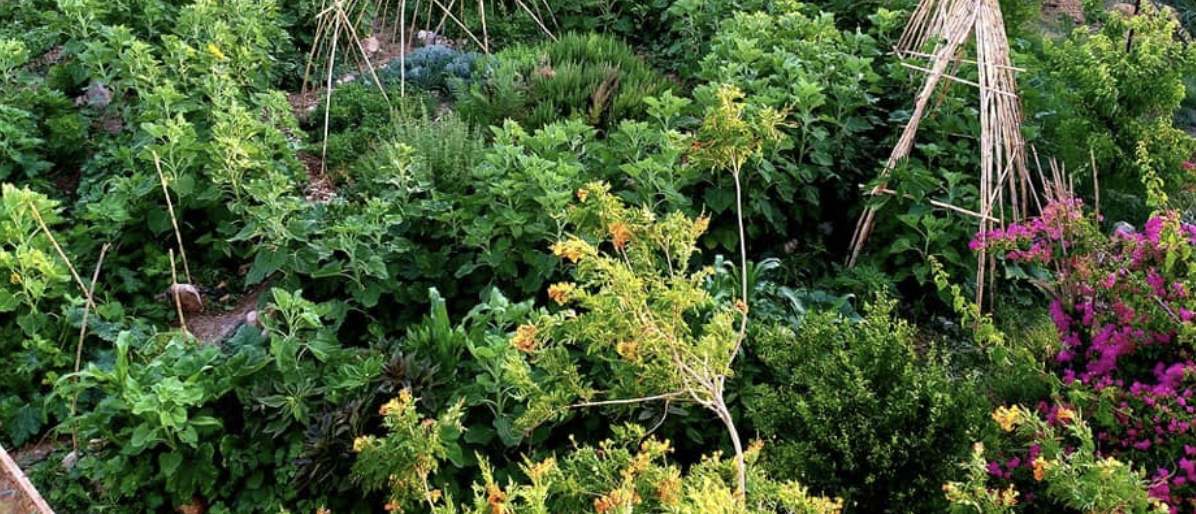
Agroforestry Educational Hub in Rajeb, Jordan
- DefinitionDevising project idea, defining the aim and main components
- DesignSpecifying details such as time-frame, budget, target indicators, project partners and relevant steps to reach the project objectives
- Open to FinancingSearching and securing funding and investment, setting up relevant financing partnerships, and discussing payment modalities
- ImplementationExecution of feasibility studies, context analysis, plot design, planting and setting up facilities and starting with potential capacity-building
- MaintenanceOperational phase (monitoring and evaluation, impact assessments and adjustments, execution of educational programmes and long-term capacity building)
- Scaling UpScaling up phase is when the project it has already shown success by obtaining impact as well as economic results and it's ready to become replicable.
Agriculture and Regenerative Development (ARD) and reNature are collaborating to design and create an educational hub in Jordan and the surrounding countries. Addressing the climate challenges requires a comprehensive approach to sustainable agriculture, local proof of concept, and community education. Having an educational hub in the area will allow farmers to adopt agroforestry practices, ensuring a more stable and secure future for communities all over the region.
ARD is demonstrating the success of regenerative agriculture on a one-hectare plot and is transforming into an educational hub for the region. They offer training programs on sustainable farming and are building a network for collaboration, knowledge sharing, and consultancy services for the establishment of new regenerative farms in the region. They have already educated farmers from Jordan, Palestine, Lebanon, Iraq, and Syria, who are now transforming their own farms into agroforestry systems. By scaling this model, the project will serve as a regional example of how regenerative techniques can improve soil health, water retention, and biodiversity, while also building economic resilience for hundreds of local farmers.

Climate change and Jordans’ agricultural sector
The agriculture sector in Jordan has been growing and has doubled its share of GDP from 2-4% in recent years driven by domestic demand. While the sector is growing, climate change has direct and indirect impacts on agricultural productivity through changing precipitation patterns, droughts, floods, extreme temperatures, and pests and diseases. Climate change can cause habitats to be lost or fragmented, which disrupts local wildlife and reduces biodiversity. Rising temperatures and shifting rainfall patterns put pressure on ecosystems, making them more vulnerable to soil erosion, wildfires, and pest outbreaks.

Jordans’ water scarcity
Jordan is considered to be among the world’s most vulnerable to drought as a result of climate change, according to the United Nations. Due to changing precipitation patterns, mismanagement of the land and over-exploitation of the resources, water availability and retention are increasingly under pressure. The soil quality is degrading rapidly and is unable to retain as much water. Many people in the field over-rely on chemical inputs and traditional farming techniques that deplete the soil and leave it susceptible to be washed away when it does rain. A shortage of education and funding are the primary challenges in implementing climate change adaptation projects such as pasture restoration, sustainable farming, reforestation, and other water projects. Farmers rely on their personal judgments and are not put through the necessary training and offered the necessary resources to face such challenges. Unless action is taken to make agriculture more sustainable, productive and resilient, climate change will continue to affect food production.
ARD and education
ARD directly addresses these challenges with its smart agroforestry system which integrates fruits, nuts, and native tree species to create a diverse and resilient landscape. Agroforestry improves soil health and increases biodiversity and water retention. By scaling their proof of concept to a ten-hectare farm and educating local farmers on sustainable farming techniques, they show the farmers the benefits of a successful agroforestry system. ARD is also expanding its educational programs, turning the farm into a true hub for regenerative agriculture, offering workshops, training sessions, and site visits to empower local farmers with regenerative techniques. The farm’s no-till, mulching, and water retention practices will serve as a demonstration for other farms in the region. They teach how to restore the health of the land and provide farmers with the tools and knowledge they need to make sustainable changes. They focus on soil health, water conservation, and biodiversity making farms all over the region more climate resilient.

Alexia and Firas
ARD is led by Alexia de Tillesse and Firas Taybeh, both of whom have deep roots in sustainable farming. Alexia and Firas started transforming the model farm with regenerative techniques and have already turned 1 hectare into a flourishing agroforestry system. Their leadership, commitment to the land and vision to make regenerative farming mainstream in Jordan have attracted international attention. They are pioneers in the region, serving as an inspiration to young farmers, local communities, and agricultural professionals across Jordan.

Journal
“We need solutions on a large scale.”

A definition of Regenerative Agroforestry
