

OLU Cocoa Collective: large scale regenerative cocoa production
- DefinitionDevising project idea, defining the aim and main components
- DesignSpecifying details such as time-frame, budget, target indicators, project partners and relevant steps to reach the project objectives
- Open to FinancingSearching and securing funding and investment, setting up relevant financing partnerships, and discussing payment modalities
- ImplementationExecution of feasibility studies, context analysis, plot design, planting and setting up facilities and starting with potential capacity-building
- MaintenanceOperational phase (monitoring and evaluation, impact assessments and adjustments, execution of educational programmes and long-term capacity building)
- Scaling UpScaling up phase is when the project it has already shown success by obtaining impact as well as economic results and it's ready to become replicable.
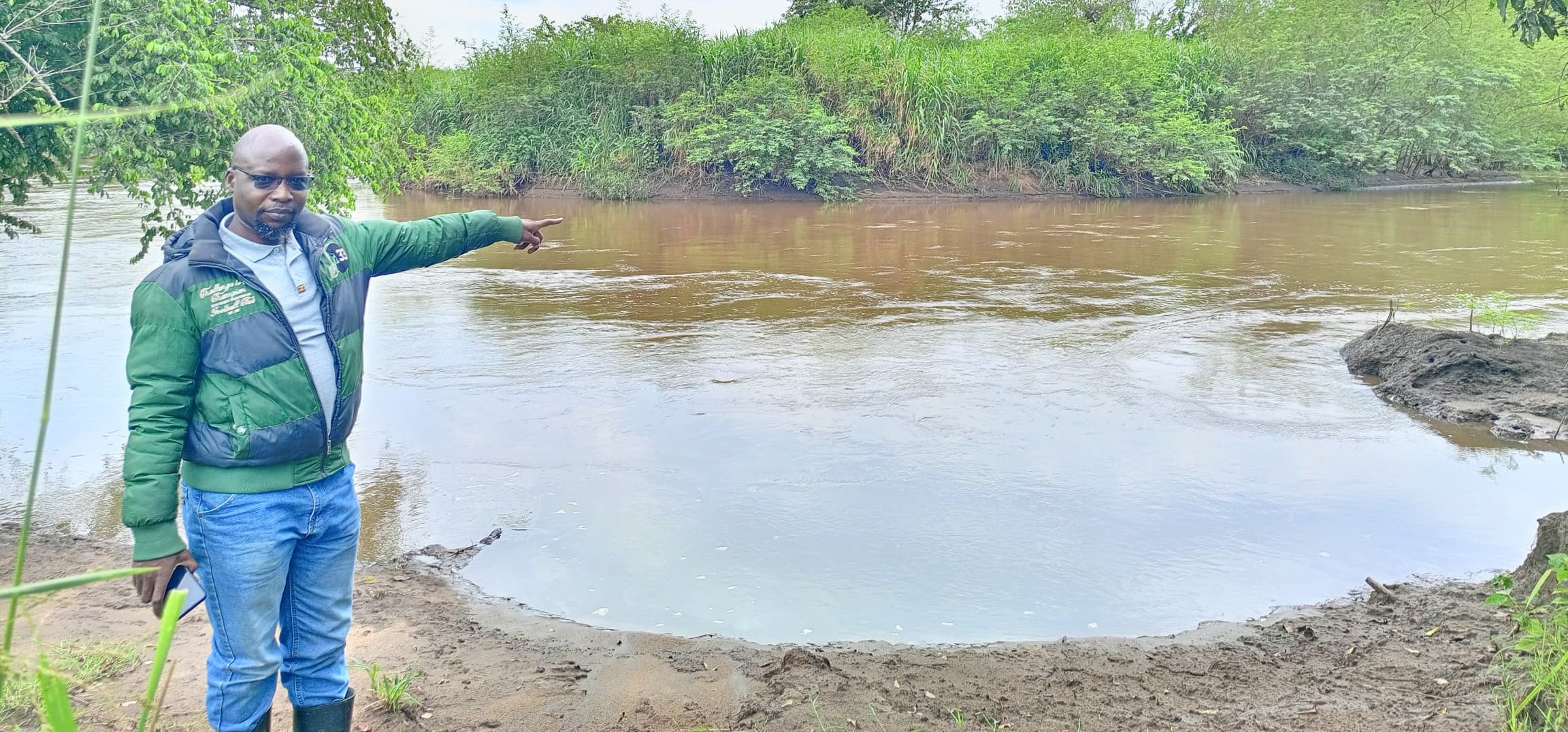
The OLU Cocoa Collective is a landscape-scale initiative to establish regenerative cocoa production in Arua, West Nile. Initiated by a community group in formation under the Olu Family Enterprise, the project brings together approximately 1,600 hectares of family-owned communal land.
Together with reNature, the project will implement a 40-hectare Model Farm as a pilot; designed with farmers, grounded in local context, and built to be replicated. This Model Farm will serve as the practical learning site and proof-of-concept before scaling across the wider 1,600-hectare area.
With four major landholding families organized into a cooperative structure and over 800 affiliated members, the project aims to reduce poverty, create dignified rural employment, and strengthen local infrastructure through regenerative agriculture and long-term investment.
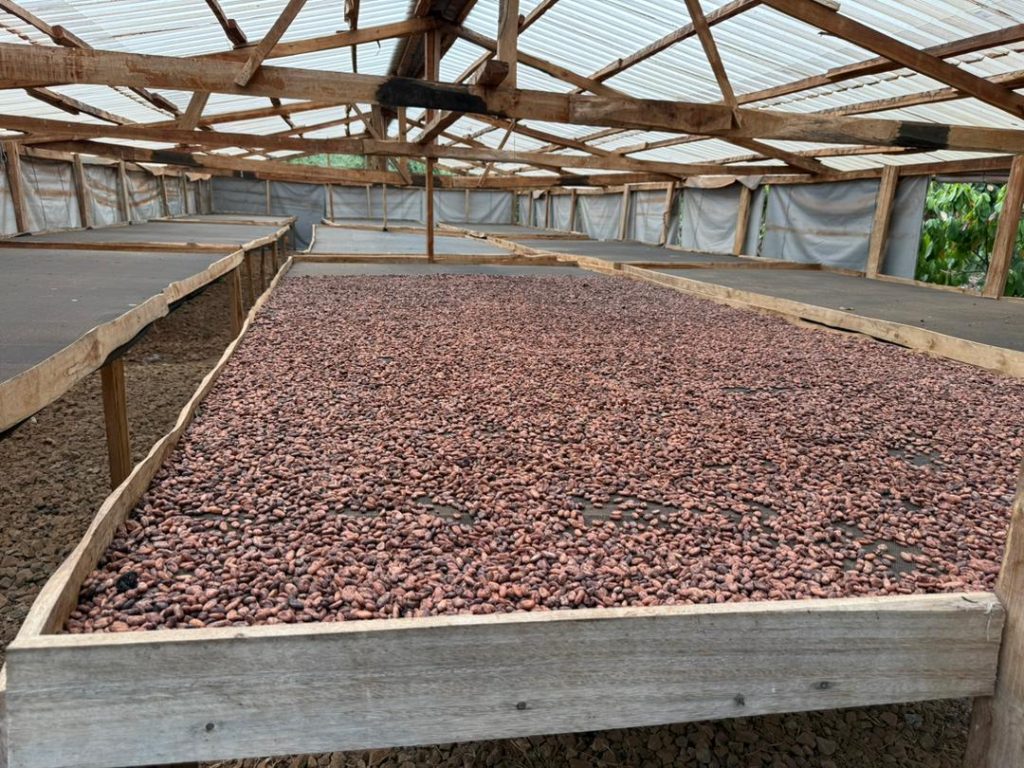
Can Cocoa Break the Poverty Cycle in West Nile?
West Nile is often described as a “land of space”: broad farms, long distances, and communities spread across a low-density landscape. Yet the region also carries some of Uganda’s highest poverty and deprivation burdens.
Most families still depend on subsistence crops like cassava, beans, and maize, and large portions of available land remain only lightly cultivated. In many communities, limited cash income pushes households toward short-term coping strategies, including charcoal production, which can intensify deforestation pressure over time.
At the same time, West Nile has strong natural assets: Arua’s climate is warm and seasonally wet, with roughly 1,194 mm of annual rainfall reported in long-term averages, conditions that can support perennial tree crops when designed well. The challenge is translating land and climate potential into stable livelihoods through a coordinated, farmer-led model.
Building a Regenerative Cocoa Model Farm to Scale
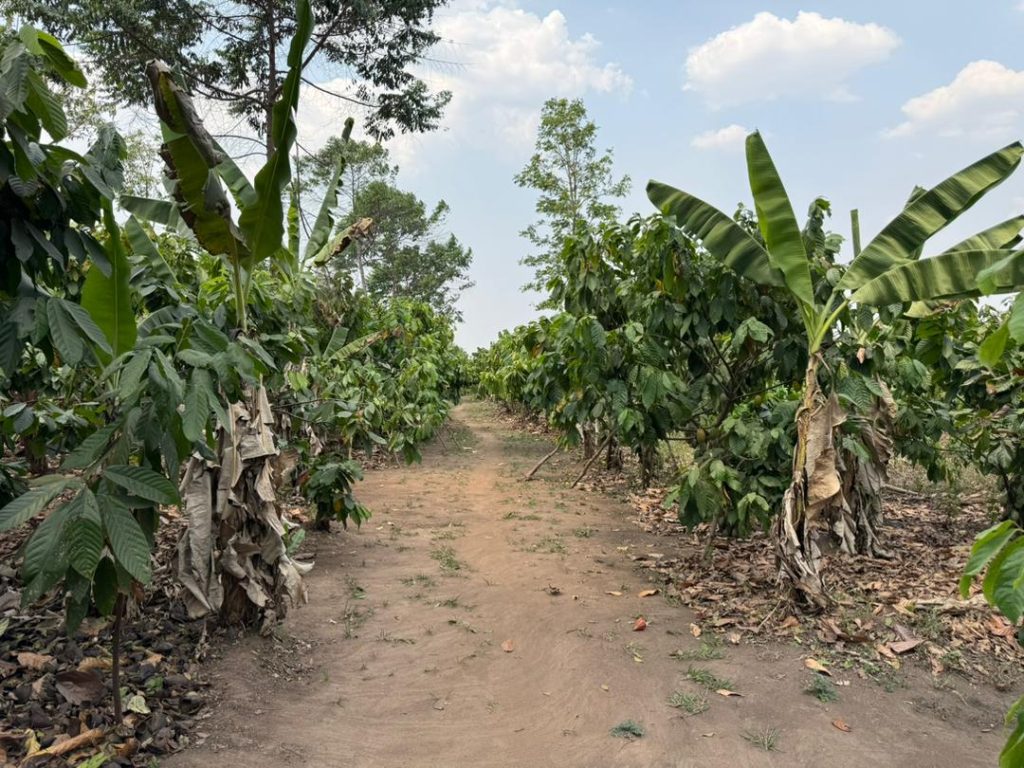
The OLU project starts where change becomes visible: on the ground. The 40-hectare reNature Model Farm will be the pilot site, built to demonstrate regenerative cocoa agroforestry, train farmers, and prove a practical pathway for expansion across the larger communal land area.
Momentum for cocoa is already growing in Arua. Local reporting indicates increasing farmer engagement in cocoa cultivation in Arua District and Arua City, signaling both interest and an emerging knowledge base in the area. Nationally, Uganda is also strengthening support for coffee and cocoa value chains through programs such as CoCoDev, involving government institutions including the Ministry of Agriculture.
How Will Communities Benefit Socially?
The project is designed as a community-centered transition, from subsistence farming to a coordinated, market-oriented perennial crop system. It targets approximately 800 local farmers, and broader benefits extend through skills development, and local infrastructure improvements tied to farm establishment and maintenance.
The Model Farm will act as a practical learning site: field demonstrations, hands-on training, and farmer-to-farmer exchange. As skills increase (nursery management, planting, pruning, shade management, and basic farm recordkeeping), young people can find meaningful work locally rather than migrating for uncertain opportunities.
Moreover, perennial crops create longer-term work and more predictable income than seasonal subsistence alone, especially when farmers are organized. By aggregating land and producers through a cooperative model, OLU can reduce fragmentation, improve access to training and inputs, and build stronger links to buyers over time. As incomes stabilize, families are better able to keep children in school and invest in household wellbeing, which is exactly the socio-economic shift the project is aiming to trigger.
By proving success on the pilot site first, then scaling practices, skills, and cooperative capacity across the broader landscape, OLU can become a regional example of how regenerative cocoa strengthens livelihoods while protecting the ecosystems communities depend on.