

Mungu Asifiwe: Transitioning a large-scale cocoa farm in Western Uganda
- DefinitionDevising project idea, defining the aim and main components
- DesignSpecifying details such as time-frame, budget, target indicators, project partners and relevant steps to reach the project objectives
- Open to FinancingSearching and securing funding and investment, setting up relevant financing partnerships, and discussing payment modalities
- ImplementationExecution of feasibility studies, context analysis, plot design, planting and setting up facilities and starting with potential capacity-building
- MaintenanceOperational phase (monitoring and evaluation, impact assessments and adjustments, execution of educational programmes and long-term capacity building)
- Scaling UpScaling up phase is when the project it has already shown success by obtaining impact as well as economic results and it's ready to become replicable.
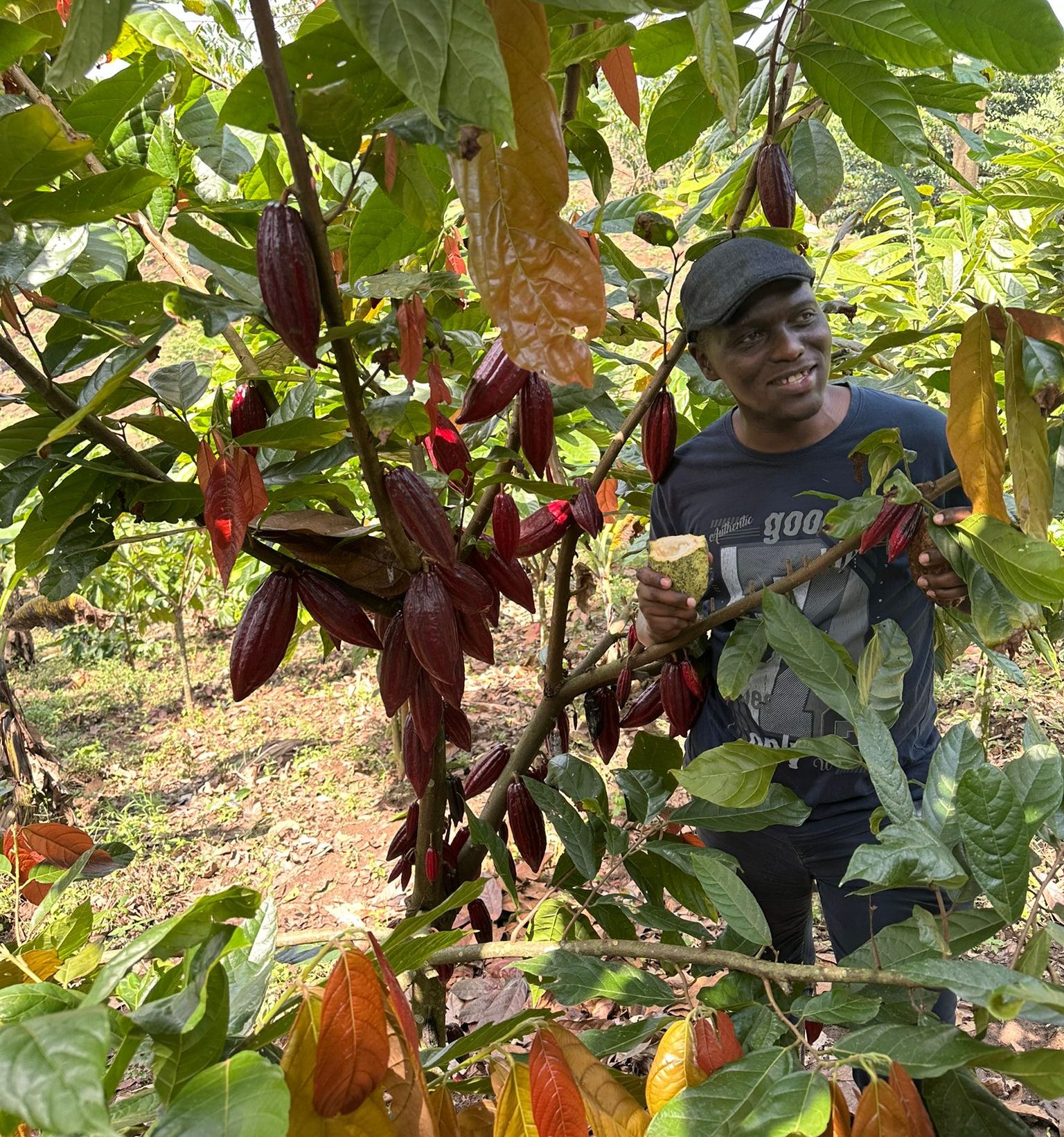
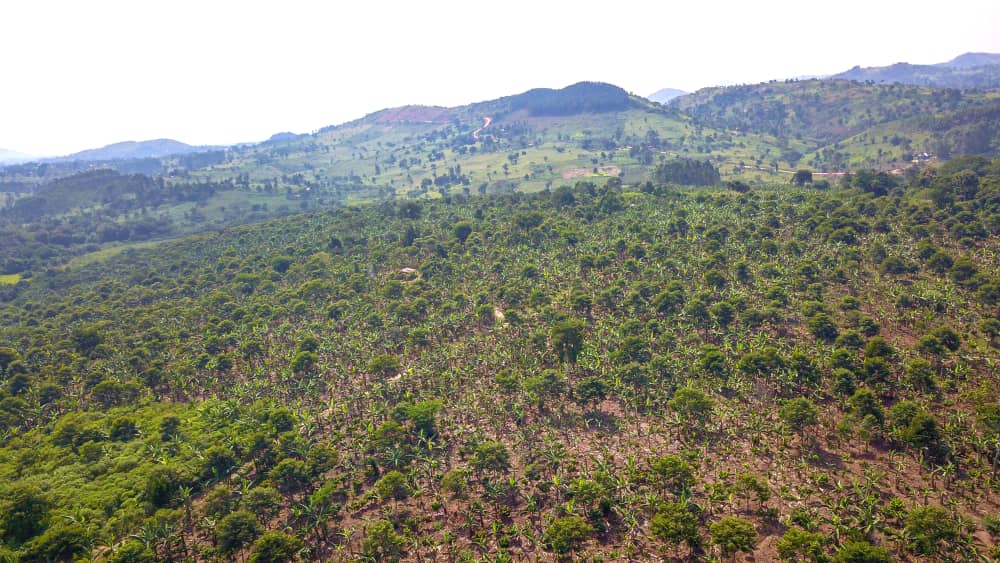
Mungu Asifiwe Farms is a commercial cocoa estate located in Kyakadongo Cell, Kibaale District, Western Uganda. Established in 2021, the farm is currently under expansion and productivity optimization, with over 100,000 cocoa trees planted across 109 hectares. Led by second-generation farmer Cleave Masereka, the estate combines entrepreneurial vision with long-term land stewardship. Together with reNature, it is being developed into a regenerative Model Farm, which will demonstrate how ecological restoration and commercial cocoa production operate in parallel.
Mungu Asifiwe is implementing a structured regenerative model based on agroforestry design, permanent soil cover, minimal soil disturbance, organic nutrient cycling, integrated pest management, and water-efficient irrigation. Through this holistic approach, Mungu Asifiwe Farms is positioning itself as a scalable benchmark for sustainable cocoa production in East Africa, benefiting up to 150 workers and more than 500 community members.
Why Is Cocoa Production at Risk?
Cocoa production in Kibaale faces increasing pressure from climate variability. Inconsistent rainfall and prolonged droughts reduce yields and threaten young trees. The absence of irrigation infrastructure makes production highly dependent on rainfall, while a recent virus outbreak further affected yields and increased reliance on imported organic fertilizer.
At the same time, regional poverty and limited on-site facilities make it difficult to attract and retain skilled labor. Without structured management systems and traceability, market access and price stability remain uncertain. Together, climate stress, plant health risks, and operational challenges create volatility for both farmers and buyers. Strengthening resilience at farm level is essential to ensure stable yields, consistent bean quality, and reliable income.
How Can Regeneration Reduce Risk?
With reNature as technical and strategic partner, Mungu Asifiwe Farms is implementing a structured regenerative transition. Permanent soil cover using cocoa husks and banana residues, on-farm composting, minimal soil disturbance, and integrated pest management improve nutrient cycling and plant health.
An agroforestry design with 30–40% shade canopy enhances microclimates and biodiversity while stabilizing yields. Drip irrigation and rainwater harvesting reduce drought risk and improve production planning. Clear standard operating procedures, staff training, and monitoring systems strengthen consistency and traceability.
By combining ecological restoration with professional farm management, the project reduces climate and supply chain risks while improving productivity toward a target of 5 kg per tree per year.
Can Soil and Biodiversity Be Restored?
By continuously recycling organic biomass and maintaining permanent soil cover, soil organic matter increases and water retention improves. Healthier soils reduce erosion, buffer heavy rainfall, and support stronger root systems.
Diversified shade trees and banana plants create a layered agroforestry system that attracts pollinators, beneficial insects, and birds. Annual soil testing, biodiversity assessments, and canopy monitoring ensure measurable progress. The result is a productive cocoa system designed for long-term ecological stability.
How Does Regenerative Cocoa Strengthen Communities?
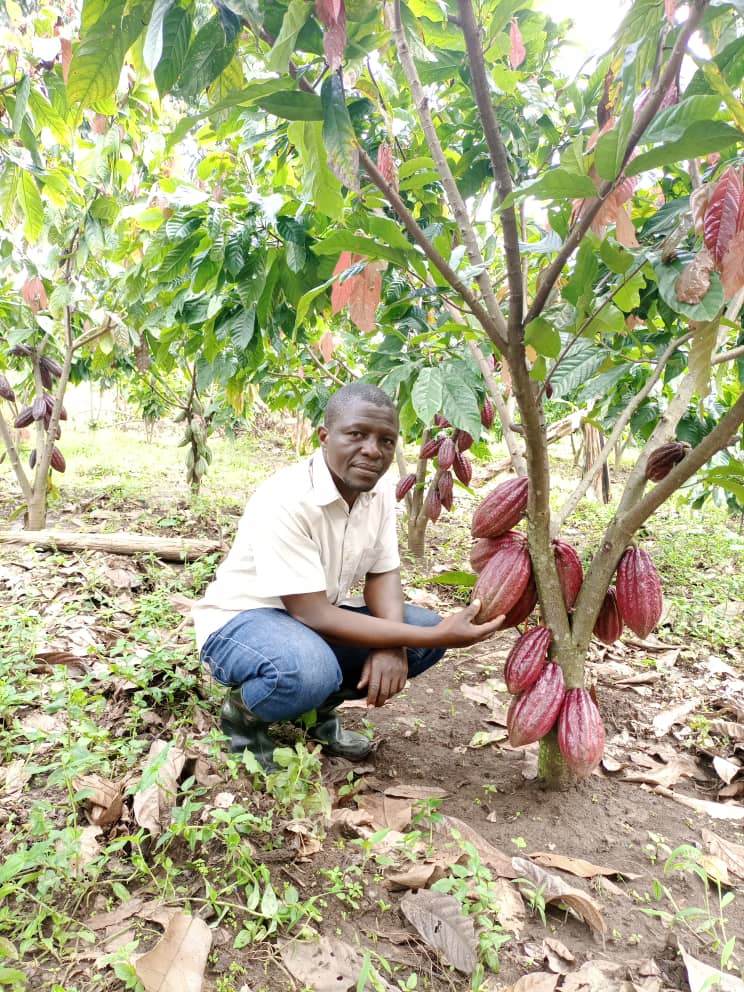
The farm employs 80–150 workers depending on the season and aims to expand toward more stable, year-round employment. Structured training programs build skills in regenerative agriculture, irrigation management, and quality control.
As the model farm develops, it will also serve as a learning site for farmers and managers in the region. Future plans include improving worker facilities and exploring healthcare and educational infrastructure. Access to harvested and underground water sources will also support the surrounding community. The project strengthens local livelihoods while building practical agricultural expertise.
Is Regeneration Commercially Viable?
The estate’s expansion toward 80,000 productive trees demonstrates that regeneration and profitability can align. Improved soil health, irrigation reliability, and agroforestry design enhance yield stability and reduce dependency on synthetic inputs.
Higher bean quality, better traceability, and consistent volumes strengthen buyer relationships and open access to premium markets. With a structured investment approach and phased development of the model farm, Mungu Asifiwe Farms positions regeneration as a long-term business strategy—building natural capital while generating sustainable financial returns.
A Scalable Model for East African Cocoa
Mungu Asifiwe Farms aims to shows how regenerative agriculture can reduce risk, improve productivity, and create measurable impact. As a model farm, it will provide practical evidence that commercial cocoa production can restore ecosystems and strengthen communities at the same time.As it scales, the project offers a replicable pathway for resilient cocoa systems across Uganda and the wider East African region.