

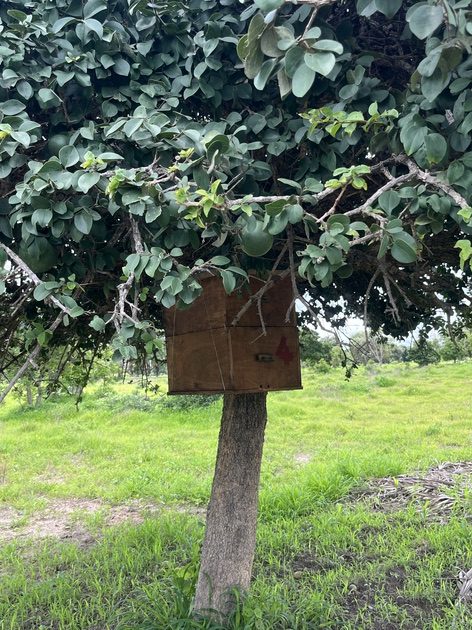
Trees for People: Agroforestry and Beekeeping
- DefinitionDevising project idea, defining the aim and main components
- DesignSpecifying details such as time-frame, budget, target indicators, project partners and relevant steps to reach the project objectives
- Open to FinancingSearching and securing funding and investment, setting up relevant financing partnerships, and discussing payment modalities
- ImplementationExecution of feasibility studies, context analysis, plot design, planting and setting up facilities and starting with potential capacity-building
- MaintenanceOperational phase (monitoring and evaluation, impact assessments and adjustments, execution of educational programmes and long-term capacity building)
- Scaling UpScaling up phase is when the project it has already shown success by obtaining impact as well as economic results and it's ready to become replicable.
Nzatu inspires change by showing that regeneration is possible, practical, and profitable for rural communities. This project envisions a 2-hectare Model Farm in Namwala designed as a scalable blueprint with the potential to regenerate up to 1,200 hectares of degraded land over time. The model farm stands as visible proof that degraded land can be restored while supporting livelihoods.
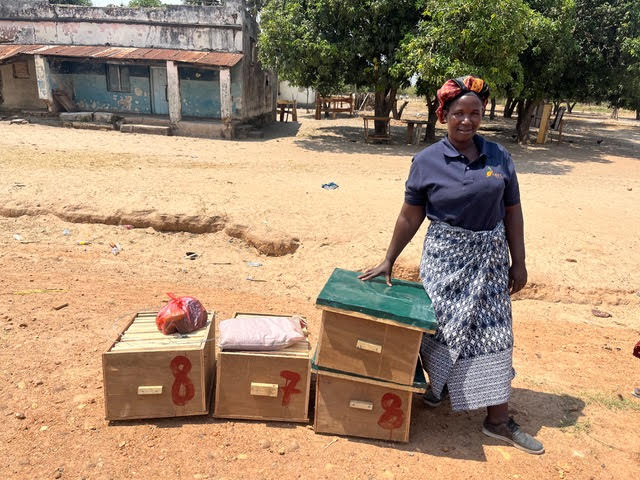
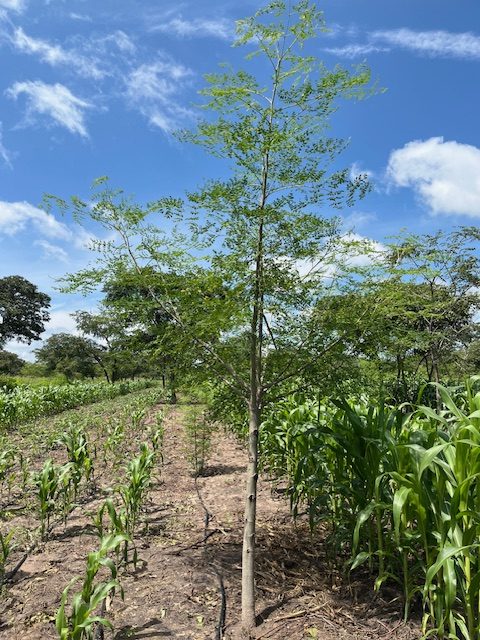
In partnership with reNature, the Model Farm will integrate agroforestry, beekeeping, and diversified cropping systems tailored to local conditions to enhance regenerative agriculture. The primary commodity will be honey, supported by secondary crops including moringa, sorghum, maize, cowpeas, sugar beans, and pigeon peas. The farm will serve as a practical training center where farmers learn soil restoration and sustainable land management practices. By positioning regeneration as a viable economic alternative to deforestation, the project encourages farmers to protect forests, improve soil health, and adopt long-term regenerative practices.
Why Is Southern Zambia Losing Its Forests?
Southern Zambia faces accelerating deforestation driven by charcoal production, unsustainable farming practices, and limited income opportunities. As soils degrade and forests disappear, communities are left with declining yields, food insecurity, and deepening poverty. Climate variability further intensifies these pressures, making smallholder farming increasingly risky.
Social challenges are closely intertwined. Limited economic prospects contribute to early marriage, school dropout, and reduced opportunities for women and girls. Without viable alternatives, families remain dependent on activities that degrade the very ecosystems they rely upon.
To break this cycle, solutions must restore land while generating reliable income. Regeneration must become more attractive than deforestation—economically, socially, and environmentally.
How Can a Model Farm Spark Regeneration?
Drawing on Nzatu’s experience, the new Model Farm will demonstrate integrated agroforestry, intercropping, and regenerative beekeeping tailored to local conditions. The 2-hectare site will function as a hands-on training center where farmers observe, practice, and replicate regenerative methods on their own land.
The existing Nzatu Model Farm operates through a cascading Trainer-of-Trainers approach: 20 community leaders train 100 farmers, who then reach an additional 500—scaling to 600 farmers in the first phase and laying the foundation for 15,000 direct beneficiaries. The new Model Farm will be embedded within this proven structure, strengthening and expanding its impact.
Beekeeping provides immediate income while incentivising forest protection. Agroforestry systems rebuild soil fertility, diversify production, and stabilize yields. Training is delivered in local languages to ensure accessibility and long-term adoption.
Each participating farmer regenerates approximately 2 hectares, contributing to an estimated 1,200 hectares restored in the first scaling phase. Through structured mentoring, WhatsApp-based follow-up, and collaboration with ward councillors, ZARI, and the Department of Forestry, the project ensures accountability and measurable impact.
Can Regeneration Restore Biodiversity and Climate Resilience?
By integrating trees, crops, and pollinators, the project rebuilds soil organic matter, improves water retention, and enhances biodiversity. Beekeeping increases pollinator populations, while agroforestry reduces erosion and captures carbon.
As dependency on charcoal declines, pressure on native forests decreases—supporting the return of indigenous trees, plants, birds, bats, ants, and other pollinators. Over time, restored landscapes become more climate-resilient, productive, and ecologically balanced.
Can Empowered Communities Transform Their Future?
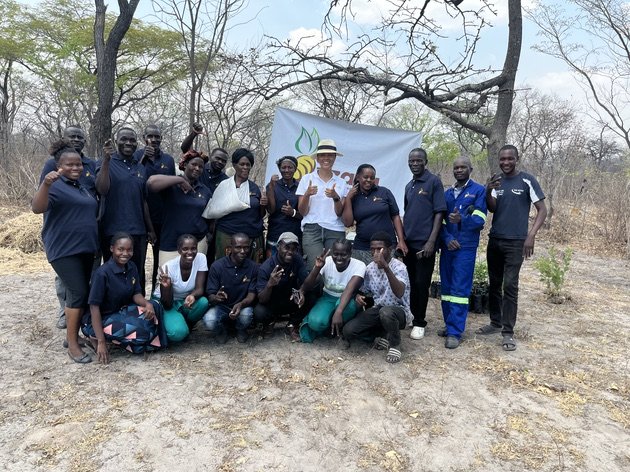
At the heart of Trees for People is community ownership. With 55% women’s participation, the project prioritises female leadership and youth engagement. Training strengthens knowledge, confidence, and long-term stewardship of natural resources.
Improved income stability reduces vulnerability and creates alternatives to harmful coping strategies such as early marriage. The Model Farm becomes a regional learning center—fostering collaboration, dignity, and shared responsibility for regeneration.