

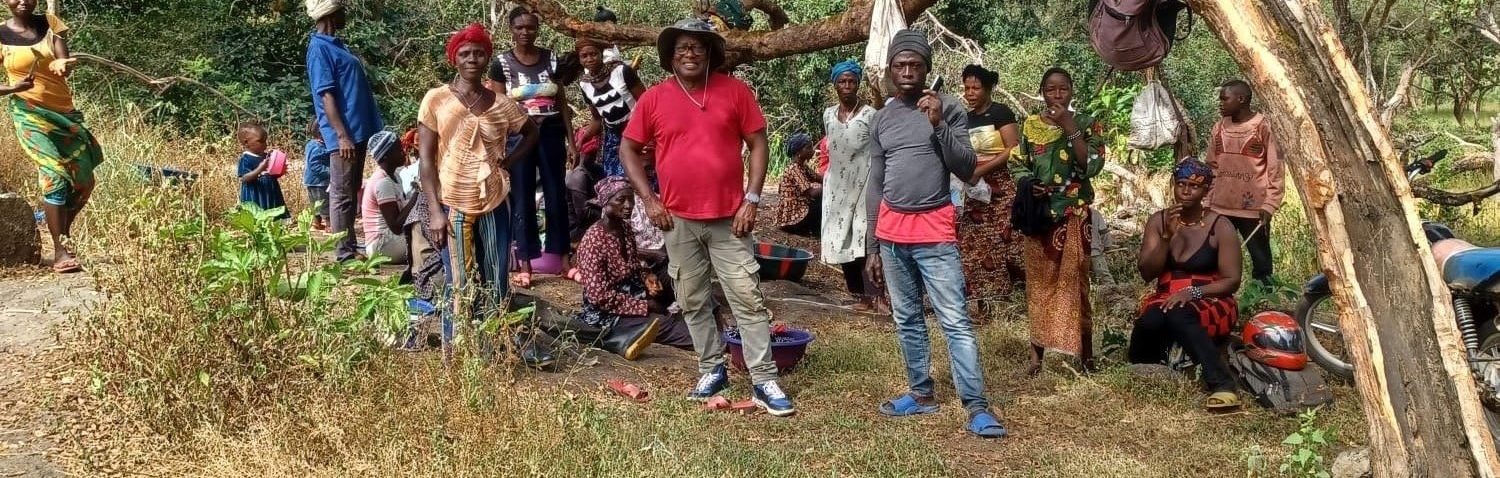
Bafedu Farmers’ Regenerative Agriculture Project, Sierra Leone
- DefinitionDevising project idea, defining the aim and main components
- DesignSpecifying details such as time-frame, budget, target indicators, project partners and relevant steps to reach the project objectives
- Open to FinancingSearching and securing funding and investment, setting up relevant financing partnerships, and discussing payment modalities
- ImplementationExecution of feasibility studies, context analysis, plot design, planting and setting up facilities and starting with potential capacity-building
- MaintenanceOperational phase (monitoring and evaluation, impact assessments and adjustments, execution of educational programmes and long-term capacity building)
- Scaling UpScaling up phase is when the project it has already shown success by obtaining impact as well as economic results and it's ready to become replicable.
Bafedu Farmers’ Regenerative Agriculture Project (RAP) and reNature are collaborating to design an ambitious agroforestry system in Bafedu, Sierra Leone. The project covers over 650 hectares and will enhance food security and economic resilience for the entire Soa chiefdom. Addressing the climate challenges requires a comprehensive approach to sustainable agriculture, local proof of concept, and community education. The Soa chiefdom will be the first chiefdom to transition to regenerative agriculture and will serve as a model for the surrounding chiefdoms. The project has the potential to become the agroforestry hotspot and educational hub of the region.
RAP has united over 150 individual household farmers to improve farming practices and boost agricultural productivity. Last year RAP established a successful 5-hectare model farm to grow rice seedlings for a 200-hectare plot this year. In collaboration with reNature, RAP will establish another 5-hectare model farm focusing on an agroforestry system with vegetables, soybeans, cattle, and landscape restoration. The project will improve soil quality, promote biodiversity, and address low crop productivity and poverty while fostering community cohesion and resilience. RAP will scale this agroforestry system over the entire 650-hectare area, uniting over 300 individual household farmers. Over five years, they will restore the land capacity, alleviate hunger, and transform local agricultural practices sustainably.

Sierra Leone and climate change
In Sierra Leone, agriculture is one of the most important sectors of the economy, with 60% of the labor force working in subsistence agriculture, contributing to about 64% of the national GDP according to the World Bank. Due to climate change, the United Nations predicts increased temperatures and highly variable rainfall levels in Sierra Leone. This has direct and indirect impacts on agricultural productivity through droughts, floods, extreme temperatures, habitat loss, reduction of biodiversity, and pests and diseases. Rising temperatures and shifting rainfall patterns put pressure on ecosystems making them more vulnerable to soil erosion, wildfires, and pest outbreaks.
Bafedu as a case study
Low crop productivity due to traditional farming practices and climate change has resulted in widespread poverty and food insecurity. The local harvest is not enough to feed the local community, let alone earn money for other basic needs. Poor land management practices and a lack of training and financial resources to invest in regenerative agriculture have left the farmland degraded and vast areas even abandoned for elephant grass to grow. The effects are increased soil erosion, biodiversity loss, and water contamination due to runoff. Landscape degradation exacerbates an existing negative cycle of low productivity, further jeopardizing farmers’ livelihoods.
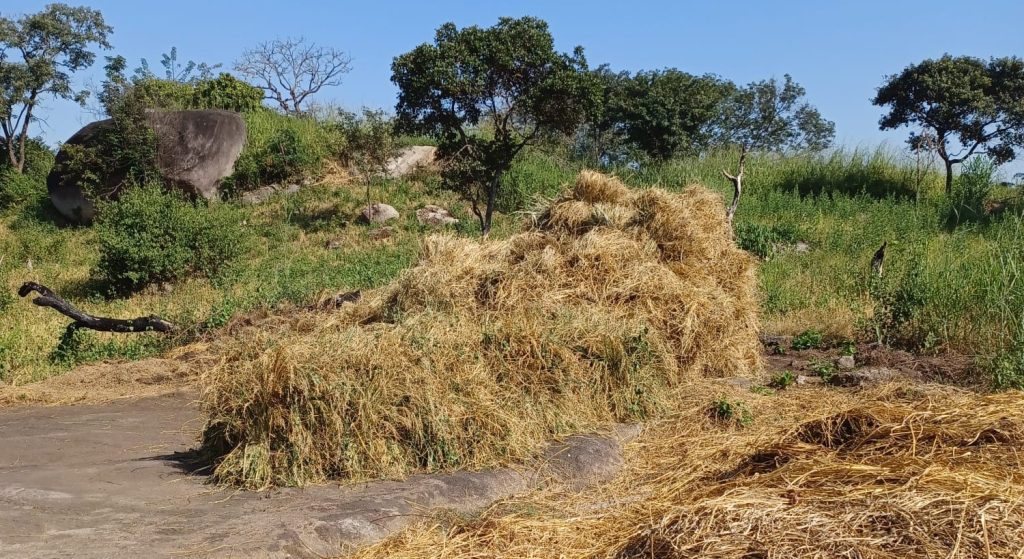
RAP VS climate change
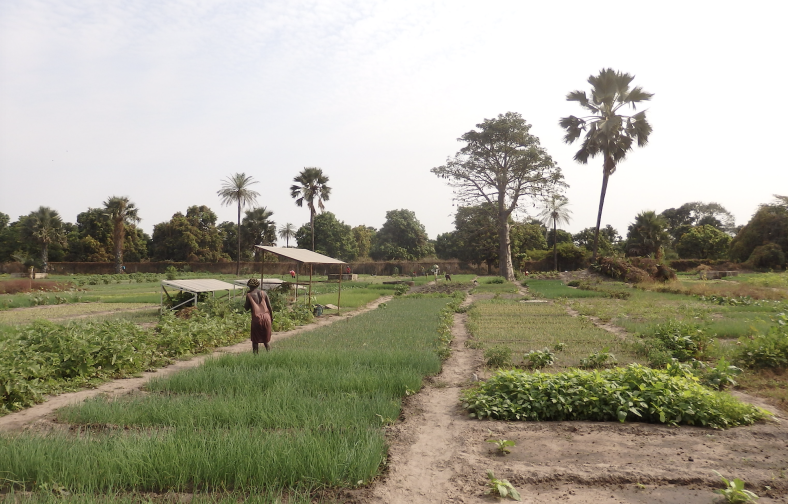
While traditional agriculture exacerbates these consequences by highly decreasing ecosystem and soil health, there is a huge potential for sustainable agriculture systems. In Sierra Leone, 54% of the land is used for agriculture. If done sustainably many of the adverse impacts of climate change can be mitigated and security and production can vastly improve in the region. RAP and reNature will address these issues by creating a highly diversified 5-hectare agroforestry system focused on vegetables, soybeans, and cattle. The farm will serve as a training center, helping at least 300 local farmers gain the skills and knowledge they need to enhance their own practices. With hands-on training and ongoing support, these farmers will convert over 650 hectares into a productive agroforestry system. Bafedu will become a regional hub for knowledge and serve as a model for chiefdoms all over Sierra Leone, improving livelihoods while contributing to healthier ecosystems.

Solomon Musa
Solomon grew up in the Soa chiefdom, where he is called ‘the son of the soil’. Over the years he has witnessed the region suffer and the crop yield decrease. By uniting the individual household farmers, he has already significantly boosted agricultural productivity and provided farmers the opportunities to learn from each other. Transforming the land into an agroforestry system and further growing the project, will allow participants to produce enough food to sustain their families and generate income.
Journal
“We need solutions on a large scale.”

A definition of Regenerative Agroforestry

A Win-Win in Regenerative Rice
