

Sowing inspiration – How two Breton farmers are exploring agroforestry
Published on: November 11, 2025
“We wanted a project that makes sense, that lets us live from our hands and watch our children grow.” – Julien and Goulven.
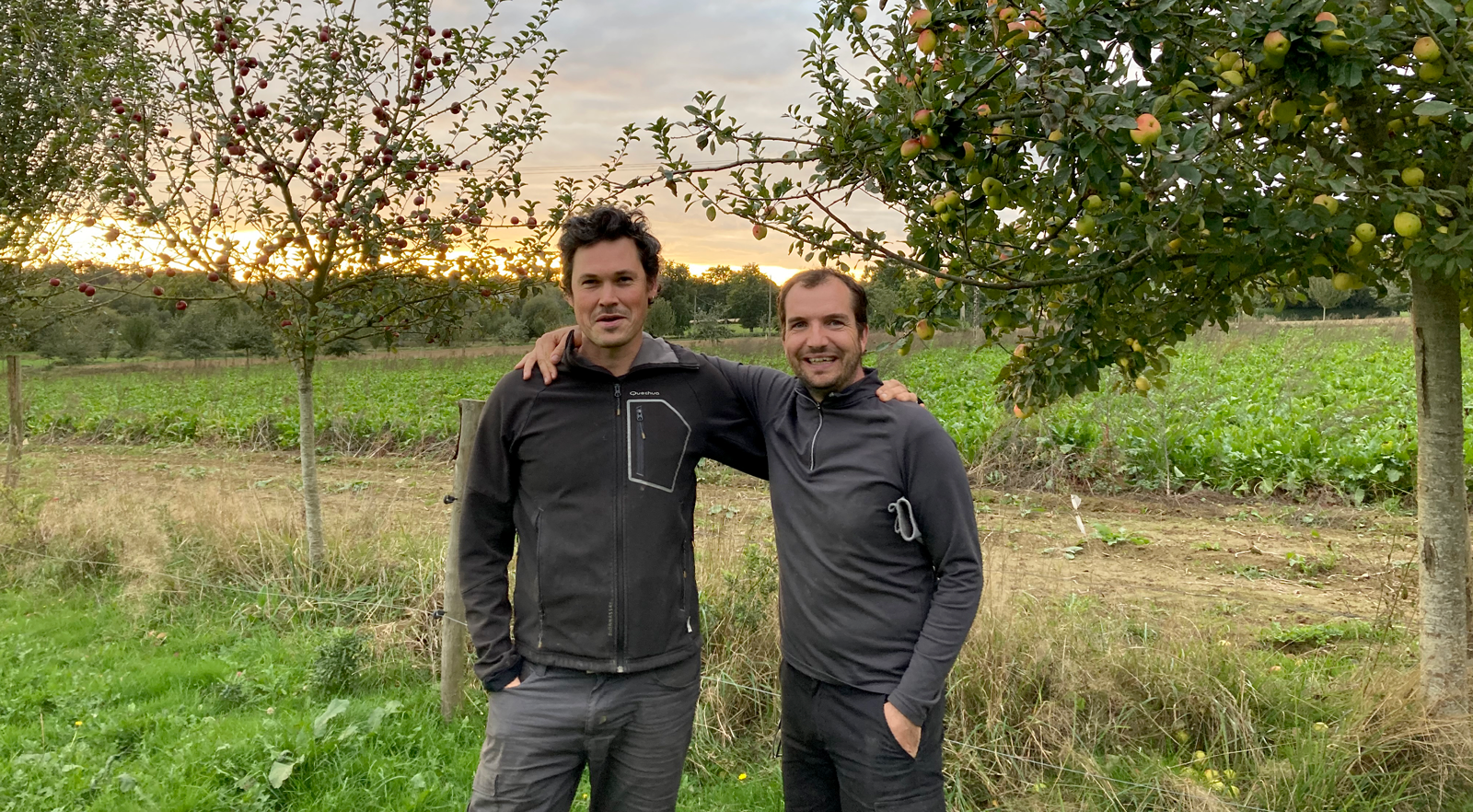
In Brittany’s rolling countryside (France), where intensive agriculture often dominates, two farmers are sowing the seeds of change. They met during their studies in Rennes agronomy School (Brittany, France). Julien, a farmer’s son rooted in tradition, owning the organic Pradenn Farm, and Goulven, who engage in agronomy driven by his environmental passion, are transforming the farm into a beacon of regenerative agroforestry. Their project — a vibrant apple orchard integrated with livestock and polyculture — produces organic cider, juice, compote, and vinegar in bottles and in bulk, proving that regenerative farms can thrive in the French diverse agricultural landscape. By blending heritage with innovation, they show how regenerative agroforestry can inspire a new generation of farmers. “We wanted a project that makes sense, that lets us live from our hands and watch our children grow,” they both say. Their story is a call to action for aspiring project holders to embrace sustainable farming.
“We want to live from our hands, with meaning.”
Julien and Goulven come from different worlds, yet their paths converged at Pradenn Farm in a shared vision for organic farming. Julien, raised on his family’s farm, studied agronomy and drew inspiration from the Fédération Régionale des Agrobiologistes de Bretagne (FRAB), a network supporting organic farmers. “It’s a project of territory, of transmission, that anchors us here,” he shares. Goulven, from a non-farming background, found his calling during an internship in the Pyrénées and a year exploring organic farms through radio broadcasts. Their values — family and friends balance, autonomy, and environmental respect — unite them. “We want to live from our hands, with meaning,” Goulven says. Their complementary strengths — Julien’s heritage and vision and Goulven’s fresh perspective — prove that diverse backgrounds can fuel inspiring projects.
Niche products for a competitive market.
To stand out in a competitive market, Goulven and Julien focus on unique products of premium quality: artisanal cider with natural fermentation, and bulk compote and vinegar catering to zero-waste trends. Their cider, recognized in professional contests, appeals to restaurants and local markets like Rennes’ Marché à Manger. “We tested the cider in restaurants and contests to see if it caught on,” Goulven explains. By offering products absent from the local market, they tap into growing demand for organic farming and sustainability.
Test before scaling
Julien and Goulven adopted a low-risk strategy: test before scaling. They piloted their cider in local venues and secured clients like Biocoop and restaurants through the FRAB network. “Thanks to the FRAB, we connected with clients who believe in our products,” Julien notes. Partnerships with local actors, like the Bercaille restaurant, and innovative formats (bulk products, festival kegs) strengthen their brand, Pradenn. Diversification and local networks lower risks and support business sustainability.
“When we work as a team, we share the load and move forward better.”
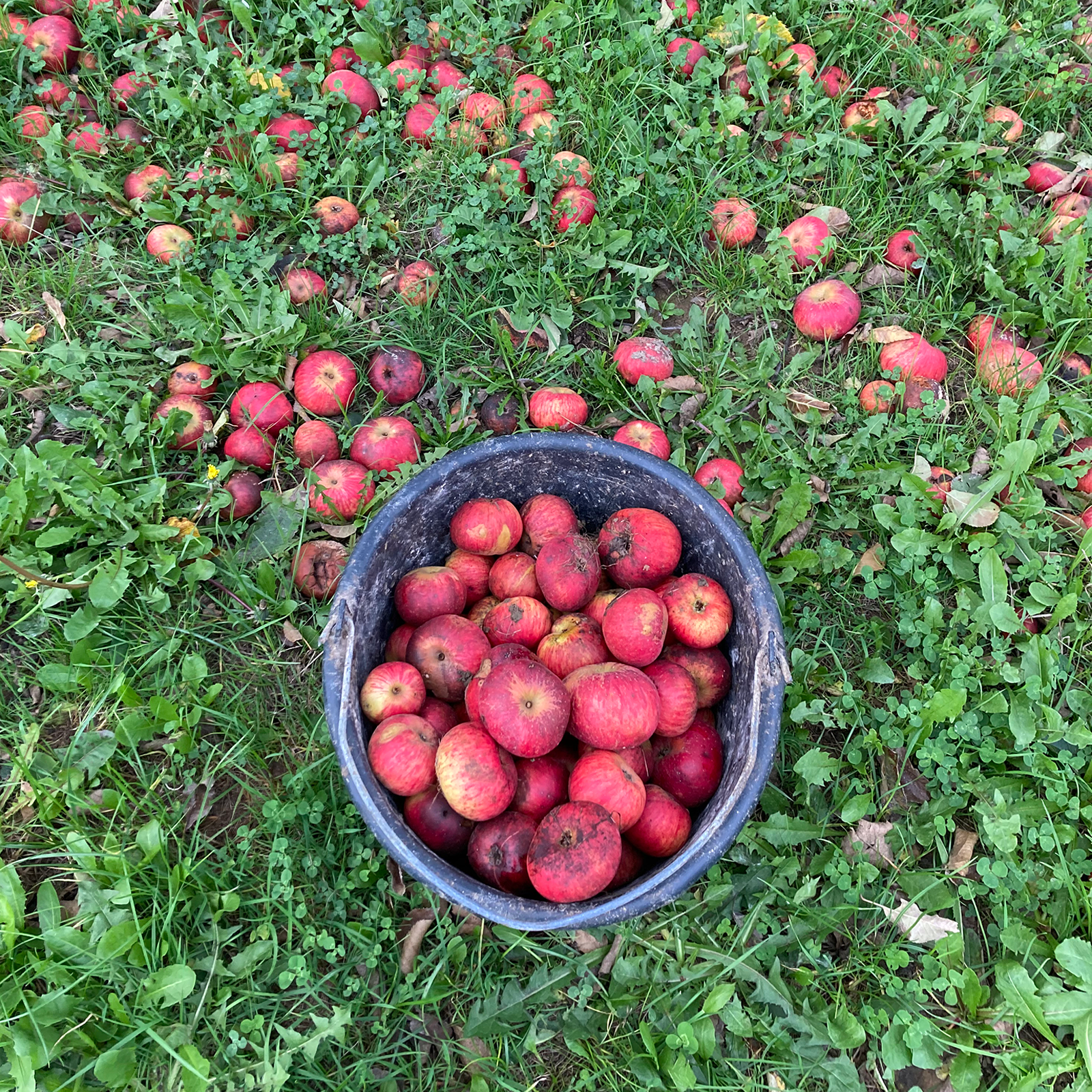
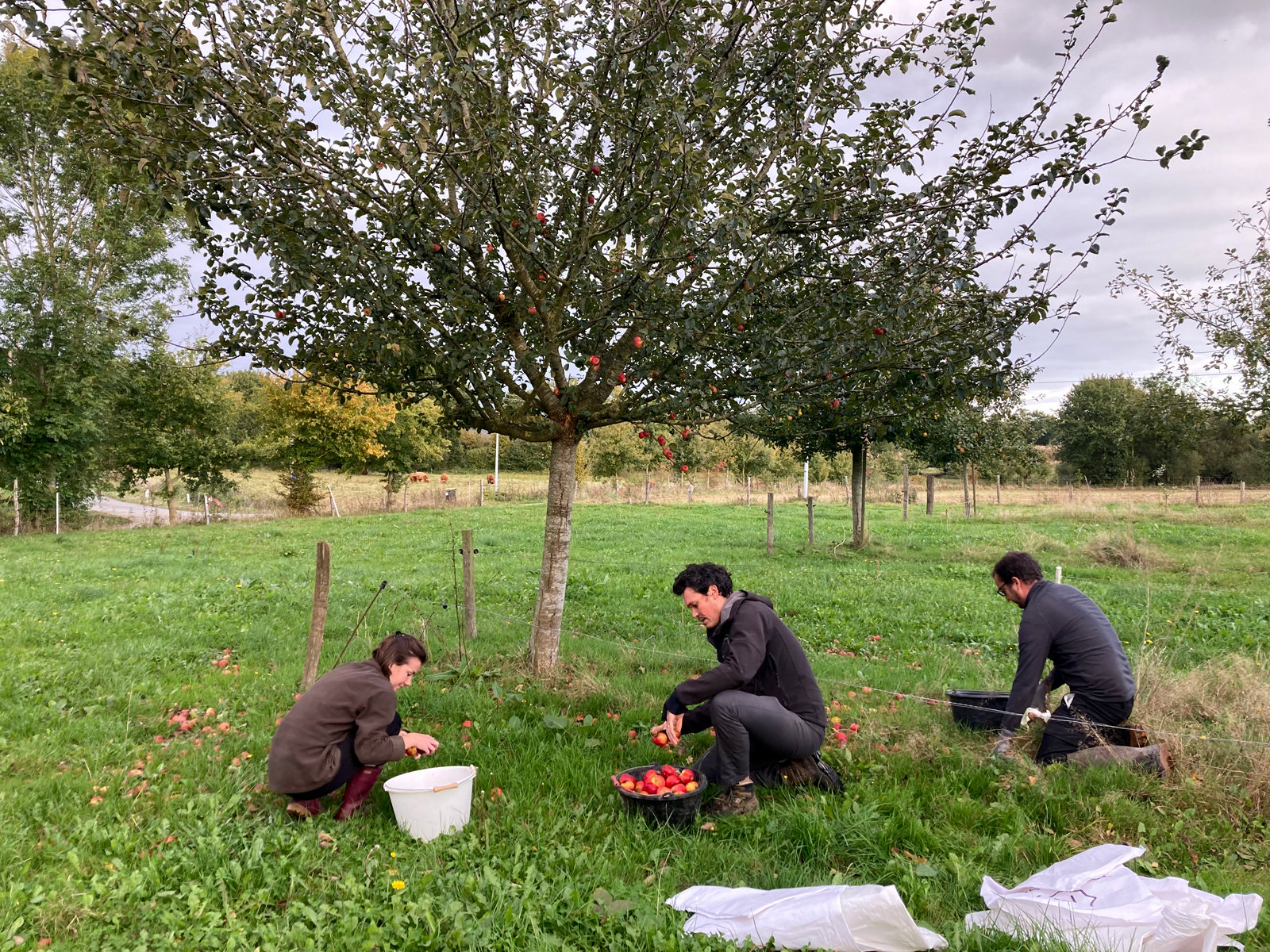
At Pradenn Farm, regenerative agroforestry thrives through integration: apple trees, Highland cattle and polyculture create a balanced ecosystem. The orchard’s wide rows (10 meters apart) produce grass for grazing, boosting biodiversity and soil health while the cows, carefully chosen for their small size, will feed the apple trees by digesting the fallen leaves without damaging the roots and trunks. Collaboration is key as well: Julien, Farm lead focused on livestock, joins Goulven (orchard lead) and their intern (initially for pigs) to harvest apples together. “When we work as a team, we share the load and move forward better,” Goulven says. This synergy — both agronomic and human — makes tasks motivating.
“We lack scientific data, so we experiment, but we’d love more support.”
Selecting resilient heritage apple varieties was an empirical process, guided by farmer testimonials and a student study, due to limited scientific data. “We lack scientific data, so we experiment, but we’d love more support,” Julien admits. They plant 300 trees annually, adapting as they learn. This pragmatic approach inspires project holders to start despite uncertainties but highlights a gap: more research could guide agroforestry decisions adapted to soil diversities. Their experience calls for relevant scientific studies to support farms in choosing varieties and systems, paving the way for scalable regenerative agroforestry.
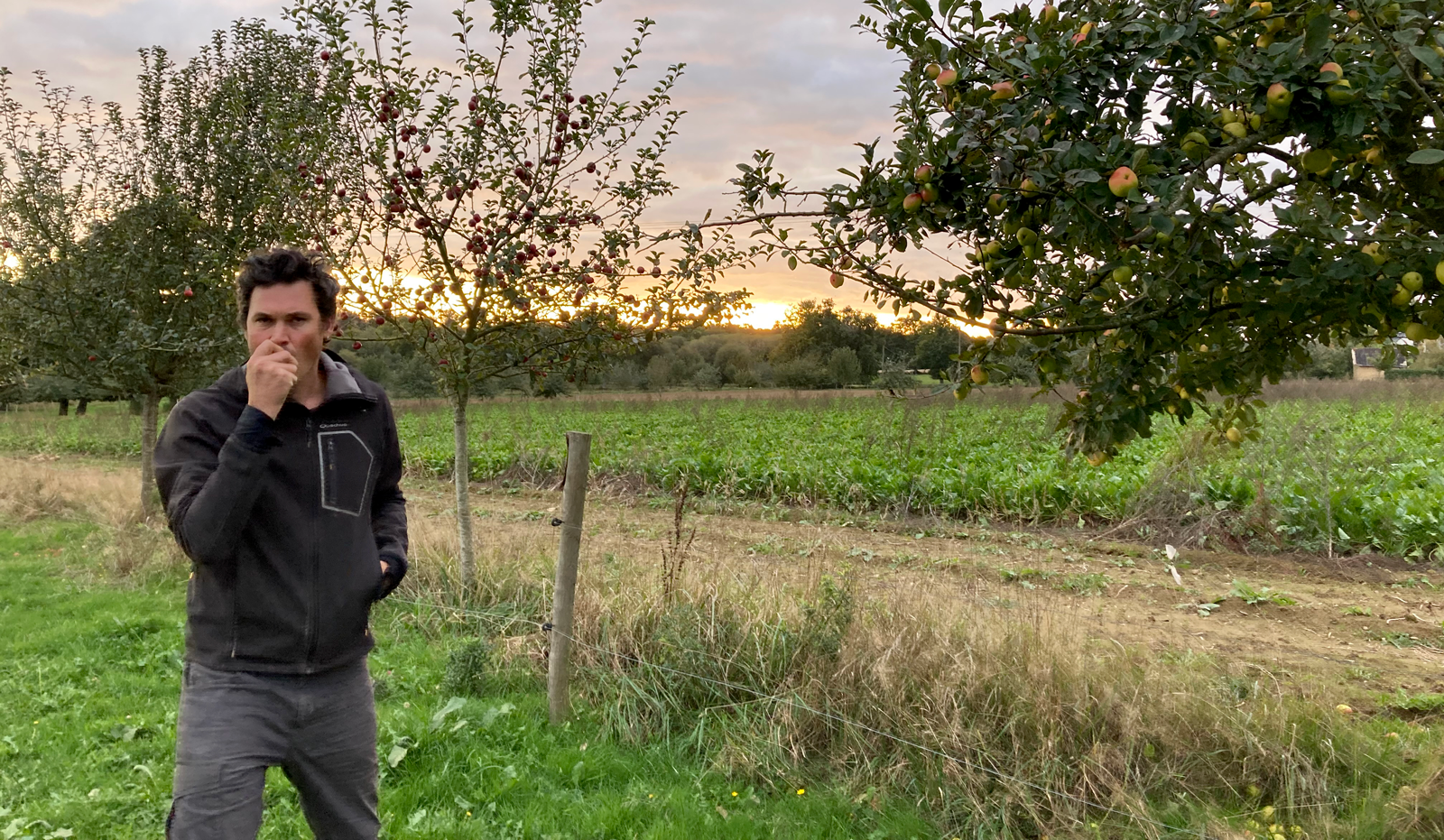
“Regenerative agroforestry can make our farms stronger.”
Julien and Goulven envision an agriculture that repopulates rural areas with thriving and sustainable farms. A countryside where farms can leverage diversification for resilience and profitability and where agriculture breathes new life into communities. “Regenerative agroforestry can make our farms stronger and more energetic” Julien says. Their project embodies peasant metropolitanization: a dialogue between rural and urban, where local products nourish guests and revitalize the land. This model inspires project holders to revive rural areas through collaborative agriculture.
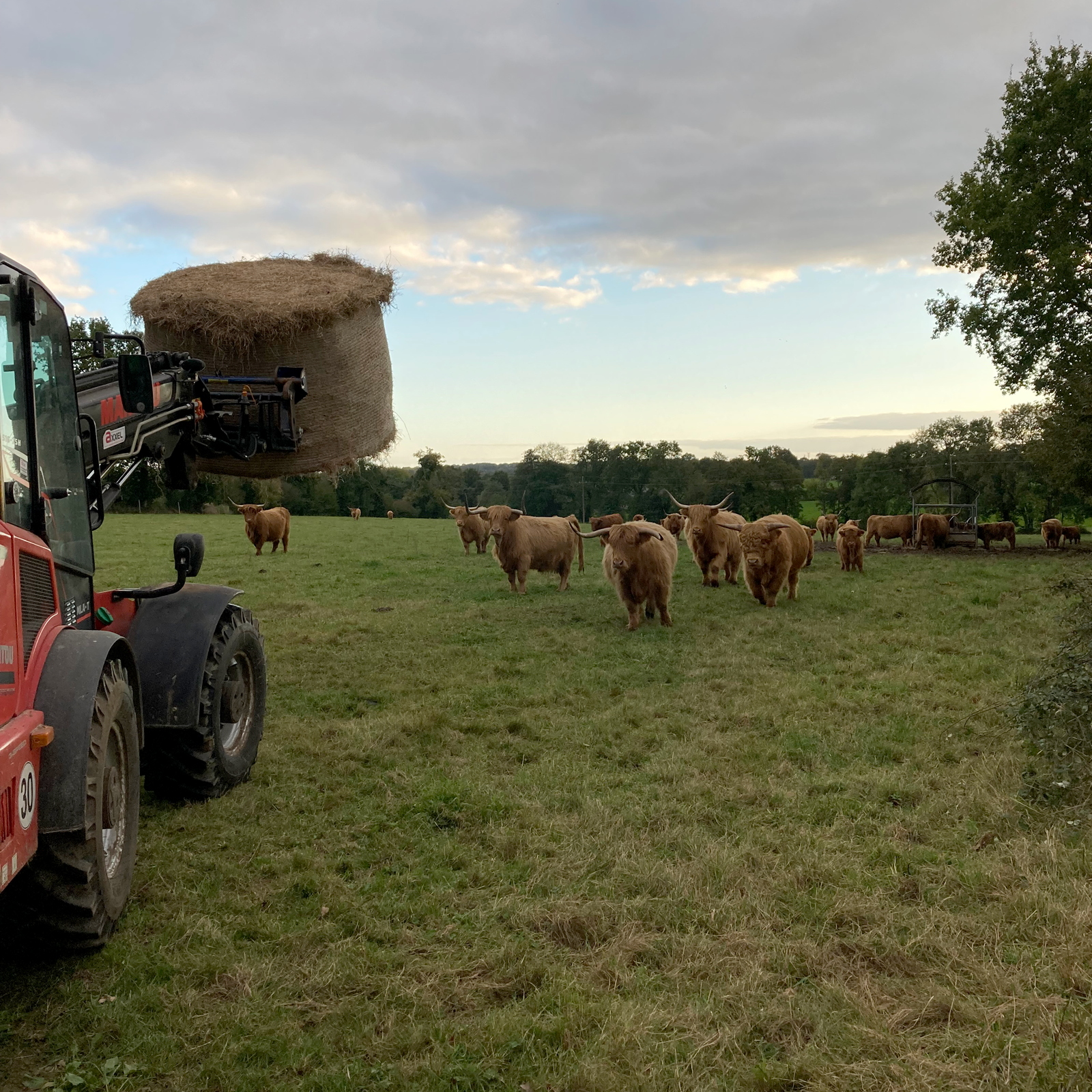
“People want local, organic products, and we’re building with them.”
Julien and Goulven aim to move beyond polarized debates (organic vs. conventional) calling for peace in the public debates, convinced that the unique solution doesn’t exist yet. By collaborating with local consumers, and partnering with specialized organic shops and restaurants, they build bridges with people. “People want local, organic products, and we’re building with them,” Goulven shares. And furthermore, they aim to focus on their core values: family, friends and meaningful agriculture. Their approach rooted in care for the living and human connections prioritizes fundamental needs.
“Test without fear, even if it’s not perfect.”
For aspiring farmers, Julien and Goulven offer practical advice. First, clarify your goals: “Know why you’re doing it, and surround yourself with the right people,” Julien advises. Second, manage risks by testing small (like their cider trials) and securing a safety net and exit “When you’re working on a project, you must put all your energy into making it happen, otherwise it won’t work. But, at the same time, it’s good to have that little button that you can flip and that tells you, “Ok, if this doesn’t work out, I still have the means to continue my life,” Goulven emphasizes. Third, embrace teamwork: their collective approach, from harvesting to planning, makes work sustainable. And then, experiment fearlessly: “Test without fear, even if it’s not perfect,” Julien says. Their message is clear: regenerative agroforestry is accessible with passion, collaboration, and perseverance.
Their journey at Pradenn Farm tend to prove that regenerative agroforestry can blend tradition, biodiversity and economic benefits. Their collaborative spirit and innovative model could contribute to inspire a new generation to reimagine farming. For project holders, their story is a blueprint: start small, build networks, and embrace experimentation. Join them in sowing the seeds of a regenerative future—support local organic farms and launch your own agroforestry project.
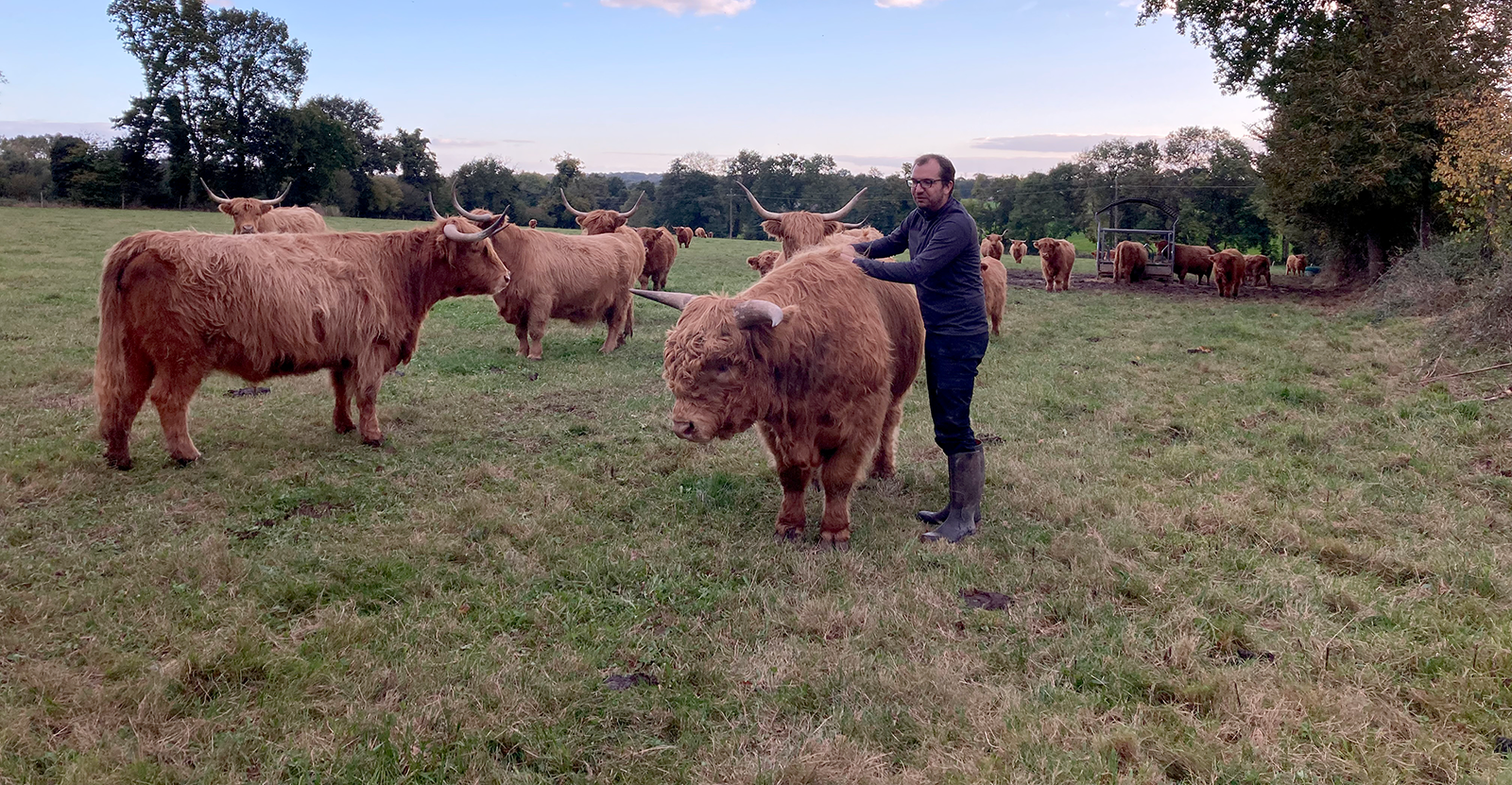
“Quality with common sense.”
Since this 2022 interview, Pradenn Farm has flourished into a dynamic collective, driven by positive activism. Julien and Goulven welcomed Aulne, chef of Meso, who runs a bistro-style canteen showcasing farm produce—apples, pork, vegetables. Sybille, through Derrière les Fagots, crafts sourdough breads from heritage grains, baked in a wood-fired oven. Greg, the market gardener, grows organic vegetables, enriching synergies. Together, they create “quality with common sense,” forging bonds between producers and guests. This lively hub—orchards, vegetable garden, bread oven—embodies peasant metropolitanization, bridging rural and urban.
